



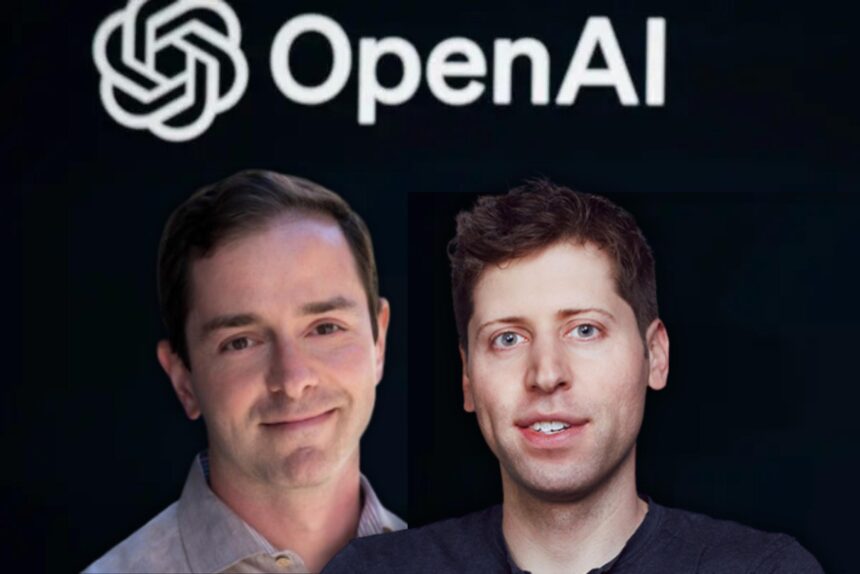
OpenAI has acquired healthcare technology startup, Torch, with the startup’s team joining the company to enhance health and wellness features for ChatGPT, co-founder Ilya Abyzov said in a post on January 13.
Founded in 2024, Torch is led by founder and CEO Ilya Abyzov. The startup’s other co-founders include Eugene Huang, James Hamlin, and Ryan Oman. According to The Information, OpenAI paid approximately $100 million in equity for the company.
The Torch team will work with OpenAI to “build ChatGPT Health into the best AI tool in the world for health and wellness,” Abyzov said. The startup was originally designed as a platform to aggregate personal medical data from hospitals, laboratories, wearables, and consumer health services into a single, AI-readable system.
“We designed Torch to be a unified medical memory for AI, bringing every bit of data about you from hospitals, labs, wearables, and consumer testing companies into one place,” Abyzov said.
What You Should Know
The acquisition comes just days after OpenAI launched ChatGPT Health, a new experience that allows users to connect their medical records and wellness applications directly to the chatbot.
OpenAI has also introduced a suite of enterprise-grade products for healthcare organisations, positioning itself not just as a consumer-facing AI platform but as a provider of infrastructure and tools for hospitals, insurers, and clinical providers. Early partners reportedly include major healthcare systems such as HCA Healthcare.
Together, these moves suggest OpenAI is building a vertically integrated healthcare AI stack, spanning patient interfaces, clinical support, data integration, and enterprise deployment.
Healthcare data today is notoriously siloed, stored across incompatible systems and formats that make it difficult for patients and clinicians to access a complete picture of an individual’s medical history.
Torch sought to address this by creating a centralised memory layer that could serve as a bridge between electronic health records, diagnostics, prescriptions, and consumer health data.
With its acquisition by OpenAI, that infrastructure is now expected to underpin the company’s growing health-focused products, particularly as generative AI becomes increasingly embedded in patient engagement, clinical decision support, and administrative workflows.
Founder’s Journey and Strategic Context
Torch’s founder, Ilya Abyzov, previously co-founded Forward, a direct-to-consumer primary care company that offered technology-enabled clinical services through physical “CarePods”.
Forward abruptly shut down in 2024, reflecting the difficulty of scaling consumer-facing healthcare models.
In contrast, Torch focused on infrastructure rather than delivery, a strategy that now aligns closely with OpenAI’s ambition to become a foundational platform for AI-enabled services across industries.
The deal also reflects OpenAI’s increasingly active corporate development strategy. In December, the company hired Albert Lee, formerly of Google, to lead mergers and acquisitions, signalling a more aggressive approach to acquiring specialised talent and technology.
Part of a Broader Acquisition Push
Torch is one of several acquisitions OpenAI has made over the past year as competition intensifies among AI giants including Google, Anthropic, and Microsoft-backed platforms.
In May, OpenAI acquired Jony Ive’s AI hardware startup io for more than US$6 billion, marking its largest acquisition to date and underscoring its ambition to expand beyond software into devices and interfaces.
With Torch, OpenAI is making a more targeted bet, that control over health data infrastructure will be as strategically important as model performance itself.
As healthcare systems worldwide grapple with data fragmentation, clinician burnout, and rising patient expectations, analysts say OpenAI is positioning itself not merely as an AI assistant, but as a core layer in the digital health ecosystem.
The acquisition of Torch represents a decisive step in that direction, moving OpenAI closer to becoming a foundational provider of AI-driven health infrastructure rather than just a consumer chatbot for medical questions.
Talking Points
It is impressive that OpenAI has acquired Torch, a startup building a unified medical memory, addressing a major barrier in healthcare: fragmented patient data spread across multiple systems and vendors.
This capability positions OpenAI to offer a practical solution for real challenges faced by healthcare providers, particularly hospitals and clinics struggling to access complete, accurate, and up-to-date patient information.
At Techparley, we see how integrations like this can accelerate the adoption of AI in healthcare, enabling providers to deliver more informed, efficient, and personalised care while reducing administrative burden on clinicians.
By embedding Torch’s technology into its ecosystem, OpenAI can now connect consumer-facing AI tools like ChatGPT Health with enterprise-grade clinical data infrastructure, creating a seamless flow of information for patients and providers alike.
As OpenAI scales its healthcare offerings, the Torch acquisition provides a foundation for building AI-driven health infrastructure at scale. With the right strategic partnerships and governance, this move has the potential to transform how patient data is managed and leveraged for better outcomes across the healthcare industry.
——————-
Bookmark Techparley.com for the most insightful technology news from the African continent.
Follow us on Twitter @Techparleynews, on Facebook at Techparley Africa, on LinkedIn at Techparley Africa, or on Instagram at Techparleynews.