



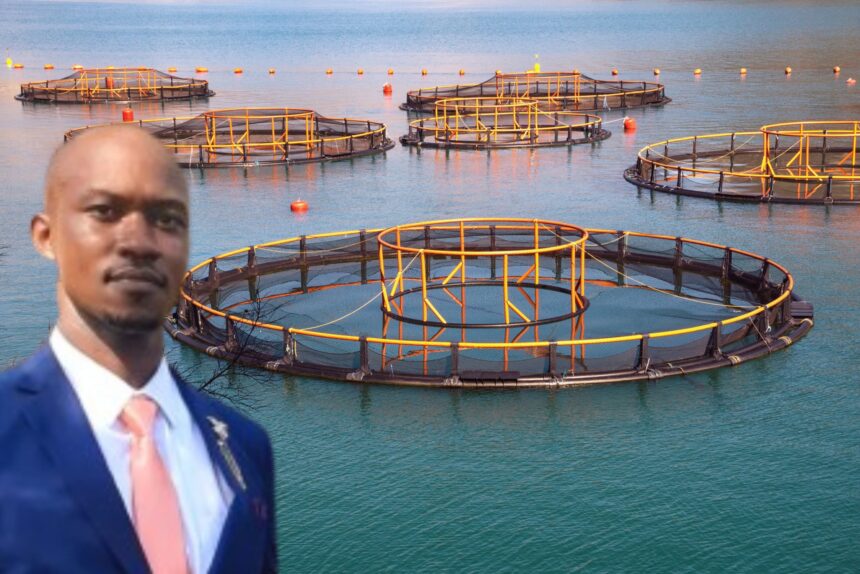
In a bold move to modernise Africa’s aquaculture sector, Kenyan startup Constantnople is deploying AI-powered HDPE fish cage systems designed to help small- and medium-scale fish farmers reduce losses, cut costs, and farm more sustainably.
By combining durable cage infrastructure with real-time data monitoring and artificial intelligence, the startup is addressing one of the most persistent challenges in fish farming across the continent, high mortality rates driven by poor water quality, inefficient feeding, and substandard cage systems.
Constantnople, founded by Boniface Wainaina, is positioning itself as a locally grounded alternative to expensive imported smart aquaculture solutions, which are often built for large commercial farms and priced far beyond the reach of everyday farmers.
“The aim is to reduce fish mortality, improve productivity, lower operational costs, and promote environmentally sustainable aquaculture,” Wainaina disclosed, underscoring the company’s mission to make smart fish farming both affordable and practical for African operators.
What You Should Know About Constantnople
Constantnople is a Kenyan startup that designs and manufactures smart fish cage systems tailored specifically to African aquaculture environments.
Although registered in 2020, the company formally commenced operations in 2024 after several years of concept development, market research, and technical validation.
According to Wainaina, this preparatory phase was critical to understanding the real-world challenges faced by local fish farmers.
“Small-scale fish farmers face high losses due to poor water quality monitoring, inefficient feeding practices, and the use of low-quality wooden or metallic cages that degrade quickly,” he explained.
By focusing on local manufacturing and farmer-centric design, Constantnople aims to close a major gap in the aquaculture value chain, where affordable, technology-enabled solutions have long been lacking.
How the Modern Fish Cage Is Unique
At the core of Constantnople’s offering is its HDPE (High-Density Polyethylene) fish cage system, a material choice that sets it apart from traditional wooden or metal cages commonly used by small-scale farmers.
HDPE cages are more durable, resistant to corrosion, and better suited to long-term use in aquatic environments. What truly differentiates the system, however, is its integration of IoT sensors and AI-driven analytics.
These technologies enable farmers to monitor water quality, fish health, and feeding efficiency in real time, replacing guesswork with data-driven decision-making.
Existing smart aquaculture solutions, Wainaina noted, are “largely imported, expensive, and designed for large commercial farms.”
In contrast, Constantnople’s cages are locally manufactured, affordable, and adapted to African operating conditions, making advanced aquaculture technology accessible to smaller players.
Solving a Costly Problem for Fish Farmers
Fish mortality remains one of the biggest threats to profitability for aquaculture businesses, particularly among small and medium operators.
Poor water quality, delayed intervention, and inefficient feeding practices often result in significant losses that farmers struggle to recover from.
Constantnople’s system directly targets these pain points by providing early warnings and actionable insights through real-time monitoring.
By helping farmers detect problems before they escalate, the solution reduces losses while improving overall farm management.
“The interest has been strong, driven by the need to reduce fish mortality and improve feed efficiency,” Wainaina said, highlighting the practical value farmers see in the technology.
Early Traction and Farmer Adoption
Constantnople is currently in the pilot to early commercialisation stage, with 10 active customers, most of whom are individual small- and medium-scale fish farmers. Despite the modest numbers, early feedback has been encouraging.
“Early users report improved survival rates, better operational visibility through real-time data, and increased confidence in managing their farms,” Wainaina noted.
He added that inbound inquiries continue to grow as awareness of the solution increases, signalling rising demand for smart, affordable aquaculture tools.
Funding, Milestones, and Operational Progress
The company has so far been bootstrapped through founder capital, supplemented by grants, innovation challenges, and accelerator programmes within the blue economy and climate-tech ecosystem. This lean funding approach has not slowed progress.
Key milestones include the development of a functional prototype, pilot deployments with fish farmers, participation in investor readiness programmes, and the establishment of HDPE fabrication capacity, allowing the startup to control quality and costs while scaling production.
Revenue Model and Path to Profitability
Constantnople currently generates revenue through the sale of AI-enabled HDPE fish cage systems, alongside installation, customisation, and ongoing maintenance services.
While revenues remain early-stage and largely tied to pilot sales, the company has a clear long-term monetisation strategy.
“As the platform scales, recurring revenue will also be generated through software subscriptions and data services,” Wainaina said.
This notes that profitability is expected as production volumes increase and subscription-based income grows.
Expansion Plans Across Africa
Looking ahead, Constantnople plans to expand beyond Kenya into East African markets such as Uganda, Tanzania, and South Africa.
Growth will be driven through partnerships with NGOs, farmer networks, and fisheries development programmes, helping the solution reach farmers who need it most.
With its blend of local manufacturing, smart technology, and farmer-focused design, Constantnople is emerging as a compelling example of how African startups are using innovation to solve deeply rooted agricultural challenges, one fish cage at a time.
Talking Points
Constantnople is coming as a timely and strategically positioned response to a structural weakness in Africa’s aquaculture ecosystem, particularly the persistent productivity gap faced by small- and medium-scale fish farmers who are often excluded from high-end technological solutions.
Its core strength lies in the localisation of advanced aquaculture technology, combining durable HDPE cages with AI and IoT, while deliberately targeting affordability and context-specific design, a move that directly addresses the mismatch between imported smart systems and African farming realities.
However, while early traction and positive farmer feedback suggest strong product–market fit, the company’s limited customer base and early-stage revenues underline the execution risks ahead, especially around scaling manufacturing, maintaining hardware quality, and ensuring reliable after-sales support in fragmented rural markets.
Additionally, sustained adoption will depend not only on technological performance but also on farmer education, digital literacy, and demonstrable return on investment, factors that often slow uptake of data-driven tools in traditional agricultural settings.
Should Constantnople successfully balance cost control with technological robustness, deepen partnerships with development agencies, and transition effectively to recurring software revenues, it could play a catalytic role in modernising small-scale aquaculture.
Failure to achieve this, however, may see it constrained by the same affordability and adoption challenges that have historically limited tech penetration in the sector.
_____________________
Bookmark Techparley.com for the most insightful technology news from the African continent.
Follow us on X/Twitter @Techparleynews, on Facebook at Techparley Africa, on LinkedIn at Techparley Africa, or on Instagram at Techparleynews