



Novee, an Israeli cybersecurity startup building artificial intelligence-driven offensive security tools, has emerged from stealth mode with $51.5 million in Series A funding, just four months after its founding, one of the fastest fundraising trajectories seen in the offensive security sector.
The round was led by YL Ventures, with participation from Canaan Partners and Zeev Ventures, underscoring growing investor confidence in companies tackling the rapid escalation of automated cyberattacks against enterprises.
Founded in May 2025, Novee says demand for its platform has been driven by a sharp increase in the sophistication, speed and scale of cyber threats, particularly those powered by AI and automation.
“Attackers don’t wait for your annual pentest, and neither should your defense,” said Novee co-founder and CEO Ido Geffen. “Novee has already helped organizations uncover hundreds of these novel vulnerabilities and fix them continuously, closing gaps before attackers exploit them.”
What You Need to Know
Traditional penetration testing is typically conducted annually or quarterly, offering only a snapshot of an organisation’s security posture. Novee’s platform seeks to replace that model with continuous, automated offensive testing, using AI to simulate how real attackers behave in dynamic environments.
Rather than scanning for known weaknesses, Novee’s system emulates the tactics, techniques and decision-making processes of human hackers, enabling it to detect complex and previously unseen vulnerabilities, particularly in business logic, workflows and integrations between systems.
The platform also automatically retests vulnerabilities once they are patched, ensuring that fixes are effective and no new risks have been introduced.
This shift is increasingly important as cyberattacks become more automated and adaptive, reducing the time between vulnerability discovery and exploitation from weeks or months to hours or minutes.
What This Means
Unlike many security platforms that rely on general-purpose large language models, Novee has developed a proprietary AI system trained specifically on offensive security data, exploits and attack patterns.
The company claims its model outperformed leading AI systems such as Gemini 2.5 Pro and Claude 4 Sonnet by more than 55 per cent in web exploitation tasks, achieving 90 per cent accuracy in controlled tests.
The approach reflects a broader trend in enterprise AI towards specialised, vertically trained models rather than general chat-based systems.
Novee has already signed several enterprise customers, including US-based software firm Cresta, which credits the platform with uncovering vulnerabilities that conventional scanners routinely miss. This early traction was a key factor behind the rapid fundraising, investors said.
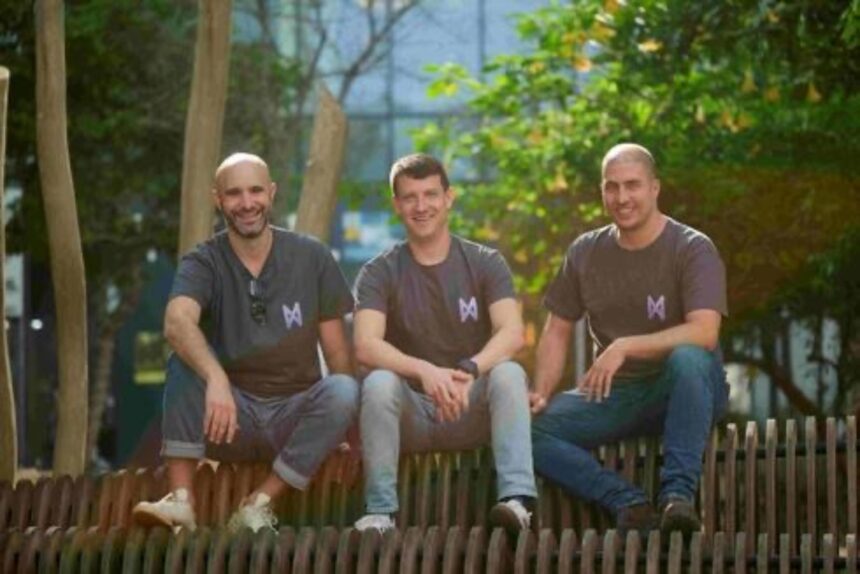
Novee was founded by Ido Geffen, Gon Chalamish (chief product officer) and Omer Ninburg (chief technology officer), all of whom previously served in elite cyber and intelligence units within the Israeli military.
The company is headquartered in Tel Aviv, placing it at the centre of Israel’s globally recognised cybersecurity ecosystem.
A Growing Market Shaped by AI Threats
The emergence of Novee comes amid a broader transformation of the cybersecurity industry, as enterprises confront an explosion in automated attacks driven by AI-assisted phishing, malware generation and exploit discovery.
Analysts expect spending on offensive security and continuous testing tools to grow sharply over the next five years, as organisations seek ways to move from reactive defence to proactive risk discovery.
By positioning itself as an AI-native offensive security company rather than a traditional testing firm, Novee is betting that the future of cyber defence lies in systems that can think, adapt and attack like adversaries, but at machine speed.
With fresh capital and growing customer demand, the startup now faces the challenge of scaling its technology and operations while staying ahead in a fast-moving and increasingly crowded cybersecurity landscape.
Talking Points
It is notable that Novee is positioning offensive security as a continuous capability rather than a periodic exercise, directly responding to how cyber threats have evolved from slow, manual attacks into fast, automated and adaptive operations.
This shift reframes penetration testing from a compliance-driven activity into a core operational function, which is a meaningful change for how enterprises think about risk, resilience, and accountability.
At Techparley, we see this as part of a broader move where cybersecurity is no longer just a defensive cost centre, but a strategic enabler of digital trust, especially as organisations adopt AI, cloud, and interconnected systems at scale.
Novee’s decision to build a purpose-trained AI model, rather than relying on general large language models, reflects a growing recognition that specialised intelligence will outperform generic tools in complex, adversarial environments like cybersecurity.
There is also an opportunity for Novee to shape industry standards around continuous testing and AI-driven offensive security, particularly if it collaborates with regulators, auditors, and large platform providers.
As AI accelerates both attack and defence, companies like Novee sit at a critical junction: they can either become niche technical tools or foundational infrastructure for the next generation of digital security. The path they choose will determine how influential they ultimately become in shaping the future of cyber defence.
——————-
Bookmark Techparley.com for the most insightful technology news from the African continent.
Follow us on Twitter @Techparleynews, on Facebook at Techparley Africa, on LinkedIn at Techparley Africa, or on Instagram at Techparleynews.