




Ladoke Akintola University of Technology (LAUTECH), Ogbomoso, has opened a new solar-powered co-working space aimed at equipping students and researchers with practical, industry-relevant skills in emerging technologies.
The facility, housed within the Seyi Makinde Innovation and Technology Hub (SMITH) on the university campus, forms part of the operations of the Centre for Emerging Skills and Technology (CEST).
The development follows the completion of a 50 kVA solar power system donated by Mar & Mor Engineering Services Limited, providing uninterrupted electricity to the hub’s workspaces, laboratories and training facilities.
Speaking exclusively to Techparley, Professor Tesleem Babatunde Asafa, Director of CEST and Professor of Mechanical Engineering at LAUTECH, said the centre was created to address structural gaps in Nigeria’s innovation and skills development ecosystem.
What You Should Know
According to Professor Asafa, CEST was established in 2019 to build technical capacity in emerging technologies and provide students with access to modern tools often lacking in traditional academic settings.
“The Centre for Emerging Skills and Technologies (CEST) at Ladoke Akintola University of Technology (LAUTECH) was established in 2019 to develop skills and build capacity in emerging technologies within the university,” he told Techparley. “To realize this vision, Oyo State Government donated the Seyi Makinde Innovation and Technology Hub (SMITH) as a cornerstone facility for the Centre’s operations.”
He explained that SMITH was designed as a collaborative environment where students, researchers and innovators can move beyond theory to develop, prototype and showcase commercially viable solutions.
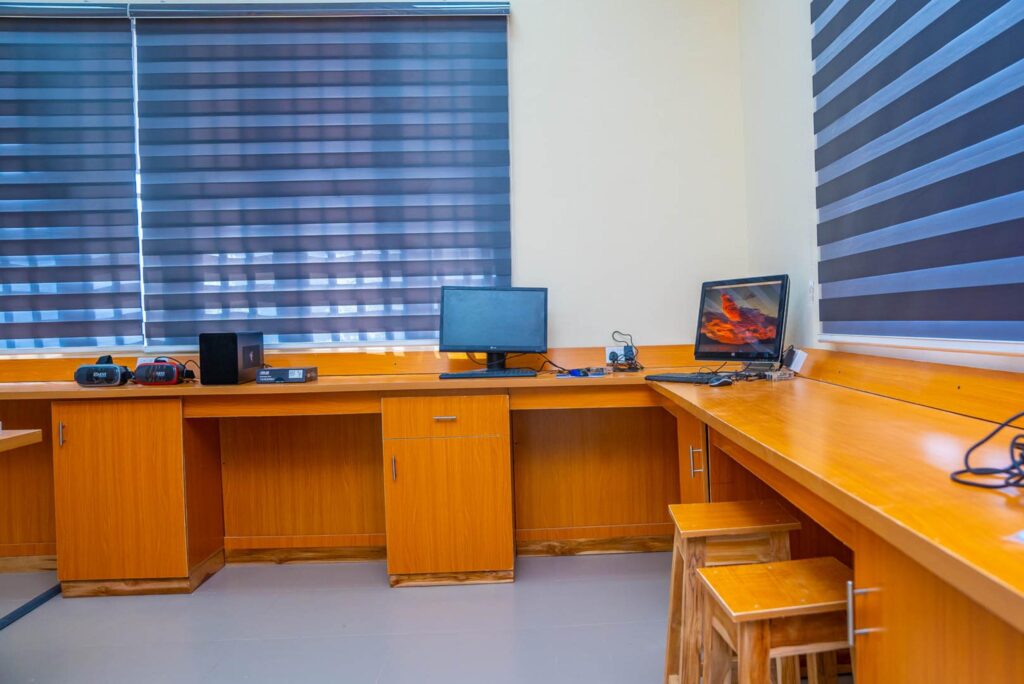
The hub features a conference hall, lecture hall, autotronics laboratory, robotics laboratory and exhibition hall, facilities now fully powered by renewable energy to support round-the-clock innovation.
From Classroom Learning to Hands-On Technical Training
Professor Asafa noted that one of the major challenges facing students is limited access to advanced equipment and mentorship needed to turn ideas into working products.
“Many students face limited access to advanced tools, technical skills and dedicated spaces required to translate innovative ideas into functional prototypes,” he said. “This gap has restricted the ability of highly creative students to fully express their ingenuity.”
To bridge this gap, CEST offers hands-on training across a range of high-demand fields, including 3D design using Autodesk Inventor and SolidWorks, 3D printing, drone assembly and piloting, autotronics and automobile fault diagnosis, robotics and embedded systems, Python and MATLAB programming, as well as artificial intelligence, data science and data analytics.
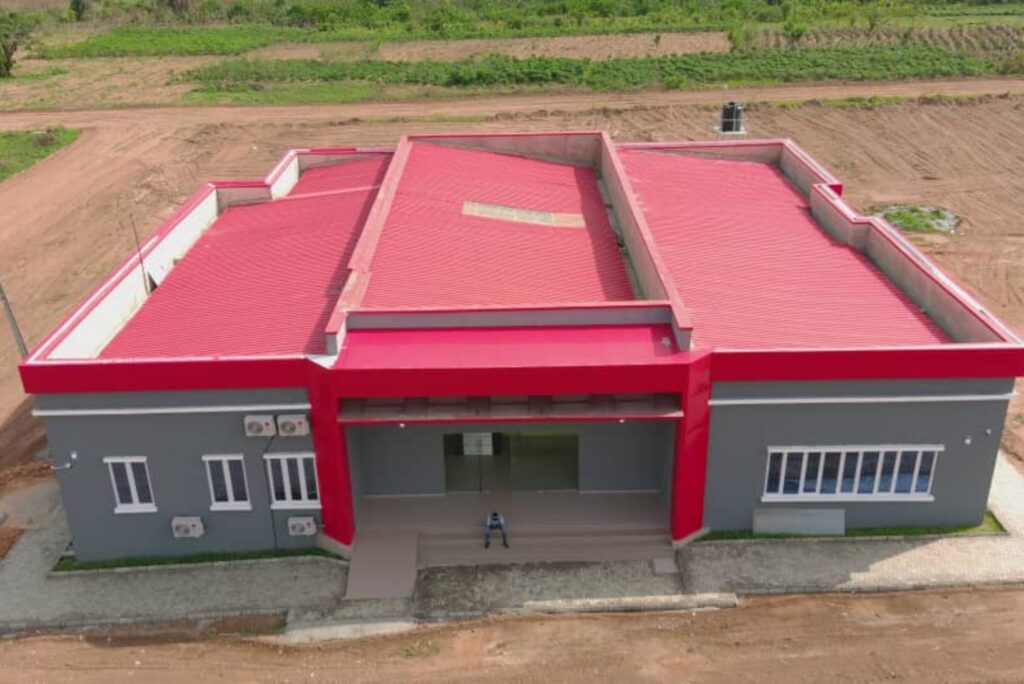
The centre also runs structured mentorship programmes that guide participants from concept development to execution.
Within the last 15 months, Professor Asafa revealed that CEST-supported projects have won more than 10 innovation awards across Nigeria, with several initiatives currently undergoing commercialisation efforts.
A Dedicated Co-Working Space for Research and Collaboration
At the heart of the new development is a purpose-built co-working space designed to provide a distraction-free environment for research, collaboration and product development.
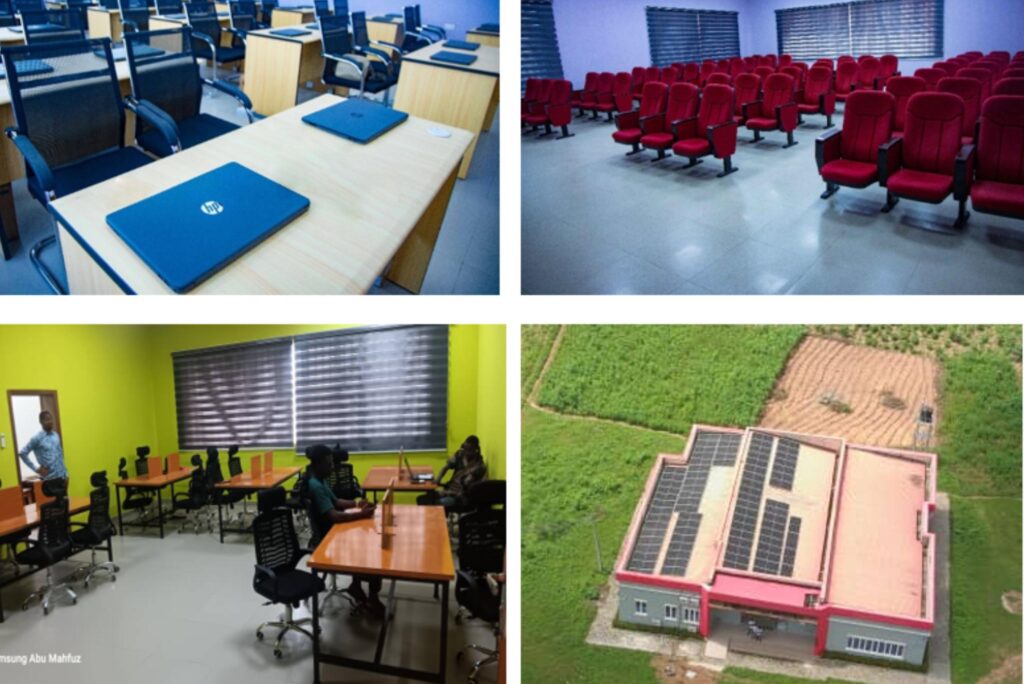
The space operates from 8 a.m. to 5 p.m., Monday to Friday, and offers reliable power, high-speed internet connectivity and shared workstations.
“CEST features a purpose-built co-working space designed to provide students and researchers with uninterrupted access to a conducive working environment, reliable power supply, and high-speed internet connectivity,” Professor Asafa said.
“The space offers a serene, distraction-free setting that enhances creativity, collaboration, research productivity, and technological innovation.”
Opening LAUTECH’s Innovation Hub to Industry and the Community
Beyond serving LAUTECH students and staff, CEST is positioning itself as an open innovation hub for researchers and innovators outside the university.

Professor Asafa explained that the centre supports the entire innovation pipeline, from ideation and simulation to fabrication and prototyping, using modern manufacturing tools such as 3D printers.
Participants are encouraged to work closely with CEST’s technical staff to refine ideas and receive professional guidance throughout the development process.
Looking ahead, the centre plans to strengthen partnerships with industry players, technology firms and startups within and beyond Ogbomoso.
“These partnerships are aimed at promoting knowledge exchange, industry-driven research, technology transfer, and commercialization of innovative products,” he said.
With its renewable energy backbone, growing portfolio of award-winning projects and open-door innovation policy, experts say CEST is positioning LAUTECH as a rising hub for applied technology, skills development and sustainable innovation in Nigeria’s higher education landscape.
Talking Points
It is significant that LAUTECH, through the Centre for Emerging Skills and Technology (CEST), is investing in physical innovation infrastructure at a time when many universities struggle to move beyond theory-driven learning.
The integration of a solar-powered co-working space directly addresses two persistent barriers to innovation in Nigeria’s public universities: unreliable power supply and the absence of dedicated, well-equipped work environments for research and prototyping.
At Techparley, we see the Seyi Makinde Innovation and Technology Hub as more than a campus facility, it represents a shift towards applied learning, where students and researchers can translate ideas into functional, award-winning solutions.
CEST’s focus on hands-on training in areas such as robotics, artificial intelligence, data science, drone technology and 3D manufacturing positions LAUTECH as a growing contributor to Nigeria’s emerging technology talent pipeline, particularly outside the traditional innovation hubs.
If successfully sustained, CEST could serve as a model for how Nigerian universities can combine renewable energy, skills development and industry collaboration to drive inclusive, locally rooted innovation.
——————-
Bookmark Techparley.com for the most insightful technology news from the African continent.
Follow us on Twitter @Techparleynews, on Facebook at Techparley Africa, on LinkedIn at Techparley Africa, or on Instagram at Techparleynews.