



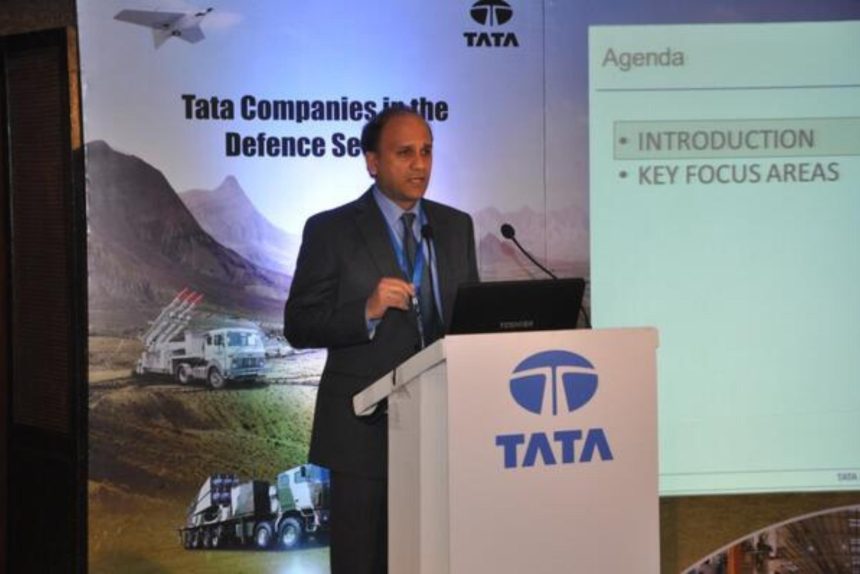
The Indian conglomerate, Tata Group, is exploring opportunities to supply military hardware to African nations, marking a potential expansion of its defence footprint on the continent.
In September 2025, Tata opened its first overseas defence manufacturing facility in Morocco, operated by a private Indian company. The factory is expected to produce around 150 armoured platform vehicles for the Moroccan government, and in December 2025, it delivered its first combat vehicles to the Moroccan army.
The Morocco facility represents Tata’s initial foothold in Africa, but company executives have indicated ambitions to expand further across the continent.
“Pretty much every country wants to diversify away from their current set of suppliers. It has become a real risk mitigation issue,” Sukaran Singh, CEO and Managing Director of Tata Advanced Systems, told the Financial Times. “You must have your own core; that is a national imperative.”
What You Should Know
India has set an ambitious goal of reaching $5 billion in annual defence exports by 2029, a target that has spurred private companies to look beyond domestic markets.
Firms such as Tata Advanced Systems, Larsen & Toubro, and Bharat Forge have increased their focus on emerging markets, including Africa, supported by government reforms that encourage private-sector participation and foreign partnerships.
Tata’s interest in Africa aligns with broader Indian government priorities to diversify export destinations, reduce overreliance on traditional markets, and position the country as a global defence supplier.
Africa’s Shifting Defence Landscape
African nations are increasingly modernising their armed forces while re-evaluating traditional supplier relationships, creating opportunities for new entrants such as Tata.
Experts say geopolitical shifts, regional security challenges, and a desire for cost-effective, locally relevant solutions have all contributed to growing demand for diversified defence partnerships.
Recent investments, such as funding for Nigerian hardware startup Terra Industries, which develops surveillance and security technologies, reflect a broader trend toward locally tailored defence solutions. Analysts say these developments underscore Africa’s rising strategic importance for foreign defence firms.
By opening its first overseas defence manufacturing facility in Morocco and delivering armoured vehicles to the Moroccan army, Tata is establishing a direct presence on the continent, signalling that private Indian companies are ready to compete with traditional global suppliers for African contracts.
What This Means
For African nations, Tata’s entry offers new opportunities to modernise armed forces while reducing dependency on long-standing suppliers. Many countries in the region face evolving security challenges and are seeking cost-effective, reliable, and locally adaptable defence solutions.
Industry leaders say the arrival of a new player like Tata provides governments with alternative options and could drive competition, potentially lowering costs and encouraging technology transfers to strengthen local defence capabilities.
The development also reflects a wider trend in Africa’s defence ecosystem, where private companies and startups are increasingly playing a role alongside governments.
Tata’s move into Morocco and potential contracts across the continent signal a long-term strategic push into African defence markets. By combining Indian manufacturing expertise with growing demand in Africa, Tata and other private-sector firms may help reshape the region’s defence ecosystem.
Talking Points
It is notable that Tata Group has opened its first overseas defence manufacturing facility in Morocco, signalling a new phase of private-sector engagement in African defence.
This initial foothold positions Tata as a practical partner for African nations seeking modern, cost-effective military hardware, particularly at a time when countries are reassessing traditional supplier relationships.
At Techparley, we see how companies like Tata can help diversify Africa’s defence procurement options, offering alternatives that are tailored to local needs while also strengthening regional security capabilities.
The production of armoured vehicles for the Moroccan army demonstrates how private Indian firms are now capable of delivering high-quality defence solutions beyond their domestic market, supporting Africa’s modernisation goals.
However, there is still room to expand Tata’s impact across the continent. Success will depend on how well the company engages with governments, aligns products with local operational needs, and invests in sustainable partnerships.
As Tata scales its African operations, there is an opportunity to set a precedent for private-sector-led defence exports, while also encouraging technology transfers, local capacity building, and stronger defence ecosystems across the region.
——————-
Bookmark Techparley.com for the most insightful technology news from the African continent.
Follow us on Twitter @Techparleynews, on Facebook at Techparley Africa, on LinkedIn at Techparley Africa, or on Instagram at Techparleynews.