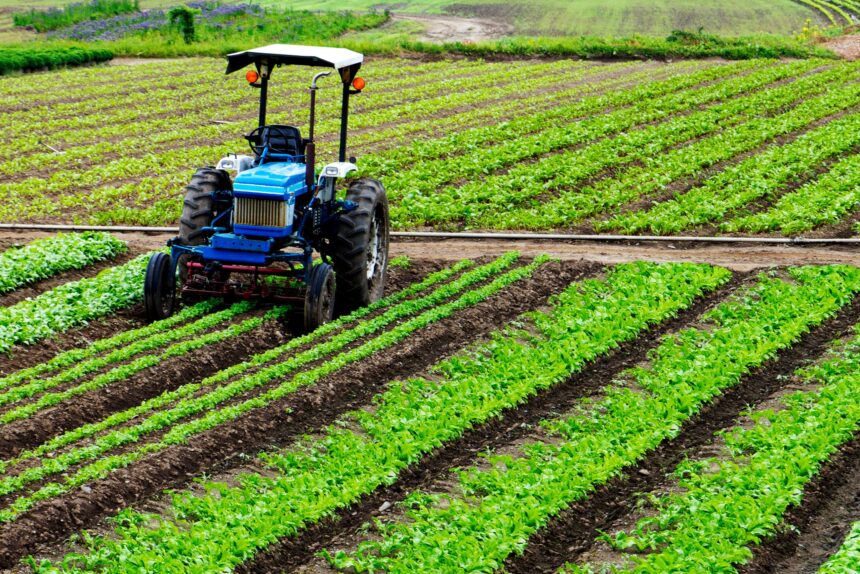
Agriculture remains the backbone of Africa’s economy. It is employing more than half of the continent’s population and sustaining millions of households. Yet, despite its importance, African agriculture continues to struggle with low productivity, fragmented markets, climate vulnerability, and deep structural inefficiencies.
Over the past decade, technology has been hailed as a silver bullet capable of transforming the sector. However, many agritech solutions fail not because technology is ineffective, but because they target the wrong problems.
Identifying high-impact agricultural problems worth solving with technology requires a grounded understanding of farmers’ realities, value-chain bottlenecks, and systemic constraints.
The most meaningful innovations are those that focus on productivity losses, market failures, and resilience challenges, while remaining accessible, scalable, and locally relevant.
This guide explores how to identify such problems, the key areas where technology can deliver the most impact, and the principles that should guide problem selection in Africa’s agricultural ecosystem.
Understanding the Real Bottlenecks in African Agriculture
The first step in identifying high-impact agricultural problems is recognizing that Africa’s agricultural challenges are not merely technical but structural. Smallholder farmers, who produce the majority of the continent’s food, often face limited access to quality inputs, unreliable infrastructure, and weak links to markets.
Post-harvest losses remain alarmingly high due to poor storage, transportation, and processing facilities. In many regions, farmers lack timely access to market prices, weather forecasts, and agronomic advice, resulting in poor decision-making and low profitability.
A problem becomes high-impact when it sits at the intersection of scale and severity, affecting a large number of farmers while significantly limiting income, productivity, or food security.
Market Access and Supply Chain Inefficiencies
One of the most critical agricultural problems worth solving with technology in Africa lies in market access and supply chain inefficiencies.
Many farmers produce crops without guaranteed buyers, accurate price information, or efficient logistics. This dependence on intermediaries often leads to exploitative pricing and reduced income for producers.
Digital platforms that connect farmers directly to buyers, aggregators, and processors can significantly reduce these inefficiencies. By improving price transparency, streamlining logistics, and enabling digital payments, technology can increase farmer incomes while reducing food waste.
High-impact problems in this area typically involve fragmented markets, long chains of middlemen, and weak coordination between producers and buyers.
Precision Agriculture and Resource Optimization
Low productivity remains a defining challenge of African agriculture, largely driven by inefficient use of inputs such as seeds, fertilizer, and water.
Precision agriculture presents a high-impact opportunity by enabling farmers to apply the right input, at the right time, and in the right quantity.
Technologies that leverage data, GPS mapping, sensors, and mobile advisory tools can help farmers monitor soil health, track crop performance, and optimize irrigation. The most impactful problems in this space are those that address waste, reduce production costs, and improve yields without increasing financial burden.
Importantly, precision solutions must be adapted to low-cost environments and function on basic mobile devices to truly reach smallholder farmers.
Climate Change Resilience and Climate-Smart Solutions
Climate variability poses an existential threat to agriculture in Africa. Irregular rainfall patterns, prolonged droughts, floods, and rising temperatures are already disrupting farming systems across the continent.
High-impact agricultural problems increasingly revolve around resilience, how farmers can anticipate, adapt to, and recover from climate shocks.
Technology can play a transformative role through early warning systems, weather forecasting tools, water management solutions, and access to data on drought-resistant crop varieties.
Problems worth solving in this area are those that directly reduce climate risk, stabilize yields, and protect livelihoods, especially for rain-fed farming communities.
Pest and Disease Management Challenges
Pests and diseases account for billions of dollars in crop losses annually in Africa, yet early detection and response remain weak. Farmers often rely on guesswork or delayed extension services, allowing infestations to spread rapidly.
High-impact problems in pest and disease management include lack of early warning systems, poor diagnostic tools, and limited access to effective treatments.
Technologies such as artificial intelligence, drone surveillance, satellite imagery, and mobile-based diagnostics can help identify outbreaks early and guide targeted interventions.
The value of such solutions lies in their ability to prevent losses before they escalate, rather than reacting after damage has occurred.
Analyzing the Agricultural Value Chain
Identifying high-impact problems requires a thorough analysis of the agricultural value chain, from input supply to production, storage, processing, and distribution.
Areas with high post-harvest losses, excessive transaction costs, or inefficiencies often present the greatest opportunities for technological intervention.
For example, improving cold storage, digitizing aggregation systems, or optimizing transport logistics can unlock significant value for farmers and consumers alike.
Problems worth solving are those where small improvements can generate outsized benefits across multiple stages of the chain.
Prioritizing Smallholder Farmers
A defining characteristic of high-impact agricultural problems in Africa is their relevance to smallholder farmers. Solutions designed exclusively for large-scale commercial farms may be technologically impressive but have limited developmental impact.
High-impact problems are those that affect farmers with limited capital, low digital literacy, and minimal access to infrastructure.
Technology must therefore be affordable, user-friendly, and adaptable to diverse local contexts. When evaluating a problem, its potential reach among smallholders should be a primary consideration.
Ground-Level Validation and Co-Design
Many agritech failures stem from assumptions rather than evidence. Identifying the right problem requires validation on the ground through direct engagement with farmers, cooperatives, and local stakeholders.
Co-designing solutions with end users helps uncover hidden constraints, cultural factors, and practical limitations that data alone cannot reveal.
Problems worth solving are those consistently identified by farmers themselves, rather than those imposed by external perspectives or technological enthusiasm.
Leveraging Data for Better Decision-Making, and Evaluating Scalability and Sustainability
Data is central to identifying and solving high-impact agricultural problems. Satellite imagery, weather data, soil analytics, and market intelligence can reveal patterns that highlight inefficiencies and risks.
Problems that can be clearly defined, measured, and monitored through data are more likely to yield scalable and sustainable solutions.
However, the true impact lies not in data collection alone but in transforming data into actionable insights that farmers and agribusinesses can use.
Equally important is to note that, a high-impact agricultural problem is one whose solution can scale across regions, crops, and farming systems. Scalability ensures that the benefits of technology extend beyond pilot projects to national or continental impact.
Sustainability requires that solutions remain economically viable without perpetual subsidies. Problems worth solving are those where technology can adapt to varying agro-ecological zones while maintaining affordability and long-term relevance.
Key Structural Challenges Technology Must Address
Several underlying challenges consistently emerge when identifying high-impact agricultural problems in Africa. Low productivity persists due to poor seed quality, inadequate fertilizer use, and outdated farming practices.
Infrastructure deficits, such as poor roads, unreliable energy, and limited storage, raise costs and reduce market access. Information asymmetry leaves farmers disconnected from price signals, weather updates, and best practices, limiting profitability.
Technology-driven solutions that address these foundational issues tend to deliver the greatest impact.
Frequently Asked Questions (FAQs)
What makes an agricultural problem “high-impact” in the African context?
A high-impact problem affects a large number of farmers, significantly limits productivity or income, and can be meaningfully addressed at scale using appropriate technology.
Why do many agritech solutions fail in Africa?
Most failures occur because solutions target the wrong problems, ignore local realities, or are not designed with smallholder farmers in mind.
Is advanced technology like AI and drones practical for smallholder farmers?
Yes, when deployed indirectly through advisory platforms, cooperatives, or service providers, advanced technologies can deliver value without requiring farmers to own or operate them directly.
How important is farmer involvement in identifying problems?
Farmer involvement is critical. Co-design and ground-level validation ensure that solutions address real needs rather than assumed challenges.
Can a single agricultural technology solution work across all African countries?
Rarely. High-impact solutions must be adaptable to different climates, crops, cultures, and infrastructure conditions to succeed across regions.
________________________
Bookmark Techparley.com for the most insightful technology news from the African continent.
Follow us on X/Twitter @Techparleynews, on Facebook at Techparley Africa, on LinkedIn at Techparley Africa, or on Instagram at Techparleynews