



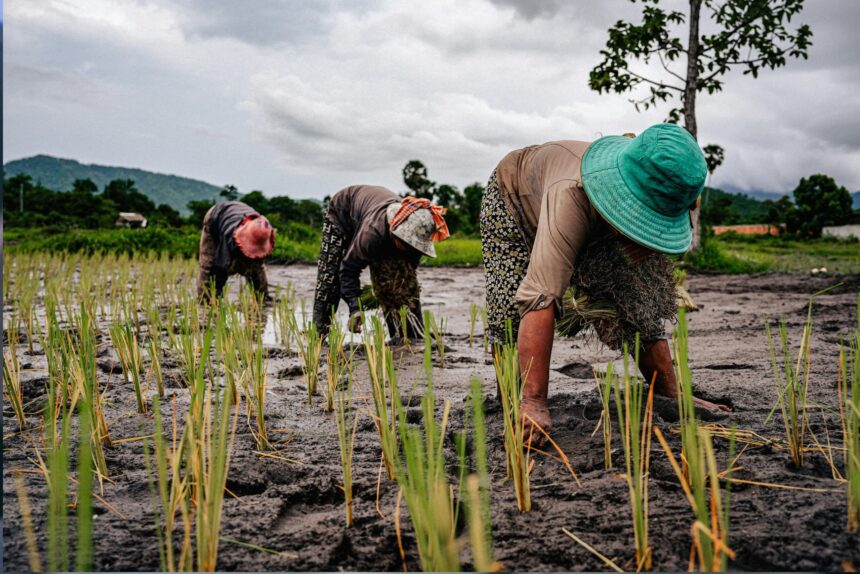
Validating an agri-tech startup idea in rural and semi-urban African markets is fundamentally different from validating a tech idea in urban or Western contexts.
In these environments, agriculture is not just an industry, it is a way of life shaped by tradition, trust, seasons, climate uncertainty, and informal systems that have existed for decades.
Many promising agri-tech ideas fail not because the technology is weak, but because founders attempt to “scale first and understand later.”
True validation in African agricultural markets demands a field-first mindset, deep empathy for farmers, and a willingness to design for realities such as low connectivity, cash-flow seasonality, and entrenched middlemen.
The goal is not to impress with advanced technology, but to prove, early and clearly, that your solution solves a painful, everyday problem in a way farmers can understand, afford, and trust.
Start With Ground-Truth Market Research, Not Desk Research
The foundation of validating any agri-tech idea in rural Africa is physical presence. Online reports, satellite data, and policy documents may provide useful background, but they rarely capture the lived realities of smallholder farmers.
Validation begins when founders step into farms, storage facilities, and local produce markets to observe how agriculture actually works on the ground.
This process involves identifying real pain points rather than assumed problems. Farmers may struggle with post-harvest losses, access to quality inputs, unreliable buyers, pest infestations, or transportation bottlenecks.
These challenges often differ from region to region and even from one farming season to another. Equally important is mapping the agricultural value chain to understand who controls access to markets, information, and resources.
In many communities, brokers and aggregators play powerful roles, and any solution that ignores their influence risks rejection.
Another critical but often overlooked aspect is cash-flow timing. Farming income is seasonal, and validating pricing models without understanding when farmers actually have money leads to poor adoption.
A solution that is affordable at harvest time may be impossible to pay for during planting season. Ground-truth research helps founders align their product, pricing, and timing with farmers’ financial realities.
Build a Low-Tech or Offline-First Minimum Viable Product
In rural and semi-urban African markets, sophisticated technology is not always an advantage. Limited smartphone penetration, inconsistent electricity, and unreliable internet connectivity mean that many farmers cannot use app-heavy or data-intensive solutions.
Validation, therefore, requires building an MVP that works under the harshest conditions, not ideal ones. Offline-first tools such as USSD and SMS often outperform mobile apps in early validation stages.
These technologies allow farmers to access services, place orders, or receive information using basic feature phones. More importantly, usability must be intuitive. If a farmer needs extensive training to understand your product, adoption will be slow.
Successful agri-tech startups often validate by solving one clear problem extremely well before expanding. Whether it is cold storage to reduce spoilage, shared tractor access to improve productivity, or simple weather alerts, the MVP should demonstrate immediate, visible value.
Validation is achieved when farmers can say, “This saved me money,” or “This increased my yield,” not when they only admire the technology.
Use Pilot Projects to Learn Directly From Farmers
Pilot projects are one of the most powerful validation tools in rural African markets. By testing your solution with a small, clearly defined group of farmers, such as a single community or district, you gain access to honest feedback that no survey can replicate.
Early adopters are essential here. These are farmers who are curious, respected in their communities, and open to trying new approaches. Working closely with them allows founders to observe how the product is used, misunderstood, or adapted in real-world conditions.
Pilot programs also provide opportunities for hands-on training, relationship building, and live demonstrations of value. Validation metrics during pilots should remain simple and practical.
Instead of abstract KPIs, focus on outcomes farmers care about, reduced waste, increased income, improved yields, or saved labor time. If these indicators do not improve during pilots, the idea needs refinement, no matter how promising it looks on paper.
Build Trust Through Strategic Local Partnerships
Trust is the single biggest factor influencing adoption in rural African agriculture. Farmers are naturally cautious of outsiders promising change, especially when past interventions have failed or disappeared. For this reason, validation rarely succeeds in isolation.
Partnering with trusted local institutions accelerates credibility. Agricultural cooperatives provide access to multiple farmers at once and often act as gatekeepers for new ideas.
NGOs and local government agencies can offer legitimacy, logistical support, and alignment with development goals. In many successful models, community members are trained as local agents who bridge the gap between technology providers and farmers.
These agents speak the local language, understand cultural norms, and provide face-to-face support. Their presence transforms a startup from a distant tech company into a familiar, accountable partner. When farmers trust the messenger, they are far more willing to test the message.
Validate Unit Economics Before Thinking About Scale
Many agri-tech startups fall into the trap of chasing scale before proving sustainability. In rural African markets, validation must include early testing of unit economics to ensure the business can survive without constant external funding.
Farmers are highly price-sensitive, and they evaluate products based on direct economic value. Pricing should reflect the savings or income gains your solution delivers, not the sophistication of the technology behind it.
Flexible payment models, such as pay-as-you-go or seasonal payments, often align better with agricultural income cycles.
Validation also requires testing different revenue models.
Some solutions work best with cooperative subscriptions, others with transaction fees or service-based pricing. The goal is to identify a model that farmers accept willingly and that covers operational costs at small scale. If the numbers do not work early, scaling will only magnify losses.
Account for Africa-Specific Realities From the Start
Validating an agri-tech idea in Africa also means addressing contextual factors that may not be prominent elsewhere. Data privacy and transparency are increasingly important, especially as farmers become wary of how their information is used. Being clear about data collection and benefits builds long-term trust.
Climate variability is another critical factor. Solutions that help farmers adapt to erratic rainfall, droughts, or floods gain relevance and urgency. Additionally, data models must be localized.
Imported datasets and assumptions often fail to reflect African soil types, farming practices, and micro-climates, leading to inaccurate recommendations.
True validation happens when a solution fits seamlessly into the local agricultural ecosystem, rather than forcing farmers to change everything they know.
Validating an agri-tech startup idea in rural and semi-urban African markets is not a fast or purely digital process. It is a deeply human journey that blends technology with trust, patience, and cultural understanding.
Founders who prioritize field engagement, build simple and usable solutions, test through pilots, and validate economics early stand the best chance of creating lasting impact.
In these markets, success is measured not by rapid downloads or viral growth, but by steady adoption, farmer loyalty, and tangible improvements in livelihoods.
Frequently Asked Questions (FAQs)
Why do many agri-tech startups fail in rural African markets?
Most fail because they design solutions without deeply understanding farmers’ realities, rely too heavily on digital tools, or attempt to scale before building trust and proving economic value.
Is it necessary to visit farms physically to validate an idea?
Yes. Physical presence is essential to understand daily challenges, cultural dynamics, and infrastructure limitations that cannot be captured through online research alone.
Can advanced technologies like AI and IoT work in rural Africa?
They can, but only when adapted to local conditions, supported by offline or low-tech interfaces, and introduced gradually after trust and basic value are established.
How long should a pilot project last?
A pilot should run long enough to cover at least one key farming cycle or season, allowing you to measure real outcomes such as yield, income, or waste reduction.
What is the most important success factor when validating an agri-tech idea in Africa?
Trust. Without trust, built through local engagement, partnerships, and demonstrated value, even the best technology will struggle to gain adoption.
______________________
Bookmark Techparley.com for the most insightful technology news from the African continent.
Follow us on X/Twitter @Techparleynews, on Facebook at Techparley Africa, on LinkedIn at Techparley Africa, or on Instagram at Techparleynews