



Rwanda has taken a historic step in autonomous logistics by signing an expansion agreement with US-based drone company Zipline, positioning the East African nation as one of the first countries in the world to achieve full nationwide coverage for autonomous medical and logistics deliveries.
Announced on 5 February 2026, the deal unlocks the first tranche of funding under a up to $150 million “pay-for-performance” award from the US Department of State, originally announced in November 2025.
“Today, Rwanda is doing it again. This is a global first — not because the technology exists, but because the leadership exists,” Caitlin Burton, CEO of Zipline Africa, said, adding that the partnership sets a new global standard for deploying innovation.
“Rwanda and Zipline have been working together for years to harness technology for the good of our people. We have witnessed the extraordinary impact of drone delivery — saving time, saving money, and saving lives,” said Paula Ingabire, Rwanda’s Minister of ICT and Innovation.
What You Need to Know
The agreement builds on Zipline’s decade-long partnership with Rwanda, where the company launched its first commercial operations in 2016, delivering blood and essential medicines to remote health facilities.
Since then, Zipline has completed millions of flights with an impeccable safety record, dramatically reducing delivery times from hours to minutes and contributing to improved health outcomes, including documented reductions in maternal mortality in served areas.
Under the new pact, Rwanda will add a third long-range distribution hub in Karongi District, complementing existing facilities in Muhanga and Kayonza. The Karongi hub, strategically located near the border with the Democratic Republic of Congo, is expected to serve around 200 health posts and 60 major facilities, reaching more than 2.9 million people in the west of the country.
Combined with urban expansions, Zipline’s network will soon cover over 11 million Rwandans, nearly the entire population and support approximately 350 local jobs. This creates a seamless, nationwide system that eliminates geographic barriers in access to critical supplies.
What This Means
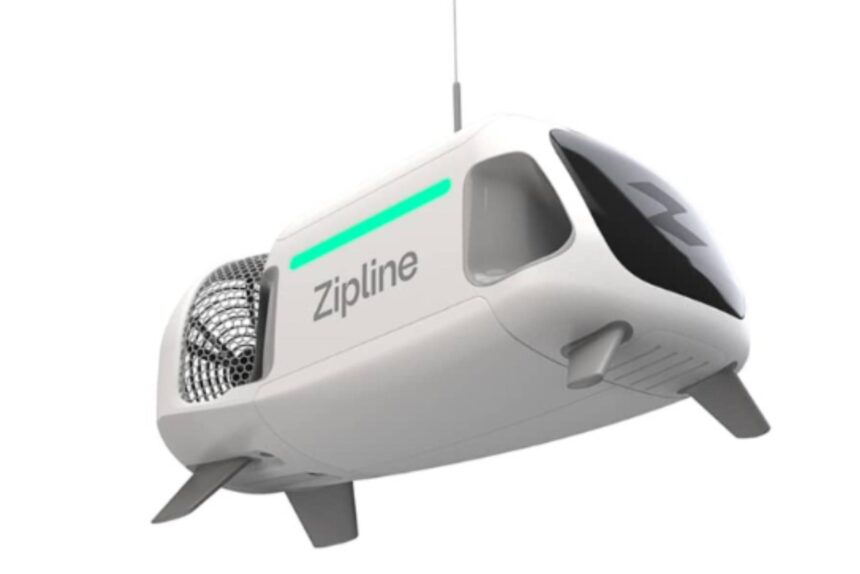
A key innovation is the introduction of Zipline’s Platform 2 (P2) urban delivery system in Kigali, where roughly 40% of the country’s healthcare demand is concentrated. P2 drones, designed for dense environments, offer fast, quiet, and highly precise deliveries, capable of “dinner-plate accuracy” to homes, offices, and public spaces.
While initially focused on medical supplies such as vaccines, blood, and essential medicines, the technology opens the door to broader applications, including retail and food items, as already demonstrated in US deployments.
Rwanda will also host Zipline’s first overseas AI and robotics testing facility, dedicated to advancing aircraft safety, next-generation software, and autonomous systems development. This positions the country as a global hub for innovation in drone logistics.
The US State Department’s funding covers upfront infrastructure costs, such as building “nests” for drone launches, while the Rwandan government commits to paying for ongoing operations.
This co-financing approach, described as a first-of-its-kind by the State Department, aligns with the America First Global Health Strategy and aims to ensure sustainability by transitioning reliance from donors to domestic budgets as costs fall.
Broader Implications for Africa and Beyond
The Rwanda deal serves as the inaugural expansion under the $150 million US award, which targets tripling Zipline’s African footprint from around 5,000 to 15,000 health facilities across Rwanda, Côte d’Ivoire, Ghana, Kenya, and Nigeria, potentially benefiting up to 130 million people with instant access to life-saving supplies.
Experts view this as a blueprint for modernising health supply chains in resource-constrained settings, where poor roads, weather, and distance often delay critical care.
By proving that autonomous logistics can become permanent national infrastructure, Rwanda is demonstrating how public-private partnerships, backed by results-oriented funding, can drive equitable health improvements and economic growth.
Talking Points
It is impressive that Rwanda has signed this landmark expansion agreement with Zipline, unlocking the first tranche of a $150 million “pay-for-performance” award from the US Department of State and positioning the country as the first in the world to achieve full nationwide autonomous drone delivery coverage.
This single milestone alone elevates Rwanda’s decade-long partnership with Zipline from pioneering rural medical deliveries to a comprehensive national system, now extending life-saving logistics to over 11 million people through new infrastructure like the Karongi hub and Platform 2 urban deliveries in Kigali.
At Techparley, we see how this model, combining upfront US funding for infrastructure with Rwanda’s commitment to sustain operations can accelerate the shift from donor-dependent pilots to self-reliant, embedded national infrastructure, delivering real, measurable improvements in healthcare access and outcomes across the continent.
As the partnership scales, we see significant opportunity in deeper collaborations with regional bodies, private sector players, and additional donors to accelerate onboarding, broaden applications, and deepen the footprint across underserved African regions.
With strong leadership and strategic execution, this Zipline-Rwanda alliance has the potential to become a powerful catalyst for equitable healthcare access, technological sovereignty, and resilient supply chains across the continent.
——————-
Bookmark Techparley.com for the most insightful technology news from the African continent.
Follow us on Twitter @Techparleynews, on Facebook at Techparley Africa, on LinkedIn at Techparley Africa, or on Instagram at Techparleynews.