



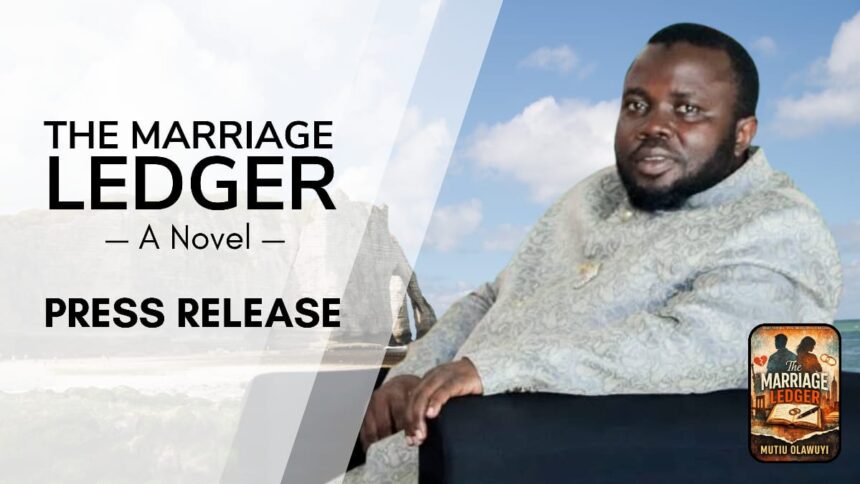
- Pan-African Journalist and scholar, Mutiu Olawuyi, announces the publication of a literary intervention into modern marriages and intimate relationships.
- The book introduces “Restorative Realism,” the scholar’s original school-of-thought, offering an alternative to romantic idealism and cynical dismissal in contemporary discourse.
- The work positions African intellectual voices within international conversations on marriage, ethics, and social institutions.
- The publication interrogates the evolution of love in an era shaped by technology, migration, performance culture, and emotional fragmentation.
New York, US, Thursday, February 12, 2026 — Mutiu Olawuyi, a Pan-African editor, serial-entrepreneur, communications strategist, and literary theorist across borders, has announced the publication of The Marriage Ledger, a documentary-fictional exploration of marriage that challenges dominant global narratives about love, power, and emotional accountability.
At a time when marriage is increasingly romanticized as a personal achievement or dismissed as an outdated institution, The Marriage Ledger introduces a structured yet humane framework for examining intimate relationships.
Rather than offering therapeutic prescriptions or moral condemnation, Olawuyi situates marriage within broader systems, economics, migration, faith traditions, professional pressures, housing insecurity, and digital culture. He argues that relationships are shaped as much by structural forces as by personal character.
“The ledger doesn’t punish; it records,” Olawuyi explains. “What people often experience as sudden collapse is usually delayed accounting.”
Through interconnected stories set across New York City’s five boroughs, the book presents marriage as a living social contract constantly shaped by negotiation, silence, power, and unspoken expectations.
Each borough functions symbolically, the survival instincts of the Bronx, Manhattan’s performance culture, Queens’ negotiated coexistence, Brooklyn’s ideological intensity, and Staten Island’s quiet endurance.

What it Matters
The release of book, The Marriage Ledger, marks a significant entry into contemporary global debates surrounding commitment, divorce culture, emotional literacy, and the pressures reshaping family life in the 21st century.
With global divorce rates rising, delayed marriages increasing, and digital platforms redefining intimacy, Olawuyi’s work offers a timely re-examination of what partnership requires beyond romance. Rather than asking whether marriage should survive modernity, the book asks whether individuals have been equipped with the emotional education necessary to sustain it.
“It refuses both romantic illusion and cynical dismissal,” Olawuyi notes in discussions about the work. “The real question is not who is bad, but what was never taught.”
Existing Schools of Thought vs. Restorative Realism
Contemporary marriage discourse often falls into two dominant camps, idealistic preservationism or individualistic exit culture. One insists on endurance at all costs; the other prioritizes personal fulfillment above institutional continuity. Olawuyi’s Restorative Realism proposes a third path.
Rooted in ethical responsibility and constructivist philosophy, the framework argues that most marriages do not collapse because of cruelty, but because of accumulated silence, fear, and emotional illiteracy.
“Most marriages do not fail from malice,” Olawuyi asserts. “They fail from fear; fear of speaking, fear of needing, fear of destabilizing fragile security.”
Restorative Realism does not guarantee permanence. Instead, it demands emotional accountability, structured repair, and honest reckoning. The “ledger” metaphor becomes central, that’s, every silence, compromise, and unresolved tension is recorded, whether acknowledged or not.
African Intellectual Voices in International Marriage Conversations
While global discourse on marriage is often dominated by Western therapeutic models, The Marriage Ledger underscores the growing influence of African writers in shaping international social philosophy.
As a Nigerian-born writer working within global cities, Olawuyi bridges African ethical traditions, sociological analysis, and Western urban realities. His work reflects a broader movement of African thinkers contributing to conversations on identity, family, migration, and institutional reform.
Rather than presenting marriage as purely private, the book frames it as a social institution embedded within faith communities, economic structures, and collective memory, a perspective deeply resonant with African communitarian traditions.
In doing so, Olawuyi expands the intellectual geography of global relationship discourse, demonstrating that African literary voices are not peripheral observers but central contributors to the evolving theory of modern intimacy.
The Evolution of Love in the Age of Technology
The Marriage Ledger also examines how digital culture reshapes expectations of intimacy. Social media performance, economic comparison, and algorithm-driven validation increasingly influence how couples measure success, loyalty, and fulfilment.
The novel’s Manhattan chapters, in particular, explore how curated identities distort private realities, while other borough narratives reveal the tension between survival and emotional expression. Olawuyi suggests that contemporary love suffers not from lack of feeling, but from insufficient emotional infrastructure.
Children, he emphasizes, remain the silent witnesses in these evolving dynamics, absorbing tensions adults attempt to conceal, inheriting patterns never consciously addressed. By blending sociology, ethics, and narrative realism, the book shifts the dominant question from “Should I stay or leave?” to “Do we know how to repair?”
A Constructive Vision for Couples, Communities, and Institutions
At its core, The Marriage Ledger is not an argument for preserving marriage at all costs. Nor is it a manifesto for departure. It is an invitation to examine how private relationships shape public stability.
Through its hybrid documentary-fictional structure, the work engages couples, faith institutions, academic circles, and policy thinkers interested in family systems and social cohesion.
As debates around family structures intensify globally, The Marriage Ledger positions itself as both literary work and theoretical contribution, expanding the intellectual vocabulary available for discussing commitment, dignity, and emotional accountability.
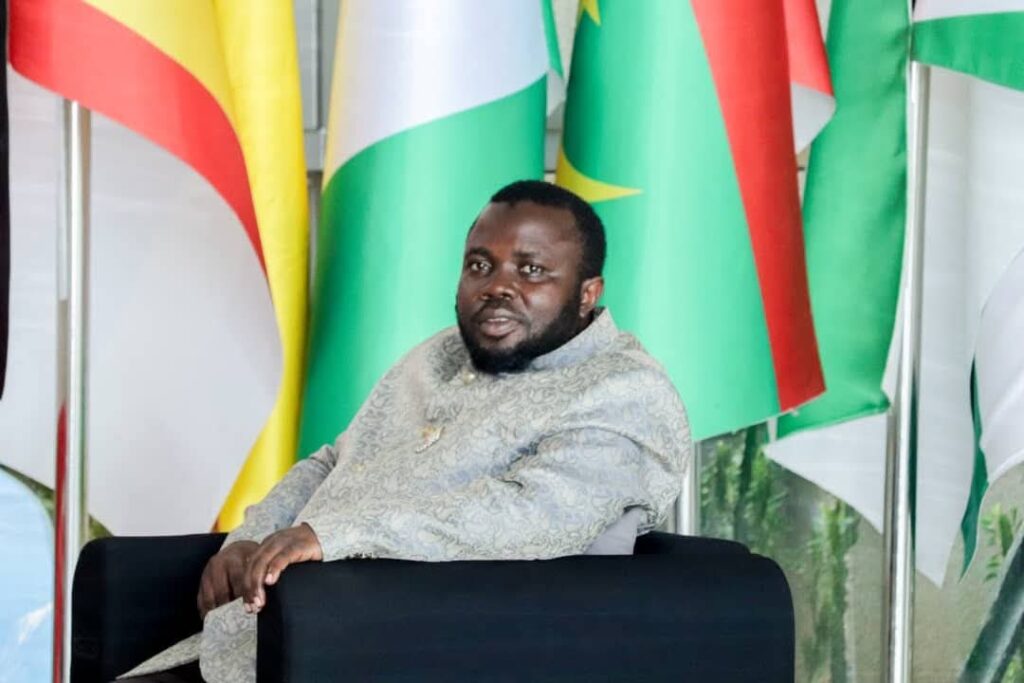
About Mutiu Olawuyi
Mutiu Olawuyi (who describes himself as a restorative realist) is a communication and PR strategist, media manager, social entrepreneur, creative writer, academic, and independent researcher. His work interrogates power, intimacy, belief, and social institutions.
He is the author of The Marriage Ledger and the originator of Restorative Realism, DUP-Centric Curriculum Theory, and ECOPEACE Learning Theory. His creative works include Veil of Rescue, A City on Trial, The Shadow of the Giant, and The Blotted Pawpaw.
His writing blends sociology, philosophy, ethics, and narrative realism to advance a constructivist vision centered on truth, human dignity, and emotional accountability.
Availability
The Marriage Ledger is now available worldwide via Amazon
Contact
For media inquiries, interviews, speaking engagements, or review copies, please contact:
Yakub Abdulrasheed
PR, Manager, The Marriage Ledger by Mutiu Olawuyi
Yakub@techparley.com
+234 903 258 8034
_________________________
Bookmark Techparley.com for the most insightful technology news from the African continent.
Follow us on X/Twitter @Techparleynews, on Facebook at Techparley Africa, on LinkedIn at Techparley Africa, on Instagram at Techparleynews