


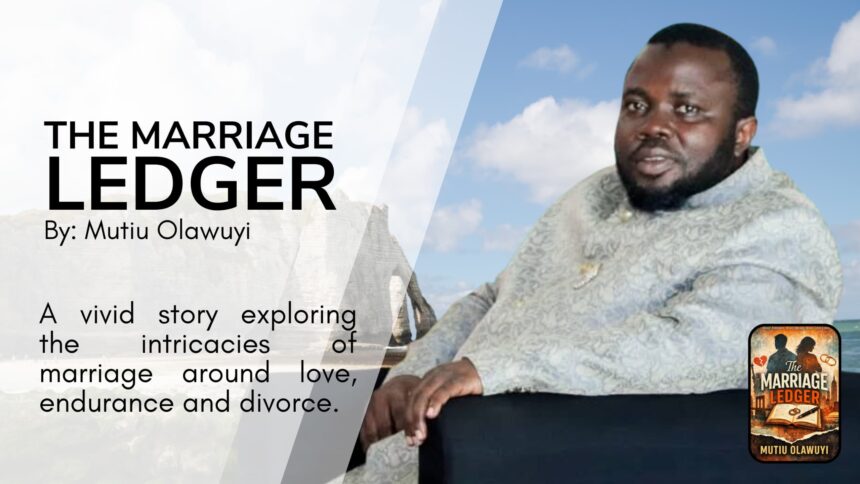
Mutiu Olawuyi is an international scholar, journalist, and borderless literary figure. He writes on politics, arts, peace development and social justice. His latest novel, The Marriage Ledger, focuses on Marriage and how it hits the block for many reasons.
Since time immemorial, marriage, across the world, remains one of the most complex and contested human institutions. In some societies, it is idealized as the ultimate reward of love and social validation; in others, it is critiqued as restrictive, outdated, or a structure of quiet endurance.
Between these extremes, couples navigate intimacy, power, and survival with limited language for repair or understanding. In this global context, The Marriage Ledger, a book by Mutiu Olawuyi offers a new lens, blending literary craft with sociological insight to explore why marriages thrive, erode, or collapse.
In a discussion with Techparley Africa’s Yakub Abdulrasheed; Mutiu Olawuyi shares insight into the inspirations, structure, and ideas behind the book.
What inspired you to write The Marriage Ledger, and why was this the right time to give this account?
I describe myself as a restorative realist, an ideological position that insists on telling the truth about human relationships without cruelty, illusion, or despair, and this framework is foundational to The Marriage Ledger. Essentially, restorative realism rejects romantic idealism that sanitizes marriage and also rejects cynical narratives that treat commitment as naïveté or oppression; instead, it focuses on consequences, repair, and ethical responsibility.
In the book, this ideology allows me to portray marriages honestly, showing imbalance, silence, failure, and endurance, without shaming the characters or sentimentalizing their suffering.
Note that the restorative realist lens prioritizes clarity over comfort, empathy over judgment, and repair over moral posturing, making the novel less about prescribing outcomes (stay or leave) and more about exposing the emotional illiteracy, power dynamics, and unspoken debts that determine whether a marriage deepens, erodes, or collapses.
Now back to your question, I must confess that I wrote this novel out of fatigue; I mean moral fatigue. Fatigue with how dishonestly we talk about marriage. On one end, marriage is sold as a romantic reward system: find love, perform commitment, receive happiness. On the other end, it’s dismissed as obsolete, oppressive, or naïve. Both narratives fail people in real marriages.
This felt like the right time because we are living in an era of extremes: idealization and abandonment, performance and withdrawal. People are either enduring silently or leaving abruptly, often without language for what actually went wrong.
Hence, I wanted to write a book that slows the conversation down and replaces slogans with clarity. Not advice. Not propaganda. Just truth rendered carefully and creatively.
Why did you choose to structure the book as interconnected stories rather than a single linear narrative?
Because marriage itself is not linear, most marriages don’t collapse in one dramatic moment. They erode, stall, adapt, convulse, or survive in uneven ways. A single protagonist, for instance, would have falsely centered the problem in personality rather than in patterns.
To simply put, the interconnected stories allowed me to show repetition without redundancy, to reveal how the same emotional failures and pressures appear across different classes, cultures, and belief systems.
What changes are the accents and justifications. What remains is power, silence, fear, and unmet emotional education.
The title suggests accounting and calculation. What does the “ledger” symbolize in the context of marriage?
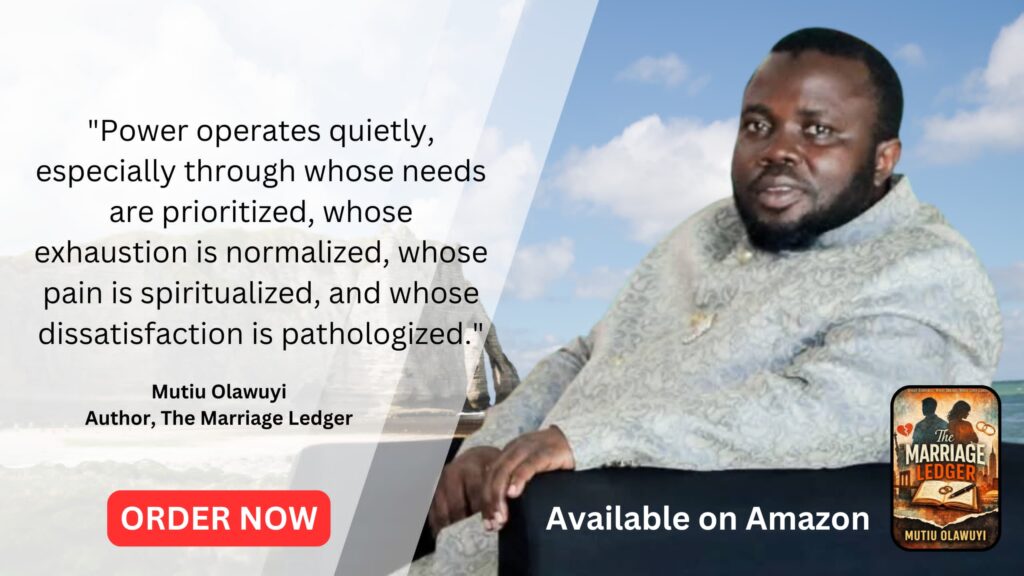
The ledger represents what marriage always keeps, even when couples pretend it doesn’t. Every marriage keeps accounts, of labour, sacrifice, silence, forgiveness, resentment, unmet needs, emotional debt.
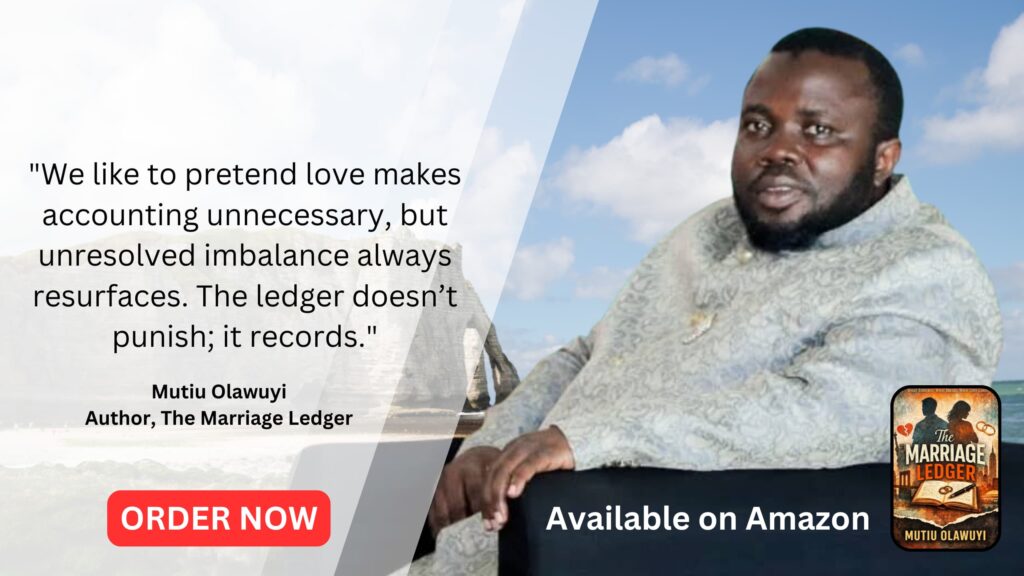
Unfortunately, we like to pretend love makes accounting unnecessary, but unresolved imbalance always resurfaces. The ledger doesn’t punish; it records.
What people often experience as “sudden collapse” is usually delayed accounting. The ledger is simply where truth accumulates when it’s not spoken.
How do love and power intersect in your portrayal of marriage across the different stories?
Love is never power-free. Power, in this case, enters marriage through money, language, religion, immigration status, gender expectations, emotional withdrawal, even silence. Sadly, one of the most dangerous myths is that love neutralizes power. It doesn’t. It often hides it.
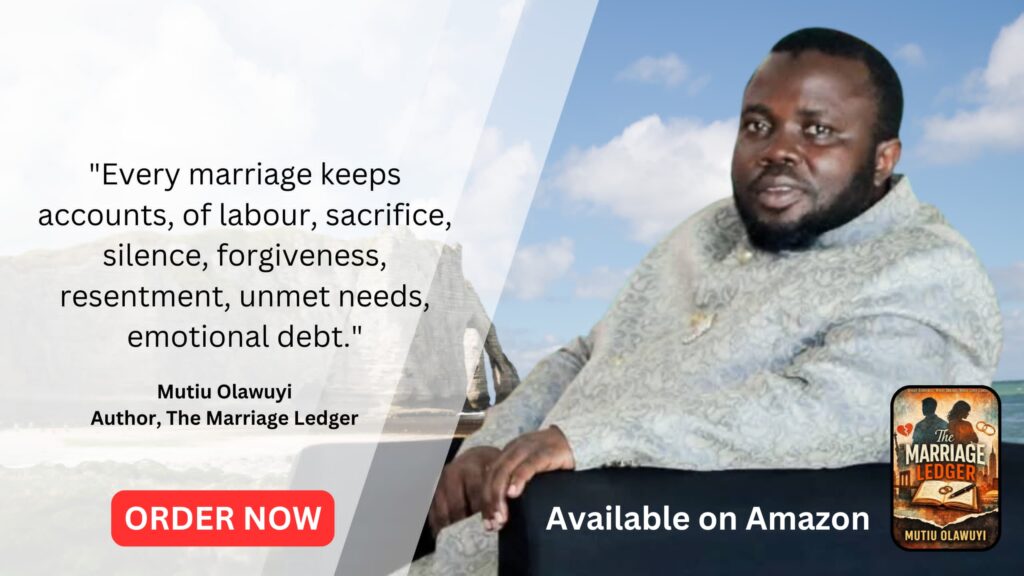
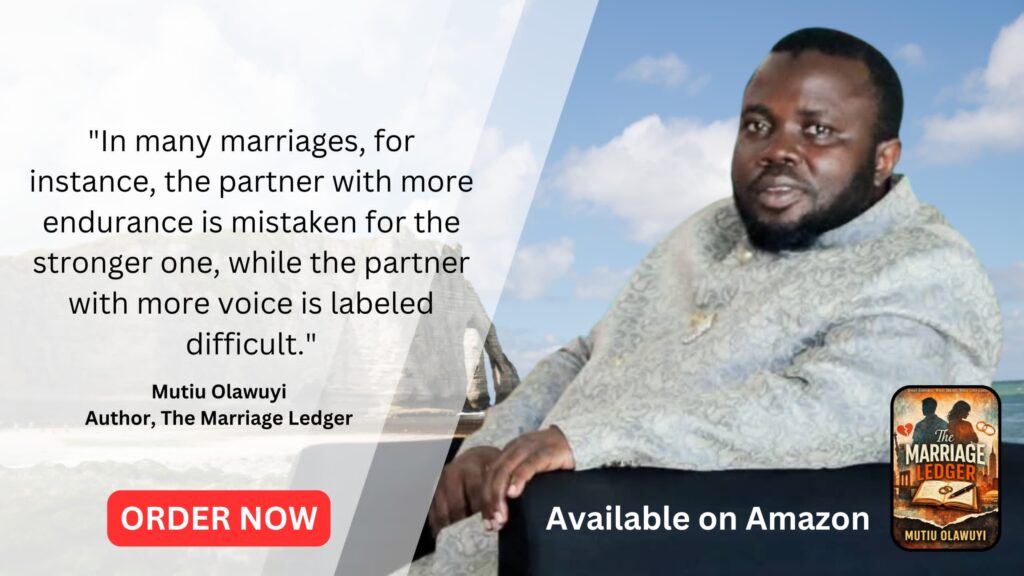
In many marriages, for instance, the partner with more endurance is mistaken for the stronger one, while the partner with more voice is labeled difficult. Power operates quietly, especially through whose needs are prioritized, whose exhaustion is normalized, whose pain is spiritualized, and whose dissatisfaction is pathologized.
Are your characters meant to be morally judged, empathized with, or simply observed?
Characters in the fictional documentary are meant to be understood. I believe that moral judgment is cheap and often lazy. This is why I carefully ensure that these characters are not villains; they are under-skilled people operating under intense structural and emotional pressure. I have learned to realize that empathy without clarity, however, is also insufficient.
I, therefore, want readers to recognize themselves, their parents, their neighbors, not to excuse harm, but to see how easily harm emerges when emotional literacy is absent. This is why the book does not ask, “Who is bad?”; instead, it asks, “What was never taught?”
What role does New York City play in the book, is it merely a setting, or does it function as an active force shaping the marriages?
Obviously, New York is an active force. In this context, each borough functions as a social laboratory.
The Bronx, for example, teaches survival. Manhattan rewards performance. Queens demands negotiation. Brooklyn elevates ideology. Staten Island hides endurance. These carefully selected environments shape how people love, endure, leave, and justify their choices.
More so, marriage does not happen in a vacuum. It happens inside economies, migration systems, housing stress, professional cultures, and moral communities. Hence, New York simply makes those forces impossible to ignore.
What conversations or reflections do you hope your community, especially couples, will have after reading this book?
I hope couples stop asking, “Should I stay or should I leave?” and begin asking, “Do we know how to repair?”
I hope communities stop praising endurance without asking what it costs. I hope faith spaces become more ethical and less anesthetic. I hope couples learn that conflict is not failure, but unmanaged conflict is.
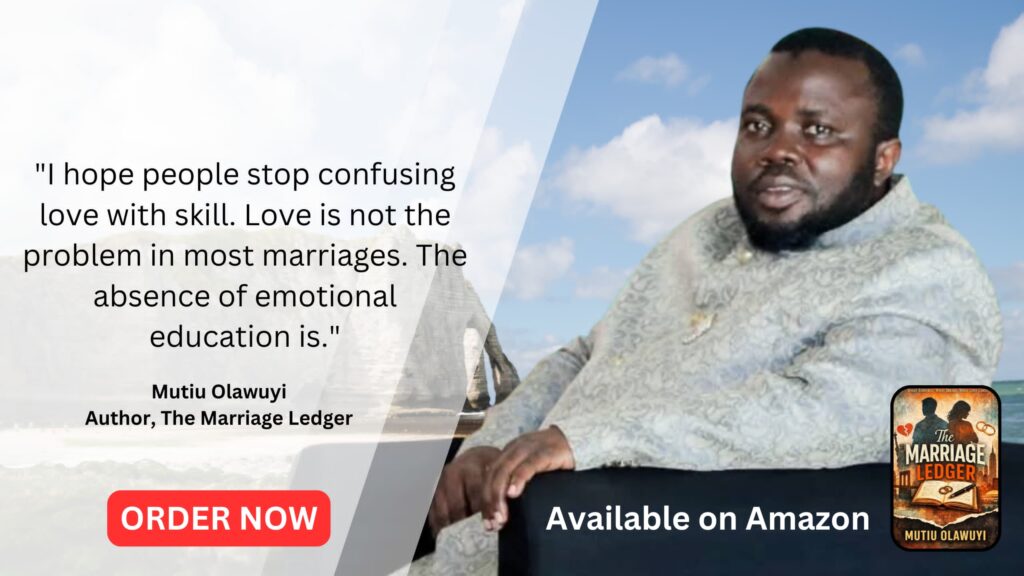
Most importantly, I hope people stop confusing love with skill. Love is not the problem in most marriages. The absence of emotional education is.
What surprised you most about marriage, relationships, or human behavior while writing this book?
How rarely malice is the cause of failure. Most people are not cruel. Realistically, they are just untrained. They inherit scripts, particularly about gender, faith, sacrifice, and silence, and then mistake them for virtue.
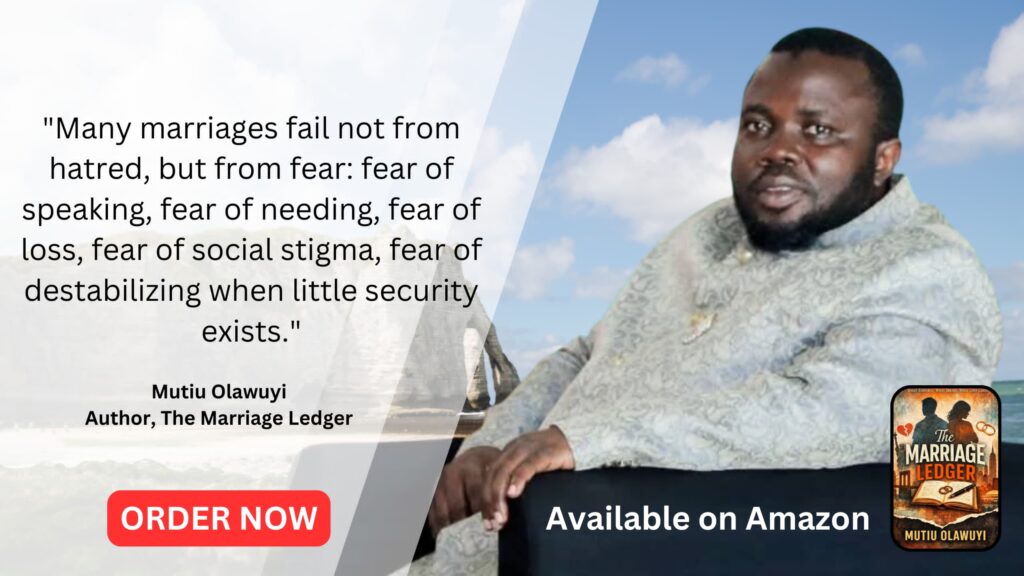
What surprised me most was how many marriages fail not from hatred, but from fear: fear of speaking, fear of needing, fear of loss, fear of stigma, fear of destabilizing when little security exists.
And how deeply children feel everything, even when adults insist they don’t. That, perhaps, is the most sobering truth the ledger records.
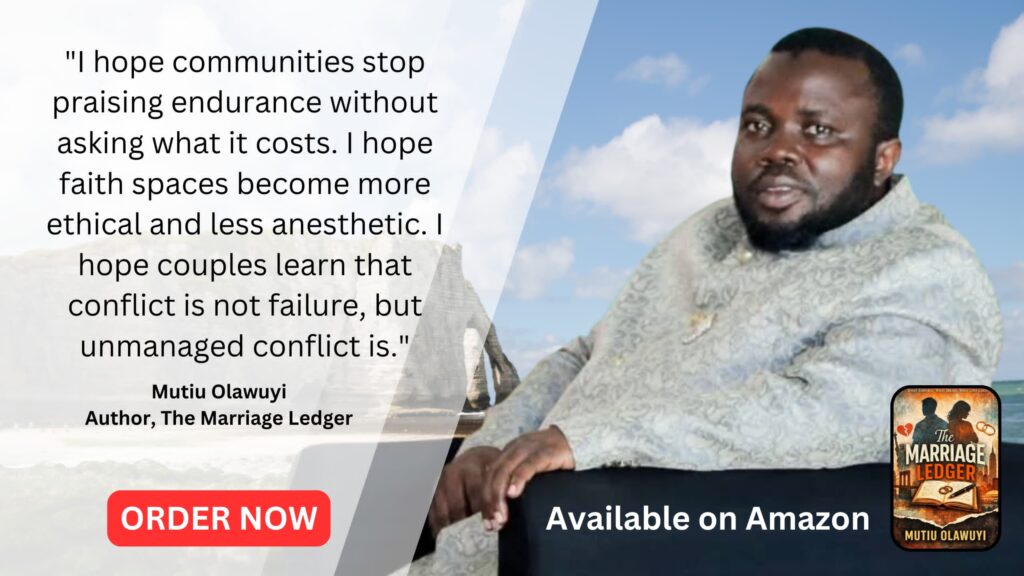
The Marriage Ledger is available for purchase on Amazon:
_________________________
Bookmark Techparley.com for most insightful technology news from the African continent.
Follow us on X/Twitter @Techparleynews, on Facebook at Techparley Africa, on LinkedIn at Techparley Africa, on Instagram at Techparleynews