



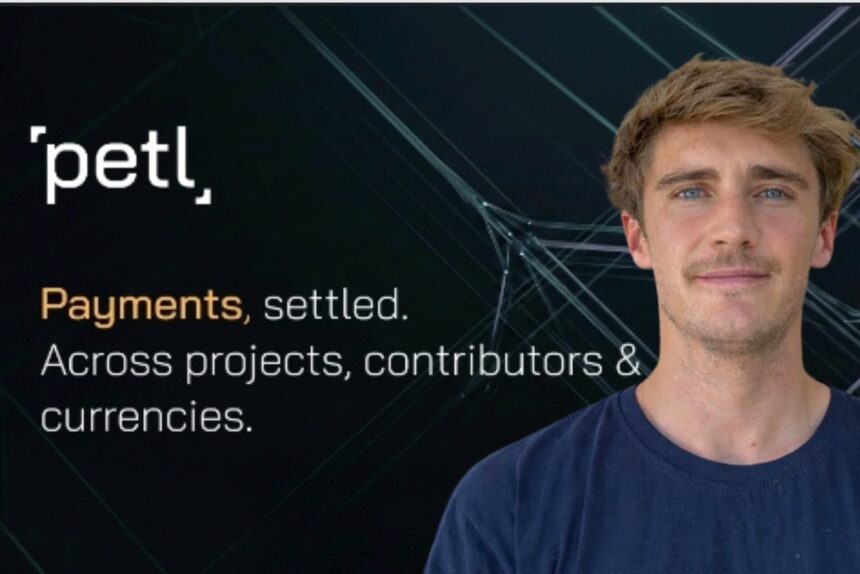
South African startup Rafiki has spun out its fintech arm into a standalone company, Petl Pay. A strategic move that underscores a growing reality in the global gig economy, that’s, modern work is modular and cross-border, but the financial rails supporting it remain outdated.
After two years of running real-world projects across Africa, the UK, the EU and the US, Rafiki is doubling down on payments orchestration for distributed, project-based teams.
The split formalises what had already become clear internally, that the payments engine powering collaborative work deserved its own focused product, regulatory partnerships, and expansion strategy.
Founded in 2023 by Greg Cooke and Nicolas Boswell, Rafiki began life as a freelance marketplace but quickly evolved beyond simple talent matching.
Today, the company stands as a work and payments operating system (OS) designed to simplify subcontracting and collaboration across borders, a pain point many agencies and freelancers have long accepted as a cost of doing global business.
What You Should Know About Rafiki Startup
Rafiki’s evolution reflects a broader shift in how knowledge work is structured. It started as a freelance marketplace, but soon moved into assembling curated “hit squads” of senior freelance and fractional talent.
From there, it matured into a broader OS for managing global teams, not just connecting talent to clients, but structuring how projects are executed and, critically, how money flows.
This pivot was driven by operational friction observed in service-based industries. As agencies increasingly rely on distributed teams, designers in Lagos, strategists in London, developers in Cape Town, the back-office complexity multiplies.
Invoices, cross-border payments, foreign exchange, tax documentation and reconciliation often require a patchwork of tools. Rafiki’s founders identified that the real bottleneck was not talent, but financial coordination.
How Rafiki Startup Operates
At its core, Rafiki enables agencies and freelancers to generate one consolidated invoice for a project and then distribute payments instantly to multiple subcontractors across jurisdictions.
Instead of a client paying an agency, which then manually calculates payouts and initiates separate international transfers, Rafiki’s infrastructure allows a single incoming payment to be allocated automatically among collaborators.
As Cooke previously explained, “Unlike other embedded finance or invoicing platforms, we’ve focussed on multi-party, collaborative invoicing and the associated flow of funds, saving significant time and cost associated with outdated workflows and invoicing we’d previously accepted.”
The platform supports affordable cross-border transfers, including free instant transfers between Rafiki wallets globally. It integrates both fiat currencies and stablecoins directly into invoicing, allowing contributors to receive payouts in their preferred settlement method.
This dual-rail system is particularly relevant in African markets, where access to reliable cross-border banking remains uneven and stablecoins are increasingly used as a hedge against volatility and friction.
In short, Rafiki attempts to merge workflow management with intelligent money movement, reducing reconciliation errors, transfer delays, and unnecessary fees.
What is Petl Pay and How It Works?
Petl Pay is the fintech infrastructure that previously powered Rafiki’s payments engine. By spinning it out, the company has turned that capability into a standalone product focused exclusively on payments orchestration for project-based teams.
Cooke describes Petl Pay as sitting “at the convergence of HR tech and fintech, but in a very practical way.” He added that, “It orchestrates collaborative workflows into consolidated invoices and split payments, so one client payment can be routed cleanly to many contributors across borders.”
In practice, this means Petl Pay coordinates the full lifecycle of a project payment. It integrates with regulated payment providers, leverages both fiat and stablecoin rails, and ensures that once a client settles an invoice, the distribution to contributors happens automatically and transparently.
Importantly, Petl Pay does not take custody of funds. Instead, it works alongside regulated financial partners to execute settlements. This reduces regulatory exposure while enabling faster, more transparent transactions.
Currently in private beta, Petl Pay is focusing on corridors between the US, UK and EU into Southern Africa, while actively expanding partnerships across Africa and Europe.
Why Did They Split the Operations?
The decision to spin out Petl Pay reflects a structural mismatch between how work is executed today and how financial systems are designed.
As Cooke aptly put it, “We kept running into the same inefficiencies, the way work is executed today is modular and project-based, but the financial infrastructure underneath it is still built for one-to-one employment, payroll cycles, and static organisations.”
He continued that, “Agencies, contractors, and collaborators are forced to stitch together time tracking, invoicing, clunky and expensive 1:1 bank transfers, payroll tools, and spreadsheets just to get paid correctly.”
By separating Petl Pay from Rafiki Works, the founders are allowing each entity to specialise. Rafiki continues as a services and talent platform, while Petl Pay focuses on becoming dedicated financial infrastructure for distributed teams.
Strategically, this also opens up broader market opportunities. Payments orchestration is not limited to Rafiki’s ecosystem; it can serve agencies, collectives, and project-based teams globally.
Why This Matters
The spinout speaks to a larger transformation underway in global work. Remote collaboration is no longer an exception; it is increasingly the norm. African talent is embedded in global delivery chains, yet cross-border payment systems remain fragmented and costly.
By combining collaborative invoicing with split payouts and multi-rail settlement options, Petl Pay is targeting the operational layer beneath the gig economy, the plumbing that determines whether distributed work is efficient or chaotic.
Upon a success, the model could reduce friction for African agencies serving global clients, improve cash flow predictability for freelancers, and challenge legacy payroll and invoicing tools built for a different era.
Rafiki’s restructuring signifies a maturing view of the future of work, talent networks may be borderless, but without modernised financial infrastructure, they remain constrained.
By separating Petl Pay into a standalone fintech product, the company is betting that the next frontier of innovation lies not in finding talent, but in moving money more intelligently.
Talking Points
Rafiki’s decision to spin out Petl Pay from Rafiki is strategically sound, but its long-term success will depend on execution depth, regulatory navigation, and defensibility in an increasingly crowded cross-border fintech space.
The thesis, that modern, project-based, distributed work is being forced through financial systems built for static employment models, is accurate and timely, particularly across Africa–EU–US corridors where compliance friction, FX volatility, and banking inefficiencies are persistent barriers.
However, payments orchestration is capital-intensive, compliance-heavy, and highly competitive, with embedded finance players, payroll APIs, and stablecoin infrastructure providers all targeting similar workflows.
Petl Pay’s differentiation lies in multi-party collaborative invoicing rather than simple payout rails, which is compelling if it can build strong integrations into agency workflows and avoid becoming just another payment layer.
The choice not to take custody of funds reduces regulatory burden and balance-sheet risk, but also limits margin expansion and control over the full stack.
Ultimately, the spinout clarifies product focus and sharpens market positioning, yet scaling beyond Rafiki’s native ecosystem into a broader B2B infrastructure play will require deep partnerships, airtight compliance across jurisdictions, and a clear moat beyond operational convenience.
_______________________
Bookmark Techparley.com for the most insightful technology news from the African continent.
Follow us on X/Twitter @Techparleynews, on Facebook at Techparley Africa, on LinkedIn at Techparley Africa, or on Instagram at Techparleynews