



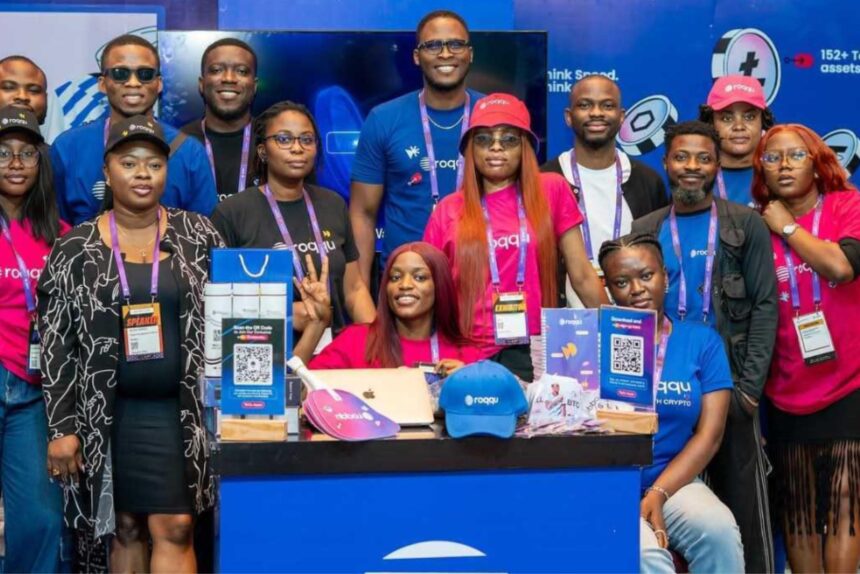
Roqqu, a Nigerian cryptocurrency start-up, is accelerating its evolution beyond basic trading services after attracting more than 30,000 users to its locally built futures derivatives product during beta testing, signalling growing appetite for advanced crypto tools among Nigerian traders.
The futures product, which launched in beta in December 2025 and has now exited testing, marks a significant step in Roqqu’s transition from a simple buy-sell platform to a more comprehensive digital asset ecosystem.
“We already have [over] 30,000 accounts that started testing and using it during the beta period,” said Emmanuel Peter, Head of Trading and Markets at Roqqu. “It’s reassuring to us that things developed within our ecosystem are appealing to users.”
The company is further exploring tokenisation and reward-based products, all developed in-house as part of what it describes as a product-first approach.
What You Need to Know
Roqqu’s latest push reflects a broader industry trend where crypto platforms are expanding into derivatives, payments, and financial services in an effort to retain users and deepen engagement.
The company’s futures product introduces a new layer of functionality for traders seeking to hedge positions or speculate on price movements, features typically associated with more mature crypto markets.
To drive adoption, Roqqu initially waived trading fees during the beta phase. Following its full launch, the platform has introduced a 0.1% fee, positioning itself as a low-cost alternative in a high-frequency trading environment.
“Futures is a high-frequency market, so if the fee is not low, [users] end up paying a lot just to trade,” Peter said. “[Our users] are liking the experience, and it’s cheap to use.”
Renewed Push into Crypto Payments
Alongside derivatives, Roqqu is preparing to re-enter the crypto payments space with a new card product, reviving an earlier initiative that was discontinued in 2022 due to reliability issues.
“We needed cards that actually work everywhere,” Peter said. “Not cards that decline when you try to make payments. We’re coming back with something way better; cards you can use in any market, local or international.”
The new crypto-powered cards, expected to launch within weeks, are being developed in partnership with multinational providers, signalling a more robust infrastructure than the company’s previous attempt.
Building a Broader Crypto Ecosystem
Roqqu’s expansion strategy also includes the development of a locally built prediction market, allowing users to trade on the outcomes of real-world events, an emerging segment within the global crypto industry.
This diversification places Roqqu in direct competition with local rivals such as Busha and Luno, both of which are broadening their offerings beyond trading.
At the same time, global exchanges operating in Nigeria, including Bitget and Bybit, are evolving into “super apps” that combine trading, payments, savings, and even buy-now-pay-later (BNPL) features.
In 2025, Roqqu acquired Flitaa, a Kenya-based crypto exchange, as part of its regional expansion strategy. While the company retains ownership, Flitaa continues to operate independently.
Navigating a Changing Regulatory Landscape
Roqqu’s aggressive product rollout comes at a time when Nigeria’s regulatory environment for digital assets is undergoing significant change.
The Central Bank of Nigeria (CBN) and the Nigeria Revenue Service (NRS) now oversee payment-related digital assets, while the Securities and Exchange Commission (SEC) regulates assets classified as securities under the Virtual Asset Regulatory Authority (VARA) framework introduced in February 2026.
This evolving framework is shaping how crypto firms design and deploy products, particularly those that blur the lines between trading, payments, and financial services.
As global crypto markets continue to innovate, spanning stablecoins, derivatives, and decentralised finance, companies like Roqqu are under increasing pressure to keep pace.
For Roqqu, the strong early traction of its futures product offers a signal that there is demand for locally built, advanced trading tools. But sustaining that momentum will depend on execution, regulatory alignment, and the ability to compete with both local and international players.
Talking Points
It is notable that Roqqu is moving beyond basic crypto trading into more advanced financial tools, signalling a clear shift towards becoming a full-service digital asset platform.
The strong beta traction of over 30,000 users on its futures product highlights a growing appetite among Nigerian traders for sophisticated instruments, not just simple buy-and-sell services.
At Techparley, we see this as part of a broader evolution in Africa’s crypto ecosystem, where users are becoming more informed and are demanding products that match global standards.
Roqqu’s decision to build its futures product in-house is particularly significant. It suggests a move towards greater control over its technology stack, which could improve user experience, reduce costs, and enable faster innovation.
The reintroduction of crypto cards also reflects an important strategic shift, bridging the gap between digital assets and everyday payments, which remains a key barrier to mainstream adoption.
As Roqqu scales, partnerships, particularly with global liquidity providers, payment networks, and regulatory stakeholders could play a crucial role in strengthening its position.
——————-
Bookmark Techparley.com for the most insightful technology news from the African continent.
Follow us on Twitter @Techparleynews, on Facebook at Techparley Africa, on LinkedIn at Techparley Africa, or on Instagram at Techparleynews.