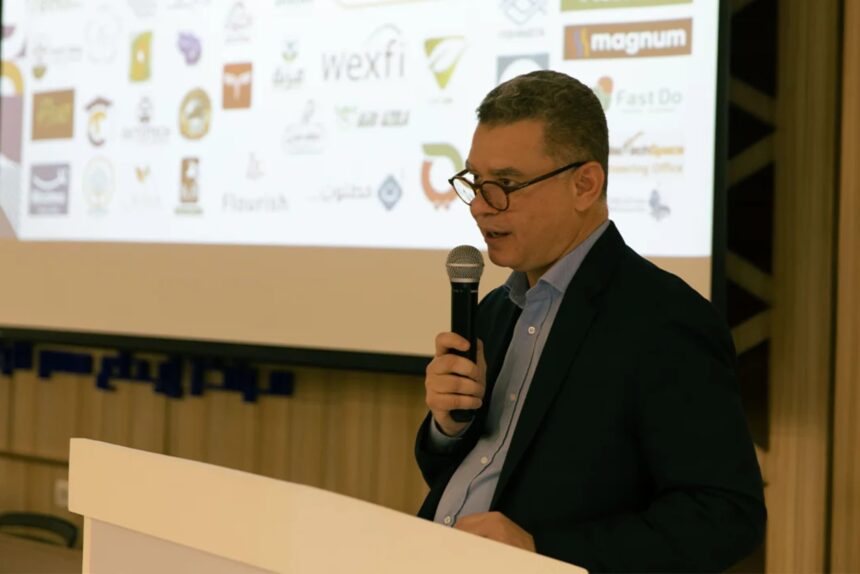
Egypt’s push to decentralize its startup ecosystem is gaining tangible momentum as the Information Technology Industry Development Agency (ITIDA), in partnership with Plug and Play, has successfully concluded the Aswan Bootcamp Series. This is an initiative that supported 61 startups across Upper Egypt and helped them secure a combined $3.7 million (EGP 200 million) in investments.
Launched in November 2024 and implemented in collaboration with USAID, the program represents a significant milestone in Egypt’s broader strategy to build a geographically inclusive innovation economy.
Despite disruptions in international development funding, the initiative not only met but exceeded expectations, demonstrating strong demand with over 150 applications and delivering measurable outcomes through intensive training and mentorship.
As Eng. Ahmed El-Zaher, CEO of ITIDA, noted, the initiative “is a demonstration of a broader national direction, one that places startup growth and entrepreneurial empowerment at the center of economic development, particularly in Upper Egypt, where the potential to build globally competitive companies is significant.”
What the Partnership Means for Egyptian Startups
The collaboration between ITIDA and Plug and Play signals a deliberate shift toward global-standard startup development within Egypt’s local context.
By combining ITIDA’s institutional backing with Plug and Play’s international expertise in innovation acceleration, the bootcamp delivered a hybrid model of technical training and expert mentorship tailored to early-stage companies.
This partnership effectively bridges the gap between local talent and global best practices, equipping startups with the skills, exposure, and networks needed to scale.
More importantly, it demonstrates how cross-border collaboration can strengthen national innovation ecosystems, particularly in emerging markets where access to such expertise is often limited.
Inside the Aswan Bootcamp: Structure, Reach, and Impact
The Aswan Bootcamp Series was designed as a multi-phase, intensive program aimed at nurturing around 60 technology startups. Ultimately, 61 startups from Aswan and neighboring governorates benefited from the initiative, receiving hands-on training and guidance from industry experts.
Delivered through a structured model that blended technical instruction with mentorship, the program’s real-world impact is already evident. Several participating startups successfully attracted investments totaling approximately $3.7 million, underscoring the effectiveness of the program’s approach.
The strong turnout, over 150 applications, also highlights a growing appetite for entrepreneurial opportunities in regions traditionally underserved by Egypt’s startup ecosystem.
Overcoming Funding Challenges to Sustain Momentum
One of the defining aspects of the program was its resilience in the face of funding disruptions. Changes in international development cooperation led to a halt in external funding, which could have derailed the initiative.
However, ITIDA stepped in as the sole funder to ensure continuity. This intervention not only safeguarded the program’s success but also underscored the agency’s commitment to long-term ecosystem development.
By sustaining the initiative through to completion, ITIDA reinforced confidence among participating startups and stakeholders, demonstrating that public sector leadership can play a pivotal role in stabilizing and advancing innovation programs.
Expanding Beyond Cairo: Building a Geographically Inclusive Ecosystem
Historically, Egypt’s startup activity has been heavily concentrated in Cairo, leaving regions like Upper Egypt with limited access to resources and opportunities. The Aswan Bootcamp directly addresses this imbalance by fostering entrepreneurship in underserved areas.
The program aligns with a broader governmental strategy to expand opportunity across Egypt’s governorates and create a more inclusive innovation landscape. By nurturing startups outside traditional hubs, the initiative is helping to unlock untapped potential and diversify the country’s economic base.
Looking Ahead: Scaling Innovation to the Nile Delta and Beyond
Building on the success of the Aswan Bootcamp, ITIDA plans to replicate similar initiatives in the Nile Delta region. This expansion reflects a long-term vision of decentralizing innovation and enabling startups to emerge and scale from across the country.
The move shows Egypt’s ambition to position itself not just as a regional tech hub, but as a nationwide ecosystem where innovation can thrive regardless of geography.
At the same time, it also points to a sustained policy direction aimed at strengthening the country’s entrepreneurial pipeline and increasing participation in the digital economy.
Why This Matters for Emerging Startups
For emerging startups, particularly those outside major urban centers, the Aswan Bootcamp represents more than just a training program, it is a gateway to opportunity. By providing access to mentorship, technical expertise, and investor networks, initiatives like this level the playing field and enable founders to compete on a larger stage.
The success of participating startups in securing significant investment demonstrates the viability of talent in regions often overlooked by investors. As ITIDA continues to expand such programs, the ripple effects could include increased job creation, stronger regional economies, and a more resilient national innovation ecosystem.
Overall, it is professionally sane to conclude that the Aswan Bootcamp Series illustrates how targeted interventions, strategic partnerships, and sustained commitment can transform local entrepreneurial potential into globally competitive ventures, laying the groundwork for a more inclusive and dynamic future for Egypt’s tech ecosystem.
Talking Points
While the Aswan Bootcamp Series reflects a commendable and strategic push by Information Technology Industry Development Agency and Plug and Play to decentralize Egypt’s startup ecosystem, its long-term impact will ultimately depend on sustainability beyond initial training and funding wins.
The reported $3.7 million investment raised by participating startups is a strong validation signal, but it remains relatively modest when distributed across 61 companies, raising questions about depth versus breadth of impact.
More critically, the program’s reliance on ITIDA stepping in after the withdrawal of USAID highlights a structural vulnerability in funding continuity, which could affect scalability if similar initiatives are expanded nationwide.
Additionally, while the bootcamp successfully addresses geographic inequality by targeting Upper Egypt, sustained ecosystem growth will require complementary infrastructure such as access to markets, follow-on funding, and policy consistency, factors that extend beyond short-term accelerator models.
Nonetheless, the initiative is a step in the right direction, signaling a policy shift toward inclusive innovation, but its true success will be measured by how many of these startups survive, scale, and contribute meaningfully to Egypt’s broader digital economy over time.
________________________
Bookmark Techparley.com for the most insightful technology news from the African continent.
Follow us on X/Twitter @Techparleynews, on Facebook at Techparley Africa, on LinkedIn at Techparley Africa, or on Instagram at Techparleynews