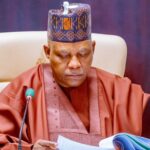




During the President Bola Ahmed Tinubu’s visit to crisis-hit Plateau State, Nigeria’s Minister of Communications, Innovation and Digital Economy, Bosun Tijani, has pledged a sweeping deployment of artificial intelligence-powered surveillance infrastructure to combat persistent violence in the region.
Speaking to grieving residents and victims of recent attacks in Jos, Tijani drew from personal tragedy to underscore the urgency of action, recalling his experience as a student during the 2001 crisis.
“It breaks my heart that this continues to happen,” he said, before announcing that the Federal Government, in collaboration with the Plateau State Government, would roll out “artificial intelligence and neighbourhood camera all over the state, starting with Jos,” in what he stressed is “not an empty promise.”
The announcement comes amid heightened national concern following renewed killings in Angwan Rukuba, and hints a strategic shift toward technology-driven counterterrorism under Tinubu’s administration.
The Nature of Attacks in Plateau State
Plateau State, particularly its capital Jos, has long been a flashpoint of violent conflict, often rooted in ethno-religious tensions, land disputes, and retaliatory cycles of attacks.
The region has witnessed repeated outbreaks of violence since the early 2000s, including the devastating 2001 crisis referenced by Tijani, which claimed hundreds of lives and displaced thousands.
In recent years, the pattern has evolved into sporadic but deadly assaults on rural communities and urban outskirts, frequently carried out by armed groups with little warning. The latest attack in Angwan Rukuba, which prompted the presidential visit, is part of this troubling continuum, highlighting both the persistence of insecurity and the limitations of traditional security responses.
Tijani’s recollection of the 2001 violence, where his own family lost property and friends, adds a personal dimension to the broader historical narrative, reinforcing the idea that Plateau’s crisis is not just ongoing, but generational.
The Minister’s statement reflects a recognition that without systemic change, the cycle of violence is likely to endure.
Results of the Presidential Visit to Angwan Rukuba
President Tinubu’s visit to Plateau State hopefully resulted to a multi-layered federal response combining empathy, security reinforcement, and technological intervention. Beyond paying condolences to victims’ families, the president has reportedly ordered the deployment of additional troops to stabilise affected areas and prevent further attacks.
More significantly, the visit has catalysed the introduction of a large-scale surveillance initiative, with plans for thousands of AI-enabled CCTV cameras to be installed across the state. This initiative is designed to strengthen intelligence gathering, enable real-time monitoring, and improve coordination among security agencies.
Tijani’s role in articulating and operationalising this vision places the Ministry of Communications at the centre of Nigeria’s evolving security architecture.
The Minister assured Nigerians, stating that the government will “work with the governor to ensure that we can deepen the core detailed infrastructure we have.”
This suggests that the initiative will build on existing systems while introducing advanced technological capabilities.
AI Surveillance as a New Frontier in Counterterrorism
At the heart of Tijani’s promise is the integration of artificial intelligence into public security infrastructure, a move that shows a shift from reactive to proactive counterterrorism strategies. By deploying neighbourhood cameras powered by AI, the government aims to detect suspicious activities, track movements, and respond to threats in real time.
This approach reflects global trends in security governance, where data-driven systems are increasingly used to enhance situational awareness and reduce response times. In the Plateau context, such technology could prove transformative, particularly in areas where attacks often occur without prior warning.
Tijani emphasised that the initiative is grounded in practical experience rather than speculation.
“We already have similar solution in states like Lagos with the latest in Enugu state, and it works really well,” he noted, positioning the Plateau rollout as a replication of tested models.
This claim is crucial in building public confidence, especially in a country where government promises are often met with skepticism.
Bridging Technology and Governance in Nigeria’s Security Strategy
The proposed deployment of AI-powered surveillance systems in Plateau State marks a significant evolution in Nigeria’s approach to internal security. Traditionally reliant on military and law enforcement responses, the country is now exploring the integration of digital tools to enhance its capabilities.
This development positions technology not merely as a support function, but as a central pillar of national security strategy. It also expands the mandate of the communications ministry, bringing it into closer alignment with defence and intelligence operations.
Tijani’s insistence that “this is not an empty promise” underscores the administration’s awareness of public skepticism and the need for tangible results. If successfully implemented, the initiative could serve as a model for other conflict-prone regions across Nigeria.
Talking Points
The proposed AI-driven surveillance rollout in Plateau State, as articulated by Bosun Tijani under the broader directive of Bola Ahmed Tinubu, reflects a commendable shift toward modern, intelligence-led security architecture in Nigeria. Yet, it also exposes a longstanding pattern of reactive governance that continues to undermine national security outcomes.
Attacks in Plateau are not new, they span decades, from the early 2000s crises to recurring waves of communal and organised violence, raising a critical question:
Why must devastating loss of lives repeatedly serve as the trigger for decisive intervention?
The fact that tech-enabled surveillance systems have already been deployed in relatively stable states like Lagos and Enugu, while conflict-prone regions such as Plateau are only now being prioritised after fresh bloodshed, suggests a misalignment in national security planning and risk assessment.
If anything, states with entrenched histories of violence should have been the earliest beneficiaries of such proactive infrastructure, not the latest.
While the Minister’s assurance that “this is not an empty promise” is important for rebuilding public trust, the broader national implication is clear, Nigeria must transition from episodic, crisis-driven responses to a preventive, data-informed security framework that anticipates threats rather than reacts to tragedies.
Without this shift, even the most sophisticated technologies risk becoming tools of post-crisis management rather than instruments of lasting peace.
______________________
Bookmark Techparley.com for the most insightful technology news from the African continent.
Follow us on X/Twitter @Techparleynews, on Facebook at Techparley Africa, on LinkedIn at Techparley Africa, or on Instagram at Techparleynews