



In Gaa Saka, a densely populated area on the outskirts of Ilorin, Mrs Mansurat Adelakin sat outside her small tailoring shop, staring at idle sewing machines. The power had gone out again, without warning, as usual. Her generator, once a backup, had become her primary source of energy, draining her income daily as fuel prices surged.
“There were days I spent more on petrol than I made in profit,” she recalled in her discussion with Techparley Africa’s Yakub Abdulrasheed. “Sometimes, I had to turn customers away because I simply couldn’t work.”
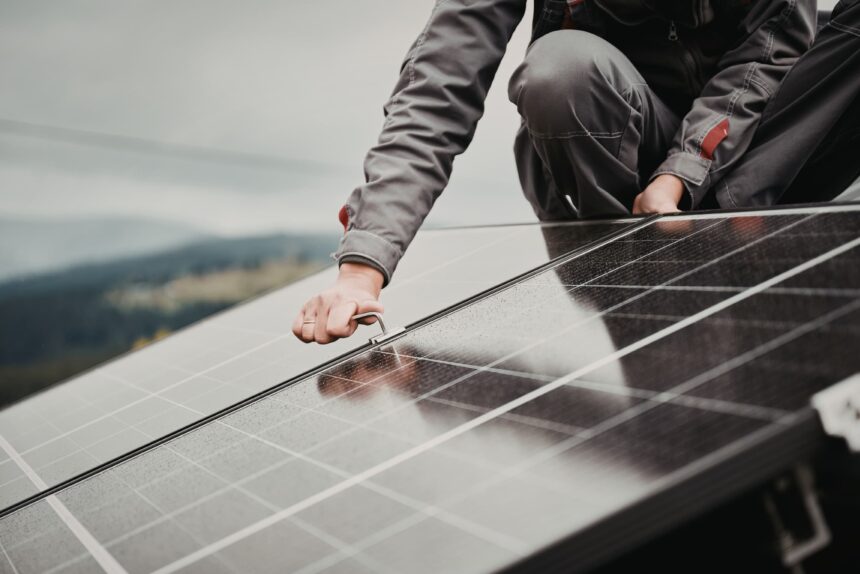
Everything changed when she installed a modest solar system. Within weeks, her shop stayed open longer, production became predictable, and her costs dropped significantly.
“Now, I don’t worry about light again. I just focus on my work,” she said with quiet confidence. For Mrs Adelakin, solar was not just an energy solutionit was a business lifeline.
Her story reflects a broader economic reality across Nigeria, where unreliable electricity continues to constrain productivity. Beneath this challenge lies a fast-emerging opportunity, solar installation. As global energy leaders are beginning to emphasize, the shift toward decentralized energy systems is not just inevitable, it is already underway.
According to Manoj Sinha CEO of Husk Power, “What we are building (in the global south) is not just energy access, we are creating an entire ecosystem of industrialisation that enables economic activity in communities.”
That ecosystem is now taking shape in Nigeria, and solar installers are at the heart of it.
Situation Report
Nigeria’s electricity supply crisis remains one of the most significant barriers to economic growth. With over 85 million people lacking reliable access to electricity and millions more experiencing frequent outages, the country continues to operate far below its productive capacity. For businesses, this translates into higher operating costs, reduced efficiency, and limited scalability.
In response, a parallel energy economy has emerged, one powered by diesel generators and, increasingly, solar systems. However, as fuel prices continue to rise and environmental concerns grow, the shift toward renewable energy is accelerating.
Energy analysts note that decentralized solar solutions are becoming the most viable alternative for households and small businesses. This aligns with a broader global trend.
As Sinha explains, “It takes three things to solve energy access in the global south, capital, technology, and policy. The technology is already there, policies are improving, but capital needs to flow not in billions, but in hundreds of billions of dollars.”
In Nigeria’s case, the demand is already present. What remains is the scaling of solutions.
The Market Size
Nigeria’s solar energy market is expanding rapidly, driven by both necessity and opportunity. Industry estimates place the off-grid and solar market at over $2 billion, with consistent annual growth fueled by increasing demand for reliable electricity.
The country’s renewable energy capacity is expected to grow significantly over the next decade, with solar playing a leading role. Millions of households, alongside small and medium-sized enterprises, are actively seeking alternatives to unreliable grid power.
For many, solar is no longer a luxury, it is becoming essential infrastructure, and from an investment standpoint, the numbers are compelling.
As Husk’s CEO points out, “If you look at Africa, the scale of investment opportunity is similar to markets like India… the real question is whether investors can generate 18 to 20 percent returns, and the answer is yes.”
Independent energy analysts echo this sentiment, noting that Nigeria’s energy deficit represents one of the largest untapped markets in the world. The combination of high demand, falling technology costs, and supportive policy signals makes the sector particularly attractive.
The Opportunities
The solar installation business in Nigeria presents multiple layers of opportunity, depending on scale, capital, and expertise.
At the entry level, entrepreneurs can focus on residential installations, providing solar systems for households like that of Mrs Adelakin. This segment is driven by everyday Nigerians seeking stability and cost savings.
“Even my neighbours are now asking me where I did it,” she said, highlighting the strong word-of-mouth potential in this market.
Beyond households, the commercial segment offers even greater value. Small businesses; tailors, barbers, cold room operators, and retailers, are increasingly turning to solar to reduce dependence on expensive fuel. This segment provides higher revenue per client and opportunities for long-term service contracts.
At a larger scale, solar companies can participate in mini-grid projects and rural electrification programmes, often supported by government initiatives and international development partners. These projects not only deliver power but also unlock economic activities in underserved communities.
What makes this sector particularly unique is its multiplier effect. Solar installation is not just about providing electricity, it enables productivity, supports digital services, and fosters local enterprise development.
Major Players
Nigeria’s solar ecosystem is already attracting a mix of local innovators and international-backed companies, each contributing to the sector’s growth in different ways.
Companies such as Arnergy and Lumos Nigeria have built strong reputations by delivering solar solutions tailored to homes and small businesses, while firms like Havenhill Synergy have focused on rural electrification through mini-grid projects.
At the same time, local manufacturing efforts, including players like Auxano Solar, are beginning to address supply chain challenges by producing components domestically.
Despite these developments, the market remains far from saturated. Demand continues to outpace supply, particularly in underserved regions. This creates room for new entrants, especially those who can combine technical expertise with strong customer service and localised solutions.
Pitfalls to Look Out For
One major barrier is capital. Even at a small scale, initial investment is required for equipment, tools, and operational setup. Scaling the business further demands additional resources and access to financing.
Another challenge is supply chain dependency. Many solar components are still imported, exposing businesses to exchange rate fluctuations and global market disruptions. However, this challenge also presents an opportunity for future local manufacturing.
Regulatory uncertainty can also pose risks, although recent policy improvements are helping to stabilise the sector. Importantly, many of the perceived risks associated with operating in Nigeria are often exaggerated.
“There is a difference between perceived risk and actual risk in markets like Nigeria. The policies are evolving, the returns are strong, and the risks are often overstated”, said Manoj Sinha.
How to Launch (Including Legal Compliance)
Starting a solar installation business in Nigeria requires a combination of technical knowledge, strategic planning, and regulatory compliance.
The first step is acquiring the necessary technical skills, either through formal training or partnerships with experienced professionals. Understanding system design, installation processes, and maintenance is essential for delivering quality service.
Next, entrepreneurs must formalise their business by registering with the Corporate Affairs Commission (CAC) and ensuring compliance with relevant energy sector regulations. Building relationships with reliable suppliers is also critical to maintaining quality and consistency.
Location and target market selection play a significant role in early success. Focusing on specific segments, such as residential areas, small businesses, or rural communities, can help build a strong customer base. Growth in this sector often comes through reputation and referrals.
As Mrs Adelakin observed, “Once people see it working for you, they will come.”
Delivering consistent results and building trust are therefore essential for long-term success.
Call for Investors
Nigeria’s solar sector is increasingly attracting attention from global investors, and for good reason. The combination of massive unmet demand, declining technology costs, and improving policy frameworks creates a strong foundation for sustainable returns.
From an investment perspective, the sector offers both impact and profitability. Solar projects not only generate financial returns but also contribute to economic development, environmental sustainability, and social inclusion.
Sinha emphasises this saying, “the world needs to pay attention to the global south. The returns are there, the risks are not high, and the policies are aligning.”
With international funding initiatives and development finance institutions supporting renewable energy projects, the flow of capital into Nigeria’s solar sector is expected to increase significantly in the coming years.
Caveat: Do Your Own Research
This article is for informational purposes only and does not constitute financial or investment advice. Readers are encouraged to conduct independent research and consult relevant professionals before making business or investment decisions.
______________________
Bookmark Techparley.com for the most insightful technology news from the African continent.
Follow us on X/Twitter @Techparleynews, on Facebook at Techparley Africa, on LinkedIn at Techparley Africa, or on Instagram at Techparleynews