Nigeria’s push toward digital broadcasting has taken a major step forward with the launch of FreeTV, a new free-to-air television service designed to provide millions of Nigerians with access to up to 100 television channels without monthly subscription fees.
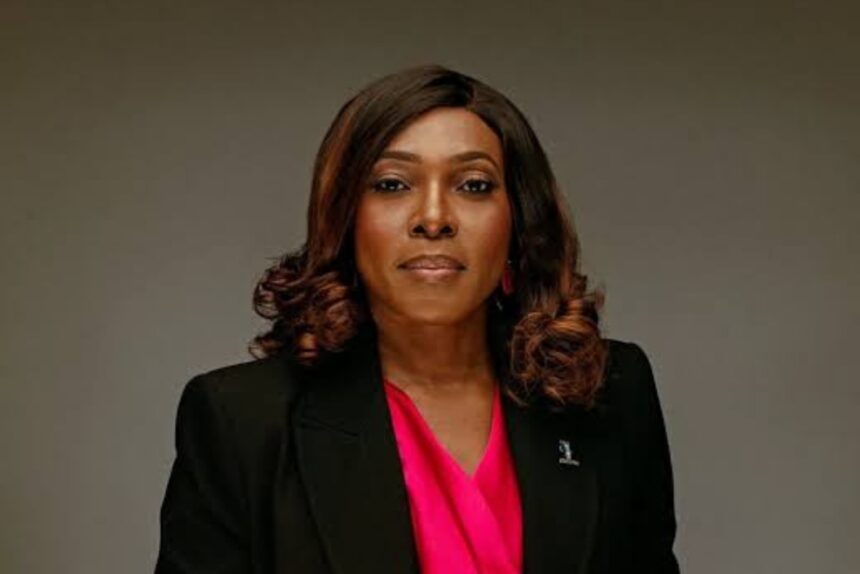
Announcing the development, Managing Director and Chief Executive Officer of Nigerian Communications Satellite Limited (NIGCOMSAT), Jane Egerton-Idehen, described the achievement as the culmination of a journey that has taken more than a decade.
“After 15 years we have finally switched Nigeria from Analog to Digital broadcasting,” she stated in a LinkedIn post, noting that the initiative was implemented through a collaboration between the National Broadcasting Commission (NBC) and NIGCOMSAT.
Beyond the satellite television service, the initiative also includes the launch of the FreeTV mobile application, enabling users to stream channels directly on smartphones and tablets.
According to Egerton-Idehen, Nigerians can now access up to 100 channels through a decoder, smart television, or mobile device, all without paying recurring subscription charges, making FreeTV one of the most ambitious efforts yet to democratize access to television content across the country.
Nigeria’s 15-Year Digital Broadcasting Journey
The launch of FreeTV represents a significant milestone in Nigeria’s long-running transition from analogue broadcasting to digital television.
For years, policymakers and industry stakeholders have pursued the migration to digital broadcasting as a means of improving picture quality, expanding channel capacity, enhancing content delivery, and creating broader access to information and entertainment.
Egerton-Idehen’s declaration that “After 15 years we have finally switched Nigeria from Analog to Digital broadcasting” highlights the scale of the undertaking and the persistence required to bring the initiative to fruition.
The project was driven by collaboration between the National Broadcasting Commission, Nigeria’s broadcast regulator, and NIGCOMSAT, the country’s satellite communications company.
Digital broadcasting offers significant advantages over analogue systems. It allows for more efficient use of spectrum resources, supports a larger number of channels, improves transmission quality, and provides opportunities for innovation in broadcasting services.
The introduction of FreeTV is therefore more than a new television platform; it represents a broader effort to modernize Nigeria’s broadcasting ecosystem while expanding access to media services nationwide.
How FreeTV Works and What Nigerians Need
One of the most attractive features of FreeTV is its simplicity. According to NIGCOMSAT, viewers do not need to subscribe to any monthly package to access the service. Instead, users can purchase a compatible free-to-air decoder or modem from the open market and connect to the platform.
“You can get any free-to-air decoder/modem in the market and you get to watch up to 100 channels with no monthly subscription,” Egerton-Idehen explained.
To access the service, users need a DVB-S2 compatible decoder or modem, a satellite dish, and proper alignment to the NigComSat satellite positioned at 42.5 degrees East.
NIGCOMSAT recommends a 90-centimetre dish for optimal reception. Once connected, viewers can receive channels transmitted through designated frequencies without recurring payments.
The service has also been designed to accommodate different categories of users. According to Egerton-Idehen, households that own smart televisions equipped with built-in satellite tuners may not require a separate set-top box.
“If you do have a smart TV that has an inbuilt satellite tuner, you don’t need a modem. You don’t need that setup box, the TV itself, just get the antenna, face the satellite, you connect,” she explained.
This flexibility means Nigerians can access FreeTV using existing equipment in many cases, reducing barriers to entry and making adoption easier for households across the country.
Bringing Free Television Access to Every Nigerian
At the heart of the FreeTV initiative is a vision of inclusivity. NIGCOMSAT believes that access to television and information should not be limited by geography or income level. The platform’s nationwide satellite coverage is intended to ensure that Nigerians in remote communities can access the same content available to viewers in major urban centres.
Speaking on the significance of the service during an interview on Arise Television, Egerton-Idehen emphasized the role FreeTV could play in promoting equitable access to information.
“First of all, it is free. It makes a level playing field that a woman in Yenagoa in the village can have access just like somebody in Maiduguri, in the city in Lagos has access,” she said.
The statement underscores one of the key advantages of satellite broadcasting. Unlike terrestrial infrastructure, which can face limitations in reaching remote locations, satellite services can provide broad geographic coverage.
This makes FreeTV particularly important for communities where access to paid television services or other media infrastructure may be limited.
By eliminating subscription fees, the initiative also seeks to reduce the financial burden on households while expanding access to news, education, entertainment, and other forms of content.
Egerton-Idehen described the development as “a dividend of democracy,” suggesting that broader access to information should be viewed as a public benefit available to all Nigerians.
Mobile Streaming Expands Reach Beyond Television Sets
In addition to satellite television access, NIGCOMSAT has launched the FreeTV mobile application, creating another pathway for users to access content.
“We have launched the FreeTV app, you can download this app from Google Playstore or Apple App Store and watch up to 100 channels on your mobile device. No subscription fee required,” Egerton-Idehen announced.
The introduction of mobile streaming significantly expands the reach of the service, particularly among younger and mobile-first audiences who increasingly consume media through smartphones and tablets.
Rather than relying solely on television sets, users can now access channels while travelling, at work, or in locations where traditional television viewing may not be practical.
Egerton-Idehen reiterated this accessibility during her Arise Television appearance, saying, “If you have a mobile phone, you just need to go to Google Play Apple Store. Download the Free TV app, you have access to all those channels. No subscription fee.”
The mobile application reflects changing consumer behaviour and demonstrates how the FreeTV initiative is seeking to blend traditional broadcasting with digital delivery channels. By making content available across multiple devices, NIGCOMSAT is positioning the platform to serve a wider audience and adapt to evolving media consumption habits.
Why Future Support for Low-Income Households Matters
Although FreeTV removes monthly subscription costs, some Nigerians may still face challenges acquiring the initial equipment needed to access the service. The purchase of a decoder, modem, or satellite dish represents an upfront expense that could remain out of reach for some households.
Addressing this concern, Egerton-Idehen acknowledged that affordability remains an important issue. She noted that setup boxes are available through the open market and vary in price.
“Setup boxes differ because it is an open market, it ranges from, I don’t know, maybe N5000 to N8000,” she said.
However, she also revealed that discussions are underway regarding possible support mechanisms for vulnerable populations.
“There will be some kind of intervention for them, but right now, it is open for all,” she said, referring to Nigerians living below the poverty line who may struggle to purchase the required equipment.
This aspect of the initiative could prove critical to its long-term success. While eliminating subscription fees lowers the cost of television access, ensuring that economically disadvantaged households can obtain the necessary hardware would further strengthen the platform’s goal of universal accessibility.
Talking Points
FreeTV has the potential to become one of Nigeria’s most impactful digital inclusion initiatives, particularly if it succeeds in delivering truly nationwide access to information and entertainment without recurring subscription costs.
However, its long-term success will depend less on the promise of 100 free channels and more on user experience, content quality, signal reliability, public awareness, and affordability of access equipment.
While eliminating monthly fees is commendable, the upfront cost of decoders, dishes, and installation may still exclude millions of low-income households the initiative aims to serve.
The proposed intervention for vulnerable groups is therefore not a side issue but a critical success factor. If effectively implemented, FreeTV could help bridge information gaps between urban and rural communities, strengthen media accessibility, and deepen digital inclusion.
If not, it risks becoming another well-intentioned public project whose benefits remain concentrated among those already connected.
_________________________
Bookmark Techparley.com for the most insightful technology news from the African continent.
Follow us on X/Twitter @Techparleynews, on Facebook at Techparley Africa, on LinkedIn at Techparley Africa, or on Instagram at Techparleynews