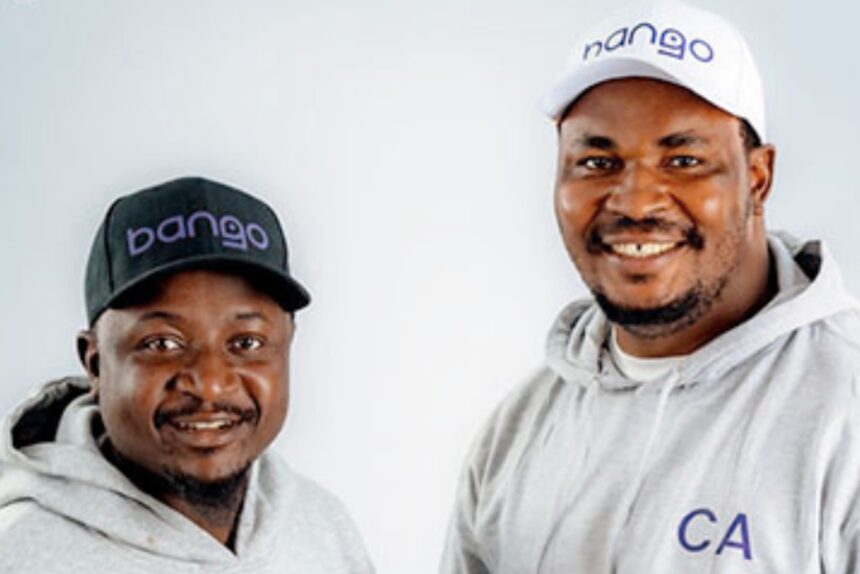
Nigerian startup Bango has introduced a community-driven price intelligence platform that enables shoppers to compare food prices across markets before making purchases.
By combining crowdsourced pricing data with a direct commerce platform that connects buyers to farmers, the startup is positioning itself as both a transparency tool and an alternative food distribution channel.
According to Bango co-founder Caleb Adenegan, the company’s mission is rooted in addressing one of the country’s biggest market inefficiencies, limited access to reliable price information.
“Once people could see where things were cheaper, the obvious next question was how to actually get it at that price, so Shopr lets users buy commodities directly through us, sourced from a network of farmers, with shared delivery to keep costs down,” he said.
What is Bango and What Does It Do?
Bango is a Nigerian technology startup that has built a crowdsourced price intelligence platform designed to help consumers make informed decisions when purchasing food commodities.
Not only relying on estimates or word-of-mouth recommendations, users contribute real-time market data by uploading details of their purchases, including the amount paid, the market visited, the specific seller, the quantity purchased, and photographic evidence.
This user-generated information creates a searchable database that allows anyone planning to shop to compare commodity prices across different markets before leaving home.
In doing so, the platform transforms ordinary shoppers into contributors of valuable market intelligence while helping other consumers identify the most affordable options available.
Recognising that information alone was not enough, the startup expanded its offering by launching Shopr by Bango, a commerce platform through which customers can order commodities directly.
The products are sourced from a network of farmers, while deliveries are consolidated across multiple orders to reduce logistics costs.
As Adenegan explained, “Once people could see where things were cheaper, the obvious next question was how to actually get it at that price.”
The Pain Point in Focus: Nigeria’s Invisible Food Price Problem
At the heart of Bango’s innovation lies a simple but significant challenge, Nigerians often have little or no visibility into commodity prices outside their immediate markets.
The startup’s inspiration came during the 2024 Sallah celebrations when co-founder Ademuyiwa Taofeek encountered unusually high prices for tomatoes and peppers in Lagos. Traders attributed the increases to transportation costs from northern Nigeria.
Rather than accept that explanation, Taofeek conducted his own experiment by sourcing the same commodities directly from Jos and paying for transportation to Lagos, only to be surprised with the outcome.
“When he asked why, he was told it was the logistics cost of moving produce down from the north. He tested that himself, sourced the same commodities from Jos, paid to transport them to Lagos, and still spent way less than half the price he would have paid locally,” Adenegan said.
That experience reshaped the founders’ understanding of the problem.
“That told him the real issue wasn’t logistics, it was that people simply don’t have visibility into what things cost outside their own market.”
The discovery ultimately became the foundation upon which Bango was built.
Restoring Trust in Nigeria’s Fragmented Commodity Markets
According to the founders, Nigeria’s traditional commodity markets operate without standardised pricing, making it difficult for consumers to know whether they are paying a fair price.
The situation is further complicated by inconsistencies in measurement. Two baskets described as containing the same commodity may differ significantly in quantity, while neighbouring traders may quote entirely different prices for similar products.
“There are no fixed prices in Nigerian commodity markets. Walk a few stalls down and the same basket of tomatoes can be quoted differently, and the basket itself might not hold the same quantity,” Adenegan explained.
Historically, communities relied on informal networks where neighbours and friends shared information about where to find cheaper goods. However, urbanisation, changing lifestyles and weakened community interactions have reduced the effectiveness of that system.
“That used to be manageable because people shared information with each other, neighbours telling neighbours where they got something cheaper. That system has broken down, and it leaves sellers free to quote whatever they want because buyers don’t have another source of truth.”
Bango aims to rebuild that “source of truth” digitally by allowing consumers themselves to document and verify prices across markets.
How Shopr Extends the Value Beyond Price Information
While price transparency forms the foundation of Bango’s offering, the startup recognised that consumers also needed a practical way to access cheaper commodities.
This insight led to the creation of Shopr by Bango, an integrated commerce platform that connects buyers directly with farmers.
Instead of merely identifying the cheapest market, Shopr enables customers to purchase commodities through Bango’s supply network.
To further reduce costs, deliveries are grouped together, allowing multiple customer orders to share transportation expenses.
This approach not only simplifies purchasing but also seeks to shorten the supply chain between producers and consumers, potentially improving affordability while creating additional market access for farmers.
Standing Apart from Existing Grocery Delivery Platforms
Nigeria’s growing quick-commerce sector already features players such as Chowdeck, Mano and GoLemon, all of which provide grocery delivery services.
However, Bango believes its approach is fundamentally different because it begins with information rather than transactions.
“The difference is we don’t start with selling. We start with information. Most of those platforms go straight to ‘here’s a product, buy it’. We help people see where something is cheapest first, then build the way to access it,” Adenegan said.
This information-first strategy gives consumers greater visibility into market realities before making purchasing decisions, positioning Bango as both a consumer advocacy platform and a commerce business.
Early Growth Signals and Ambitious Expansion Plans
Launched in November 2025, Bango has recorded encouraging early adoption despite operating on a bootstrap model. The startup attracted approximately 1,000 users within its first month and has since grown its community to around 2,500 users.
Meanwhile, Shopr, which debuted only recently, has already fulfilled more than 60 customer orders, suggesting growing demand for its direct purchasing service.
Although Shopr currently serves customers only in Abuja, the company plans to expand into additional Nigerian markets while exploring partnerships throughout the agricultural value chain.
According to Adenegan, Bango’s price intelligence platform is not geographically constrained because it addresses the wider Nigerian food economy.
This market is projected to reach nearly US$99 billion by 2033, with food already accounting for more than half of household expenditure nationwide.
Building a Broader Food Commerce Ecosystem
Beyond its existing services, Bango is already developing new products intended to deepen customer engagement and improve purchasing efficiency.
Among these initiatives is Bango Market Day, a waitlist-based collective buying system that aggregates customer demand before coordinating supply through the company’s farmer network.
The model is expected to reduce costs further by enabling bulk purchases while helping producers plan supply more efficiently.
“We’re also building Bango Market Day, a waitlist based system for bulk collective buying where we aggregate demand and coordinate supply through our farmer network,” Adenegan revealed.
The startup plans to generate revenue through service and delivery fees on Shopr orders, while Bango Market Day will include an additional reservation fee for customers joining each buying cycle.
Looking further ahead, the company also intends to introduce subscription packages that bundle benefits across its expanding portfolio of products.
__________________________
Bookmark Techparley.com for the most insightful technology news from the African continent.
Follow us on X/Twitter @Techparleynews, on Facebook at Techparley Africa, on LinkedIn at Techparley Africa, or on Instagram at Techparleynews