
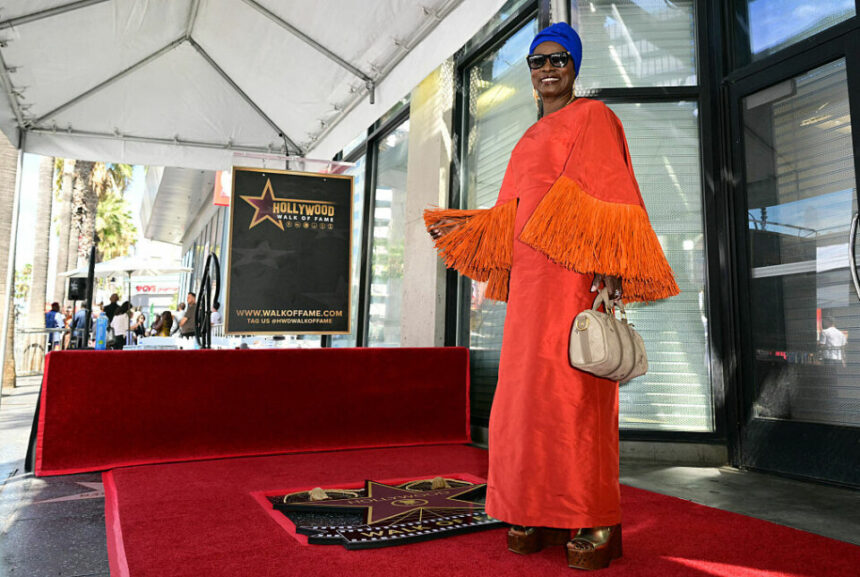
Grammy-winning Beninese singer Angélique Kidjo broke down in tears on Monday as she became the first Black African artist to receive a star on the Hollywood Walk of Fame, a milestone organisers called “a powerful moment for African music and culture on the global stage.”
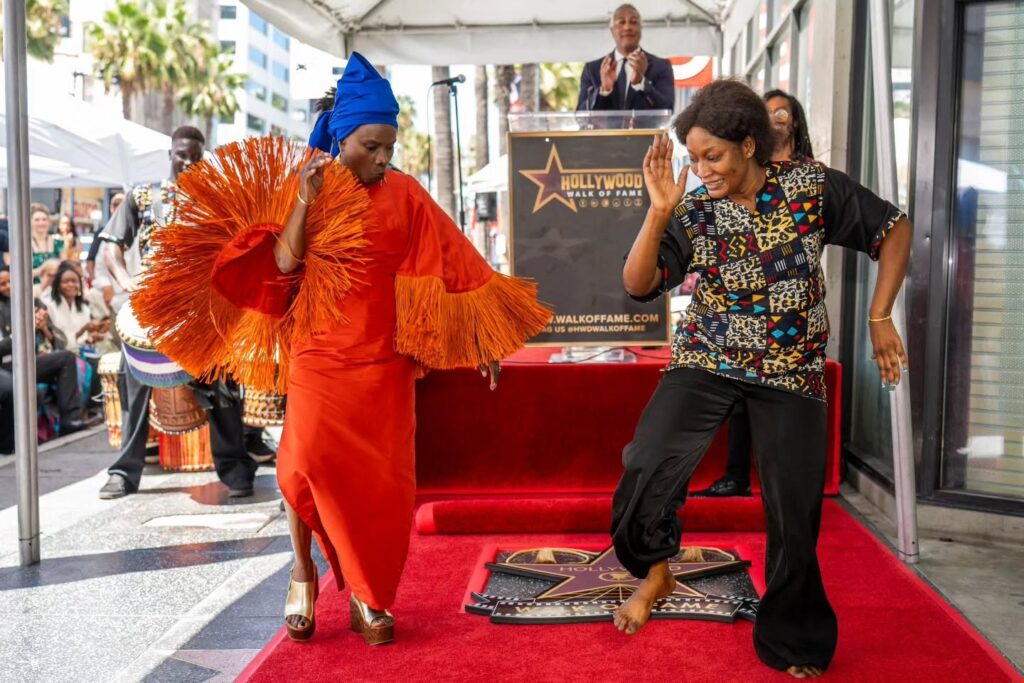
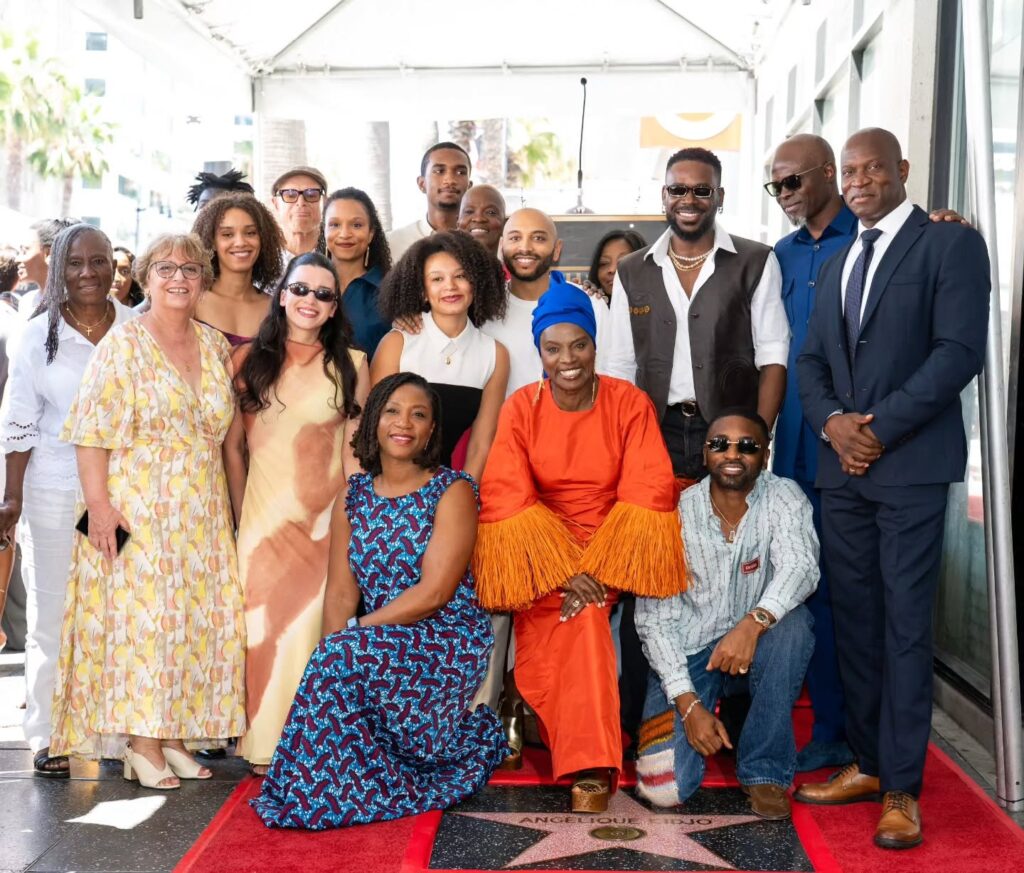
The ceremony on Hollywood Boulevard drew a crowd of musicians, diplomats, fans and dignitaries, many waving Benin and pan-African flags. Kidjo, 64, wiped her eyes as the star bearing her name was unveiled at 6417 Hollywood Blvd.
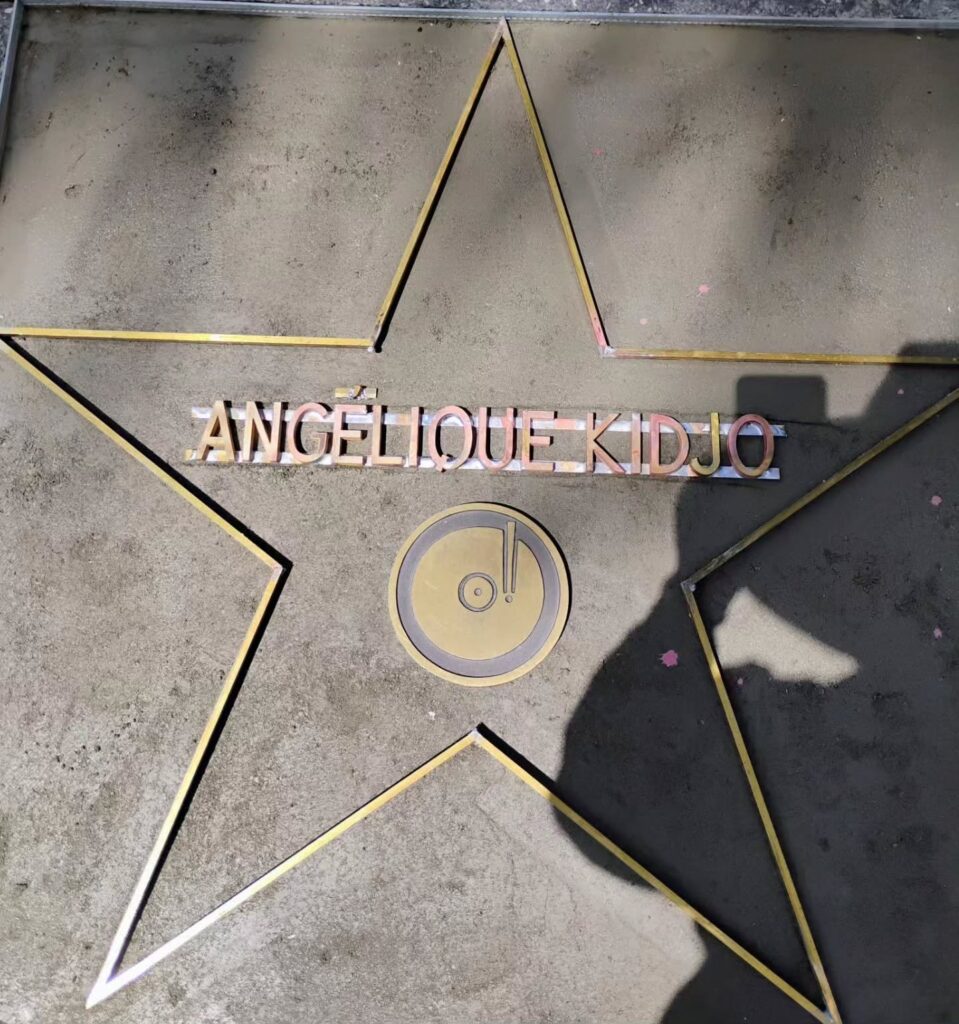
“I do this for every African child who was told their dreams were too big,” she said. “For every woman who was told to be quiet. Our music, our stories, our languages belong here too.”
Who is Angélique Kidjo?
If you’re discovering her today on TikTok or Spotify, here’s the short version: Angélique Kidjo is Africa’s musical ambassador.
Born in Cotonou, Benin, she sings primarily in Fon, Yoruba, French and English, and her sound refuses to sit in one box. Think Afrobeat meeting funk, jazz, Latin rhythms, and Western pop — all delivered with a voice that can go from a whisper to a roar in one note.

She is not just a singer. She is a storyteller, activist, and cultural bridge. Where Burna Boy brings Afro-fusion to stadiums and Tems brings alté-R&B to the charts, Kidjo laid much of the groundwork in the 1990s and 2000s by forcing Western audiences to learn African names, languages and rhythms on their own terms.
Her art is dance music with a conscience. Albums often address child marriage, female education, climate change and freedom — but you’ll still dance to every track.
A career of firsts and global recognition
Kidjo left Benin for Paris in the early 1980s to escape political censorship, and broke through with her 1991 album Logozo. Since then she has built one of the most decorated careers in world music.
Key milestones of Angélique kidjo:
- 5x Grammy Award winner – Most recently for Mother Nature in 2022. She holds the record for most Grammy wins by an African artist.
- TIME 100 Most Influential People – Named in 2021
- BBC 100 Women and Forbes Africa’s 50 Most Powerful Women
- UNICEF and OXFAM Goodwill Ambassador – Decades of advocacy for girls’ education through her Batonga Foundation
- Broadway and Film – Co-wrote music for Disney’s The Lion King musical and performed at the 2024 Paris Olympics opening ceremony
- She has performed at the Nobel Peace Prize concert, Glastonbury, Coachella, and for 4 US Presidents.
Stars she has worked with
Kidjo’s Rolodex reads like a global music hall of fame. Her willingness to collaborate across genres is part of why she endures.
She has recorded and toured with: Carlos Santana, Alicia Keys, Bono and U2, John Legend, Philip Glass, Dave Matthews, Youssou N’Dour, Peter Gabriel, Branford Marsalis, and Josh Groban.
She also reinterpreted entire classic albums through an African lens — Remain in Light by Talking Heads and Agbé by Jimi Hendrix — introducing them to new audiences while paying homage to her own.
10 Fun Facts About Angélique Kidjo
- Polyglot: She speaks Fon, Yoruba, French, and English fluently, and often sings in all 4 in one concert.
- Name means “warrior”: “Angélique” was given by her mother. In Fon, her surname Kidjo means “the one who will not be defeated.”
- Started singing at 6: In her mother’s theatre troupe in Benin.
- Fashion icon: Known for her bold, colourful, African-print stage looks designed to celebrate the continent.
- Batonga Foundation: Has helped educate more than 500,000 girls across Africa since 2006.
- Disney Lion King link: She voiced and co-wrote for the stage version, bringing West African percussion to Broadway.
- Olympic performer: One of the headline voices at Paris 2024, singing in French and Fon to 1.5 billion viewers.
- She’s a dancer first: Trained in traditional Beninese dance before music. You’ll never see her stand still on stage.
- Culinary author: Released a cookbook, Cooking with Mama, celebrating West African cuisine.
- Hollywood connection: She has acted in film and TV, including Black Panther: Wakanda Forever soundtrack contributions.
The new generation carrying her torch
Kidjo’s brand of pan-African, socially conscious, genre-blending music has clear echoes in today’s artists. Artists often cited as walking a similar path include:
- Burna Boy, Nigeria – Afro-fusion with political lyrics and global stadium ambition
- Yemi Alade, Nigeria – Pan-African visuals, multilingual songs, and fierce stage presence
- Asa, Nigeria/France – Folk-soul storytelling in Yoruba, English and French
- Somi, Rwanda/US – Jazz singer using African languages and heritage in her work
- Fatoumata Diawara, Mali – Activist singer blending Wassoulou traditions with rock and pop
Like Kidjo, they use music as diplomacy — exporting culture while addressing issues at home.
How tech is changing the music she helped pioneer
When Kidjo started, African artists needed a European label to reach the world. Today, tech has flipped that.
Streaming platforms, TikTok, and YouTube now let Afrobeats, Amapiano and Beninese rhythms travel without a gatekeeper. Kidjo herself has embraced it — using Instagram Live for Batonga fundraisers, and seeing her 1996 hit Agolo rediscovered on TikTok dance challenges.
AI translation tools are also making lyrics in Fon and Yoruba more accessible. Virtual concerts mean a girl in Porto-Novo can watch her live in LA in real time. The infrastructure Kidjo fought for now exists in a phone.
What the Walk of Fame star means
The Hollywood Walk of Fame is not an award for sales. It is an award for cultural permanence. For 65 years, it has largely reflected American and European pop culture.

By honoring Kidjo, the Hollywood Chamber of Commerce is acknowledging two shifts:
- Africa’s cultural export is now central, not peripheral. From Afrobeats to Nollywood, African creativity drives global youth culture. This star formalizes that.
- The definition of “global icon” is expanding. The first African musician to get a star was South Africa’s Miriam Makeba in 2008. Kidjo is the first from sub-Saharan Black Africa, and the first Francophone African woman. That matters for representation.
For the industry, it signals to labels, film studios and brands: invest in African artists not as a trend, but as legacy. For young Africans, it’s proof that singing in your mother tongue can land you on the same sidewalk as Marilyn Monroe and Michael Jackson.
As Kidjo said through tears: “This star is not mine. It belongs to Africa.” And now, it’s literally written in stone on Hollywood Boulevard.