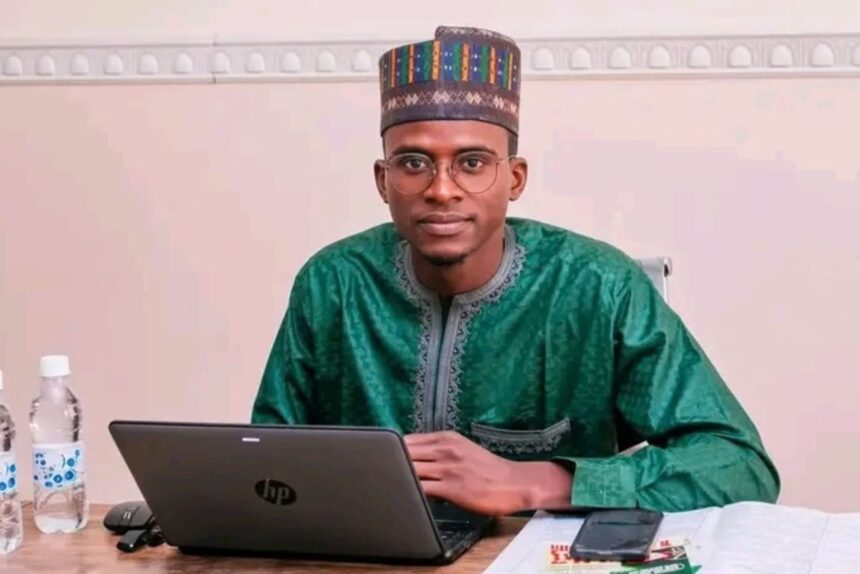
YAKUB ABDULRASHEED – A Nigerian data specialist, Abdulmalik Bashir, has recounted how a network failure during the onboarding process for a remote contract with an international agency left him devastated, prompting him to lament what he described as Nigeria “happening” to him at a critical moment in his career.
Bashir said he had secured an opportunity to work remotely as a Data Specialist, with only five per cent travel required for field assignments, and was preparing to begin when connectivity problems disrupted meetings with senior officials of the organisation.
According to him, both major telecommunications providers he relied on became unavailable during the crucial engagement, leaving him unable to maintain a stable connection.
“Imagine being in an important onboarding meeting for an international job and suddenly you cannot stay connected because the network has failed you,” he wrote.
Bashir said his contract subsequently ended just days before his scheduled start date, insisting that the setback was not caused by a lack of skills, preparedness or ability to perform the work, but by circumstances beyond his control.

The Opportunity and the Unreliable Infrastructure
For Bashir, the incident represented more than an ordinary internet interruption. It became an example of how infrastructure challenges can collide with professional opportunities in an increasingly digital labour market, where a stable internet connection is often as essential as a laptop or professional qualification.
He explained that he had been excited about working with an international organisation from Nigeria and building something meaningful through remote employment.
However, the disruption occurred during meetings with senior members of the organisation, making the situation particularly distressing.
“You can have the skills. You can have the opportunity. You can have the international contract. You can be ready to work,” Bashir wrote, before highlighting the vulnerability created when “basic infrastructure fails you at the most critical moment.”
His account reflects a growing concern among remote workers and freelancers whose ability to participate in global opportunities depends partly on infrastructure that they do not control.
For workers operating from Nigeria, unreliable telecommunications and electricity can turn what appears to be a straightforward online assignment into a high-pressure professional challenge.
Freelancers Say the Experience is Familiar
Bashir’s experience resonated with several people who responded to his post, with some sharing their own encounters with connectivity-related disruptions while pursuing international work.
Surajo Teete, a language-service provider, said he had experienced a similar setback less than a month earlier while attempting to collaborate with a client on a Fulfulde dataset project.
According to Teete, one of the most difficult aspects was explaining such challenges to international clients who may struggle to understand why a professional cannot maintain a reliable online connection.
“It is hard to find a freelance worker from Nigeria who has never experienced such setbacks,” Teete wrote.
Teete argues that many young Nigerians are seeking more than conventional employment. He said they want environments where they can develop their skills, gain experience and provide expertise to clients and organisations.
Sufyan Tukur also recalled losing what he believed was a promising Data Entry Clerk opportunity with an international NGO after his internet connection failed during a scheduled meeting.
He said he had been waiting from 8 a.m. for a 9 a.m. meeting but could not connect when the time arrived.
“I lost that job Kuma shikenan,” he recalled, describing the disappointment of missing an opportunity he expected could provide a monthly income of about ₦300,000.
Is the Network Failure Really What Ended the Contract?
While several commenters sympathised with Bashir, one response challenged the assumption that the network disruption was necessarily responsible for the end of his contract.
Musa Haruna, who said he had worked in the data-specialist and data-annotation market since 2022, suggested that many such opportunities operate through crowdsourcing platforms where available tasks can fluctuate significantly.
Haruna explained that platforms may recruit more workers than the amount of work immediately available and subsequently allocate tasks according to demand.
From that perspective, he argued that the message Bashir received could have reflected the exhaustion of available work rather than a direct decision to terminate his engagement because of the connectivity problem.
“I wouldn’t say the network issue is what failed you AbdulMalik, or at least I wouldn’t consider it the primary reason,” Haruna said.
He added that if an organisation genuinely required a worker because of rare or valuable expertise, “a minor network failure shouldn’t be enough to stop you.”
His intervention introduced an important qualification to the discussion, that is, while poor connectivity can create genuine professional risks, the precise reason Bashir’s contract ended cannot be established solely from the Facebook account.
A Broader Anxiety for Nigeria’s Remote Workforce
Beyond the disagreement over the immediate cause of Bashir’s contract ending, the reactions reveal a broader anxiety among Nigerians attempting to participate in the global digital economy from within the country.
Rayyanu Saidu, responding to Haruna, acknowledged that network failure may not explain every lost opportunity but argued that connectivity and electricity remain practical obstacles for people who depend on remote work.
“Even if you get the job, how can you work online with these stupid networks in Nigeria?” Saidu asked, linking the problem to wider concerns about infrastructure and regulation.
Thomas Matur Comfort similarly described the dilemma as one in which Nigerian professionals may face questions about reliability despite having the necessary skills.
“If you get the job, it’s either network or electricity,” Comfort wrote.
For Bashir, that frustration ultimately became a prayer:
“May Nigeria not happen to me again, he hopefully prays.
His words capture the emotional contradiction confronting many digitally skilled Nigerians, global opportunities are increasingly accessible without leaving the country, yet the infrastructure required to take advantage of those opportunities can remain uncertain.
His experience, together with the stories shared by other commenters, has therefore opened a wider conversation about whether Nigeria’s digital workforce can fully participate in the international economy when basic connectivity and power remain recurring professional vulnerabilities.
Talking Point
Bashir’s experience exposes a difficult reality of Nigeria’s digital economy, professional competence and international opportunities can still be undermined by unreliable infrastructure.
However, remote workers also need to reduce their dependence on systems they cannot immediately control by building personal resilience into their work environments.
Where financially possible, workers should consider affordable solar-power systems, backup batteries or power stations, dual-SIM devices, multiple network providers, reliable routers, sufficient mobile data, and alternative workspaces with dependable electricity and connectivity.
Important interviews, meetings and deadlines should, where possible, have contingency arrangements, including a second internet connection and backup power.
These measures cannot replace functioning public infrastructure, nor should workers be blamed for systemic failures.
Nigerian government therefore has a critical responsibility to improve electricity supply, broadband coverage, telecommunications reliability and regulatory oversight.
A dependable digital-work ecosystem could expand access to international employment, support freelancers and startups, reduce barriers to entrepreneurship, and create legitimate income opportunities for young Nigerians.
__________________________
Bookmark Techparley.com for the most insightful technology news from the African continent.
Follow us on X/Twitter @Techparleynews, on Facebook at Techparley Africa, on LinkedIn at Techparley Africa, or on Instagram at Techparleynews