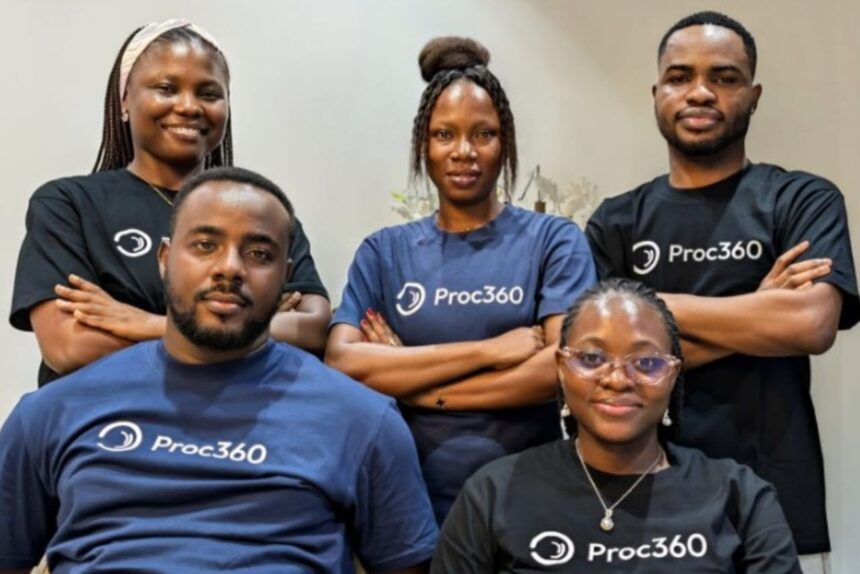
YAKUB ABDULRASHEED – Nigerian startup Proc360 is seeking to transform how African wholesalers purchase goods from China by addressing the persistent challenges of procurement fraud, expensive middlemen and unreliable logistics.
Launched in February 2025 after more than six years of research into the China-Africa trade corridor, the company combines supplier verification, escrow-based payments, pre-shipment inspections and delivery services to make international trade safer and more affordable.
According to its co-founder and chief executive officer, Fara Popoola, the platform enables traders to avoid the additional costs associated with relying on intermediaries.
“That markup is the price of trust, and it is the single biggest thing holding these businesses back,” Popoola said.
He added that Proc360 customers save an average of 38 per cent, allowing them to reinvest more money into their businesses.
What is Proc360 and What Does It Do?
Proc360 is a Nigerian procurement and trade facilitation startup that helps African businesses source and purchase goods directly from suppliers in China.
The company brings supplier verification, payment protection, goods inspection, freight, customs clearance and delivery coordination into one service, reducing the need for traders to depend entirely on traditional purchasing agents.
Its procurement process begins on WhatsApp through Ruby, an artificial intelligence-powered assistant that guides customers through the platform.
“Ruby speaks their language, and guides them to use a simple platform where they take their control back,” Popoola explained.
By combining technology with practical trade services, Proc360 aims to simplify international purchasing for wholesalers who want greater control over their transactions without exposing their businesses to unnecessary risks.
Addressing Fraud and Expensive Middlemen
Proc360’s business model responds to widespread concerns about fraud and unreliable logistics among African traders importing merchandise from China.
A survey of 500 traders conducted by the company’s founders found that 67 per cent had lost money to procurement fraud or knew someone who had, while 92 per cent reported problems with logistics.
Additionally, 71 per cent said they would rather pay an expensive middleman than transfer money directly to a supplier. The findings informed the company’s approach to building trust into the procurement process.
Through supplier verification, escrow arrangements and pre-shipment inspections, Proc360 seeks to reduce the risks associated with direct purchasing.
Popoola said the company removes the need to pay an additional premium for security, explaining that:
“Trust is built into the trade itself, so our customers stop paying a premium for it.”
Proc360’s Growth, Transactions and Customer Retention
Since its launch, Proc360 has facilitated approximately US$750,000 worth of trade across 4,900 transactions in Nigeria and Ghana, according to figures disclosed by its chief executive.
The company reports having 2,700 businesses transacting on its platform, with monthly growth of 12 per cent and a customer retention rate of 81 per cent.
It has also reported preventing US$250,000 in losses attributed to fraud and procurement-related errors.
Popoola considers customer retention particularly significant because traders who have previously experienced losses are often reluctant to trust unfamiliar services.
“This is a market where people have been burned, so they test us with one small order, it arrives as promised, and the next one is bigger,” he said.
The startup has also established a partnership-powered inspection operation in China to strengthen its service delivery.
Money Making Model and Business Challenges
Proc360 generates revenue through four channels, which are fees on completed trades, transaction charges, commissions from business partners and foreign exchange margins.
The startup reportedly generates approximately US$150 in annual revenue per user and has earned almost US$100,000 in total revenue to date. However, it is not yet profitable, as it continues investing in expansion and operations.
“We are not profitable yet, as every dollar goes back into growth,” Popoola said.
Among its major challenges are building customer confidence, managing exchange-rate fluctuations, resolving customs complications and addressing shipping delays or incorrect supplier deliveries.
Currency volatility can erode margins between the time a customer receives a quotation and when payment is completed.
The company says it has developed a wallet designed to help preserve quoted prices while taking responsibility for logistical complications that would otherwise burden customers.
Expansion Plans and Competition in the China-Africa Trade Corridor
Nigeria remains Proc360’s primary market because of the country’s substantial reliance on imported finished goods and its established trading links with China.
The company plans to deepen its presence by onboarding offline traders in eight Lagos markets, including Balogun, Idumota, Alaba, Trade Fair and Computer Village.
The expansion will involve in-person agents who speak traders’ languages and can introduce them to the platform. Beyond Nigeria and Ghana, Proc360 intends to expand across the broader West African trade corridor from 2028.
Its competitive landscape includes traditional procurement agents and logistics businesses such as Heroshe, Aquantuo, GIG, Centi and Getitfy.
However, Popoola argues that Proc360 distinguishes itself by eliminating the need for an agent within the purchasing chain, supported by a supplier verification database developed over several years.
The company’s long-term prospects will depend on its ability to sustain customer trust, control operating costs and deliver measurable savings as it scales.
___________________________
Bookmark Techparley.com for the most insightful technology news from the African continent.
Follow us on X/Twitter @Techparleynews, on Facebook at Techparley Africa, on LinkedIn at Techparley Africa, or on Instagram at Techparleynews