



When sports journalist Mahbubat Kanyinsola Salahudeen shared a Techparley Africa report about the disappearance of over 200 of her published articles, she likely intended to spotlight what she described as a copyright grievance.
Instead, the case has now evolved into a wider legal and professional reckoning within Nigeria’s creative and media ecosystem.
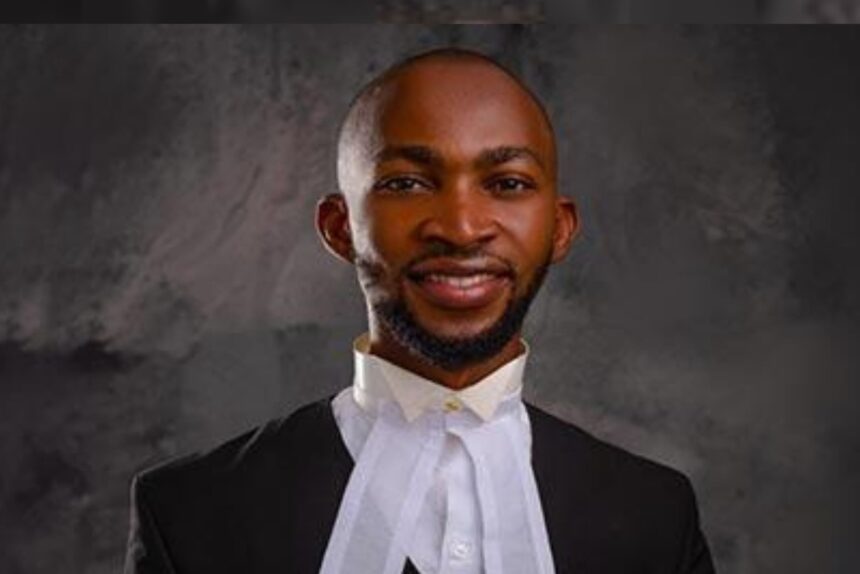
Among those drawn to the dispute was Habeeb Gobir, an intellectual property and technology lawyer, who not only reviewed the engagement documents between the parties but published an extensive legal commentary dissecting the implications under Nigeria’s copyright law.
In his February 28, 2026 newsletter titled “Ink was Spilled. Articles were Published. Then Suddenly, they Disappeared,” Gobir made clear he was “not to take sides,” but to illuminate the legal lessons embedded in the controversy.
His intervention has since reframed the conversation from a singular employment dispute to a broader examination of copyright ownership, freelance contracts, moral rights, and the evidentiary consequences of content deletion in the digital age.
A Brief Note on Mahbubat Salahudeen’s Case
Salahudeen is the founder of the Stellar Youth Project and an award-winning sports reporter with experience covering competitions such as the CAF Champions League and Women’s AFCON qualifiers.
She was engaged by a sports company (name withheld) in March 2025 to produce two articles daily for a monthly fee of ₦25,000, roughly 60 articles per month at slightly above ₦400 per article.
According to her account with Techparley Africa recently, she temporarily stepped away for examinations and returned in December to discover she had been removed from the company’s work group without notice.
Upon checking the website, she observed that her byline had been removed from over 200 articles and that the articles were eventually taken down entirely.
The company later issued a letter stating that it had exercised its rights as platform owner to remove 196 articles produced during her engagement, and further maintained that she had been engaged strictly as a freelancer.
The contract which was with no contractual promise assigning ownership of the works to her, a claim she fervently objects. It was at this legal crossroads that Gobir entered the conversation.
Copyright Begins with the Creator, Not the Commissioner
At the heart of Gobir’s analysis is a critical clarification under Nigeria’s Copyright Act 2022, that’s, authorship and ownership do not automatically transfer simply because a creator is paid.
He points specifically to Section 28 of the Act, explaining that “copyright in a work vests initially in the author.” In his words, “the law presumes that the creator is the first owner unless a legally recognised exception applies.”
One such exception involves works created “in the course of employment.” However, Gobir underscores that this exception is narrower than many assume. Courts, he notes, do not treat every commercial relationship as employment.
They examine control, supervision, payment structure, integration into the organisation, and the intention of the parties. Crucially, where a creator is engaged as an independent contractor or freelancer, the employment exception “usually does not apply.”
In those situations, “the default rule remains, the author owns the copyright unless it is expressly assigned in writing.”
This interpretation significantly shifts how freelance relationships are understood within Nigeria’s growing digital media and startup ecosystem, where written intellectual property clauses are often overlooked in favor of deliverables and payment terms.
Payment Is Not Transfer: Why Written Assignment Matters
Gobir reinforces his argument by invoking Section 30 of the Act, which states that copyright may only be transferred through “an assignment in writing signed by or on behalf of the owner.”
His warning is pointed and unequivocal, “Copyright does not move by implication, assumption, payment, or industry practice. It moves by written agreement.”
He continues, “Payment alone is legally insufficient to transfer ownership, and this is where many commercial relationships fail legally.”
According to him, silence on copyright clauses often benefits the creator, not the commissioner. This principle was further echoed in a public comment by Abigail Ajoke Sanni.
Abigail notes that, “for the copyright in a work created by an employee to vest in the employer, there should be an agreement to that effect. Otherwise, the creator owns the copyright.”
She added that only in government employment does automatic vesting apply. Together, these perspectives challenge common industry assumptions that commissioning content automatically confers ownership rights, a misconception that may expose organisations to avoidable disputes.
Ownership Is Not Authorship: The Power of Moral Rights
Even in scenarios where copyright is validly assigned, Gobir draws attention to another critical layer of protection, moral rights.
Under Section 14 of the Copyright Act, an author retains the right to claim authorship and to object to distortion or modification that may prejudice their reputation. These rights exist independently of economic ownership.
As Gobir explains, “Even where ownership is validly transferred, moral rights may still remain with the creator.” He stresses that “moral rights protect reputation, not revenue.”
This distinction is especially relevant in Salahudeen’s allegation that her byline was removed prior to the deletion of the articles. Gobir notes that “ownership and authorship are distinct legal concepts,” meaning that removal of attribution could constitute a separate legal issue from ownership disputes.
In practical terms, a company that owns copyright may still be legally obligated to credit the author unless there has been a valid waiver of moral rights.
For journalists and creators whose professional credibility hinges on bylines and publication history, this nuance carries enormous career implications.
Platform Autonomy vs. Evidence Preservation
Perhaps the most legally intricate portion of Gobir’s commentary concerns the deletion of the articles themselves. He acknowledges that platform ownership and copyright ownership are separate legal interests.
“In principle,” he writes, “there is nothing unlawful about a publisher deciding to remove material from its website.” Editorial discretion, he explains, is part of platform autonomy.
However, the timing of removal can shift the legal analysis. Gobir cautions that if content is removed after a dispute arises, particularly following formal objections or threats of legal action, courts may examine whether the action was “calculated to frustrate a claim, avoid liability, or erase proof of authorship.”
He introduces litigation principles on preservation of evidence, noting that once a dispute is reasonably anticipated, parties are generally expected to preserve relevant materials.
Destruction or alteration of evidence at that stage can attract judicial suspicion and potentially lead to adverse inferences.
“If deleted articles were capable of proving authorship, publication dates, attribution history, or editorial modifications,” he writes, “their removal after a dispute is raised could be interpreted as conduct inconsistent with good faith dispute resolution.”
This perspective does not assert wrongdoing but reframes deletion from a mere editorial decision to a potential evidentiary issue, depending on intent and context.
Who Is Habeeb Gobir?
Gobir’s intervention carries weight partly because of his professional pedigree. An intellectual property, entertainment, and technology lawyer, he began his career at Templars, working across commercial advisory, dispute resolution, and transaction support.
He is WIPO-certified, with nine WIPO Academy certifications, and has published in WIPO Magazine. He has received recognition as one of Africa’s influential IP figures and has advised startups, technology companies, and creative enterprises across Asia, Africa, and the Middle East.
His practice focuses on intellectual property protection, commercialisation, licensing, regulatory compliance, and digital governance. Beyond advisory work, he has supported policy conversations and served on panels at national IP conferences.
In his newsletter, Gobir emphasizes that his commentary is “provided strictly for educational and public enlightenment purposes.”
His stated goal is clear, “If this discussion encourages even one creator to ask better questions, or one company to draft clearer agreements, then it has served its purpose.”
Talking Points
This is a teachable moment for the Nigerian creative economy. What began as the disappearance of 200 articles has evolved into a broader lesson on contractual literacy, professional boundaries, and the structural fragility of creative labor arrangements in Nigeria.
The hybrid significance of this case lies not only in whether a dispute will proceed to litigation, but in the cultural reset it may inspire. Freelancers are reminded to scrutinize copyright clauses before signing agreements. Organisations are urged to draft explicit IP provisions rather than rely on assumptions or informal practices.
As Nigeria’s media, sports, and technology sectors continue to expand, intellectual property is no longer a peripheral clause in contracts; it is a foundational commercial asset.
Gobir’s commentary, amplified by Salahudeen’s experience, underscores a reality many creators are only now confronting, that’s, in the digital age, authorship, ownership, hosting, and reputation are legally distinct, and clarity on each can determine whether “ink spilled” becomes legacy secured or work erased.
In that sense, this dispute has already achieved something larger than resolution. It has sparked a necessary professional conversation on who truly owns creative labor, and under what terms.
_______________________
Bookmark Techparley.com for the most insightful technology news from the African continent.
Follow us on X/Twitter @Techparleynews, on Facebook at Techparley Africa, on LinkedIn at Techparley Africa, or on Instagram at Techparleynews