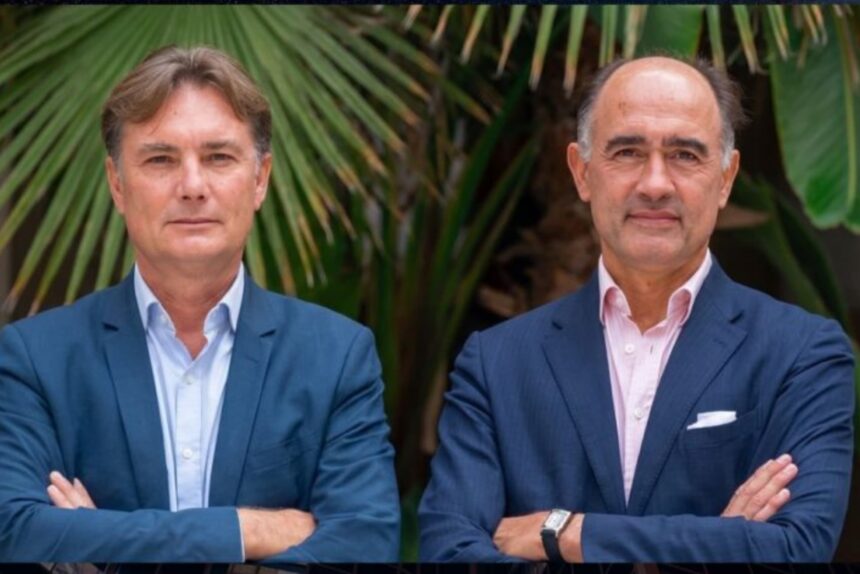
Through a strong vote of confidence in Africa’s entrepreneurial landscape, Adenia Partners has announced the successful first close of its Adenia Entrepreneurial Fund I (AEF), reaching its full hard cap of $180 million in under a year.
The milestone signals robust investor appetite for high-growth African businesses, particularly in underserved segments of the private sector.
With backing from a diverse mix of global and regional institutional investors, the fund is positioned to channel capital into small and medium-sized enterprises (SMEs) across the continent, businesses widely regarded as the backbone of Africa’s economy but often constrained by limited access to financing.
As Adenia’s Managing Partner, Alexis Caude, noted, “Reaching our hard cap at first close and in under a year reflects strong conviction in both our strategy and in Africa’s entrepreneurial ecosystem,” underscoring growing belief in the continent’s investment potential.
What is Adenia Partners?
Founded in 2002, Adenia Partners is a private markets investment firm with a long-standing focus on Africa. Over the past two decades, the firm has raised more than $1 billion across six funds and built a reputation for responsible investing and sustainable value creation.
Its track record includes over 35 platform investments and more than 20 successful exits, reflecting both experience and execution capacity in navigating Africa’s diverse business environments.
Adenia’s investment philosophy centers on identifying promising companies and working closely with them to unlock growth, improve governance, and deliver long-term impact.
This latest fund builds on that legacy while expanding its reach into a broader and more underserved segment of the market.
What Adenia Plans to Use the Money For
The Adenia Entrepreneurial Fund I is designed to invest in small and lower mid-cap companies, arguably the largest yet most underfunded segment of Africa’s private sector. These businesses often possess strong growth potential but lack the capital and operational support needed to scale.
Through AEF, Adenia intends to provide not just funding, but also strategic guidance, operational expertise, and governance support to help these companies expand.
Importantly, the fund adopts a pan-African approach, meaning investments will span multiple countries rather than being concentrated in a single market.
As Caude explained, “AEF offers a diversified, pan-African approach while staying true to our core principles such as sector-agnostic investing, control positions and responsible value creation.”
This flexibility allows the firm to pursue opportunities across industries, from manufacturing and services to technology and infrastructure.
Understanding “First Close,” “Hard Cap,” and “Control Investments”
To fully grasp the significance of this development, it is important to unpack a few key investment terms.
A “first close” refers to the initial stage in fundraising when a fund secures enough commitments from investors to begin deploying capital. In this case, Adenia not only reached its first close but did so at its “hard cap”, the maximum amount it intended to raise, indicating exceptionally strong demand from investors.
The term “hard cap” itself represents a predefined fundraising ceiling. Once reached, the fund does not accept additional capital, signaling discipline and clarity in investment strategy. That Adenia achieved this milestone quickly highlights the level of confidence investors have in both the firm and the broader African market.
“Control investments,” another central concept, refers to situations where the investor acquires a significant ownership stake, often a majority, in a company. This allows the investor to actively influence business decisions, implement strategic changes, and drive growth.
Rather than acting as passive financiers, firms like Adenia take an active role in shaping the trajectory of their portfolio companies.
The Impact Adenia Wants to Make
Beyond financial returns, Adenia is positioning AEF as a vehicle for sustainable and inclusive development. The firm has outlined a clear impact agenda that includes creating quality jobs, improving industrial infrastructure, and promoting gender equality and inclusion.
Environmental considerations are also central, with efforts aimed at reducing carbon intensity and encouraging the responsible use of natural resources across its portfolio.
This dual focus on profitability and impact reflects a broader shift in global investment trends, where environmental, social, and governance (ESG) considerations are becoming integral to capital allocation decisions.
By embedding these principles into its strategy, Adenia aims to ensure that its investments contribute meaningfully to Africa’s long-term development.
Why This Matters
Adenia’s successful fundraising comes at a time when access to capital remains one of the biggest challenges facing African businesses. SMEs, in particular, often struggle to secure the financing needed to grow, innovate, and compete at scale.
By targeting this segment, AEF addresses a critical funding gap while unlocking opportunities for job creation and economic expansion.
Moreover, the strong participation from development finance institutions, European family offices, and African institutional investors signals a growing alignment between global capital and Africa’s development priorities.
As Caude emphasized, “Adenia and our investors are responding to a clear market opportunity to invest in high-growth, high-impact SMEs across the continent… We believe the time is right to support the next generation of African champions.”
In essence, the fund represents more than just a financial milestone; it is a reflection of rising confidence in Africa’s economic future. By backing ambitious entrepreneurs and scaling promising businesses, Adenia is not only seeking returns but also helping to shape a more resilient and inclusive private sector across the continent.
Talking Points
The successful $180 million raise by Adenia Partners signals growing investor confidence in Africa’s SME ecosystem, but it also reflects a deeper structural reality, that’s, capital is increasingly flowing to segments that promise both financial returns and measurable impact, yet execution remains the real test.
While the fund’s focus on “control investments” could drive stronger governance, efficiency, and scalability in undercapitalised businesses, it may also raise concerns about ownership concentration and the extent to which local entrepreneurs retain strategic autonomy.
Moreover, the emphasis on ESG outcomes, job creation, gender inclusion, and sustainability, aligns with global investment trends, but delivering these in often volatile and infrastructure-constrained African markets will require more than capital; it demands deep local insight and long-term commitment.
The rapid attainment of the fund’s hard cap suggests optimism, yet it also heightens expectations for performance in a landscape where exits, currency risks, and regulatory uncertainties can complicate returns.
Conclusively, the initiative represents a significant opportunity to unlock value in Africa’s real economy, but its success will depend on whether Adenia can translate investor confidence into tangible, scalable, and inclusive business growth across the continent.
_________________________
Bookmark Techparley.com for the most insightful technology news from the African continent.
Follow us on X/Twitter @Techparleynews, on Facebook at Techparley Africa, on LinkedIn at Techparley Africa, or on Instagram at Techparleynews