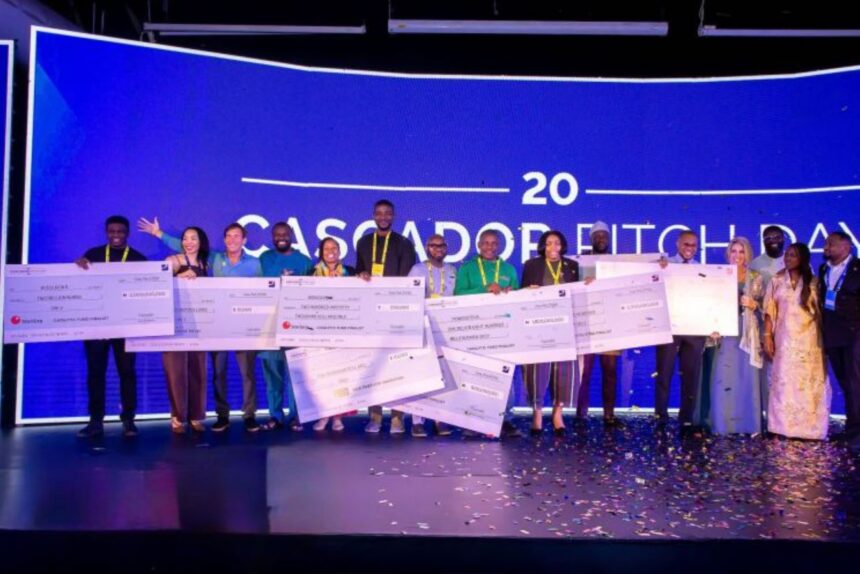
Nigerian entrepreneurs tackling some of the continent’s most pressing challenges have received a significant boost from Cascador. An Africa-focused platform dedicated to helping growth-stage founders scale socially impactful businesses, deployed more than US$5 million in funding to seven innovative startups during its second annual Pitch Day.
The funding, which was distributed through a combination of debt and equity investments, underscores growing investor confidence in African founders building scalable solutions across sectors. These include agriculture, clean energy, data intelligence, artificial intelligence, and financial services.
The event, held on June 3, brought together entrepreneurs, investors, business leaders, and industry stakeholders as selected founders presented their businesses, growth strategies, and long-term visions before a distinguished panel of judges.
Beyond the capital awarded, the occasion highlighted the increasing role of founder-support ecosystems in helping African startups move from survival to sustainable scale.
Since its establishment in 2019, Cascador has supported more than 60 entrepreneurs whose businesses have collectively raised over US$55 million in funding. This positions the organisation as one of the emerging forces helping build Africa’s next generation of transformative companies.
What is Cascador and What Does It Do?
Cascador is an entrepreneurship development platform focused on empowering African founders who are building businesses with measurable social impact.
Rather than concentrating solely on startup funding, the organisation combines executive education, mentorship, leadership development, and access to capital to help entrepreneurs strengthen their businesses and prepare for long-term growth.
At the heart of its support structure is the ScaleUp programme, which equips founders with practical skills, strategic guidance, and access to networks that can accelerate business expansion.
The organisation also operates the Catalytic Fund, an investment vehicle designed to provide growth capital to promising alumni companies that demonstrate strong business fundamentals and significant potential for scale.
The organisation’s approach reflects a growing recognition that African startups often require more than funding alone. Many founders need access to mentorship, governance support, investor readiness training, and operational expertise to successfully navigate the challenges of scaling businesses across diverse markets.
What Happened at the Pitch Day?
Cascador’s second annual Pitch Day served as both a showcase of entrepreneurial talent and a funding platform for businesses seeking growth capital.
During the event, selected founders pitched their companies before an audience of influential business leaders, investors, and judges, outlining how additional funding would enable them to expand operations, increase impact, and strengthen their market positions.
The event culminated in more than US$5 million being committed to seven startups, making it one of the most significant founder-focused funding announcements associated with the programme to date.
Reflecting on the achievement, Cascador founder, Dave DeLucia, highlighted the programme’s growing impact on Africa’s entrepreneurial landscape.
“In just two years, Pitch Day has awarded more than US$9 million to growth-stage African founders, helping to build a new generation of entrepreneurs equipped to scale transformative businesses,” he said.
DeLucia also signalled the organisation’s ambitions to continue expanding its reach, adding that, “We’re now looking for the next cohort of exceptional founders to join our 2026 ScaleUp programme and hope to see them on stage at the next Pitch Day.”
The statement reflects Cascador’s broader vision of creating a pipeline through which promising African entrepreneurs can receive both strategic support and access to capital.
The Recipients and What They Got
The largest funding recipient was Agriarche, which secured US$1.7 million in debt financing. The company was followed by Koolboks, which received US$1.4 million in debt funding, while Powerstove secured US$1.2 million in debt investment.
Other beneficiaries included First Electric, which raised US$357,000 in debt funding, and Fortics, which secured US$142,000 through debt financing.
On the equity side, Stears received US$450,000 in equity investment, while Indigenius AI secured US$250,000 in equity funding.
The funding allocations demonstrate the diversity of businesses supported through the programme, spanning sectors that address food security, clean energy access, data intelligence, electrification, and emerging artificial intelligence applications.
For Agriarche, the largest recipient of the funding round, the investment represented more than just access to capital. According to founder, Deina Mayaki, participation in Cascador’s programmes helped the company refine its business strategy and prepare for growth.
“Cascador’s ScaleUp programme built upon my team’s ability to translate learning into action by helping us refine our message and market position, adjust our funding strategy, and adapt without defensiveness,” Mayaki said.
The founder further revealed that the company had been awarded a new NGN2.5 billion credit facility to support expansion efforts.
“The Catalytic Fund due diligence team assessed Agriarche’s financial strength, resourcefulness, and track record of success, and they rewarded our high-potential for scale and impact today by awarding a new NGN2.5 billion credit facility to power our growth,” said Agriarche founder.
Debt and Equity Funding: What They Mean
A notable aspect of the funding distribution was the mix of debt and equity financing, reflecting different approaches to startup growth and investment.
Debt funding functions similarly to a business loan. A company receives capital that must be repaid over time according to agreed terms. The investor or lender does not take ownership of the company but expects repayment, often with interest or other financial arrangements.
This form of funding can be attractive to founders who wish to maintain full control of their businesses while accessing capital for expansion.
Equity funding, on the other hand, involves investors providing capital in exchange for ownership stakes in a company. Rather than being repaid like a loan, investors benefit when the company grows in value.
Equity financing can provide startups with patient capital and strategic investor support, though it typically requires founders to share ownership and decision-making influence.
The combination of both financing models at Pitch Day illustrates how African startups increasingly require tailored funding structures based on their stage of growth, revenue profile, and long-term objectives.
Why This Matters for African Startups
The significance of Cascador’s latest funding round extends beyond the seven companies that received investment. It serves as a positive hint for Africa’s broader startup ecosystem at a time when global venture capital markets have become more selective and founders face heightened pressure to demonstrate sustainable growth.
By deploying more than US$5 million into businesses that have already proven market demand and operational viability, Cascador is helping bridge one of the most persistent challenges facing African entrepreneurs: access to growth-stage capital.
Many startups successfully secure early-stage funding but struggle to raise the larger investments required to expand operations, enter new markets, hire talent, and scale impact. Programmes such as Cascador’s ScaleUp initiative and Catalytic Fund are increasingly filling that gap by combining founder development with direct financial support.
The latest Pitch Day also reinforces a broader trend within Africa’s innovation ecosystem, investors are showing growing interest in businesses that not only generate financial returns but also address meaningful societal challenges.
Whether through agricultural innovation, clean energy solutions, advanced data services, or artificial intelligence applications, the funded startups represent a new generation of African companies seeking to create both economic and social value.
Talking Points
Cascador is addressing one of Africa’s most overlooked startup challenges, the gap between early-stage promise and growth-stage scale. While many accelerators focus on mentorship and pitch competitions, Cascador is putting actual capital behind founders who have already demonstrated traction.
That is a meaningful contribution in a market where access to growth financing remains scarce. However, the real test is not the size of the cheques announced on Pitch Day but the long-term performance of the companies receiving them.
Debt funding, which dominated this round, can accelerate growth, but it can also become a burden if startups fail to generate sufficient revenue or navigate economic volatility. Capital alone does not guarantee sustainable businesses.
What stands out positively is Cascador’s emphasis on founder development alongside funding. By combining mentorship, strategic guidance, and investment, it is attempting to build stronger companies rather than simply funding them.
The broader significance is that Cascador is helping create a culture of accountability in African entrepreneurship. Yet its ultimate impact will be measured not by millions deployed, but by jobs created, businesses sustained, and scalable African success stories produced years from now.
________________________________
Bookmark Techparley.com for the most insightful technology news from the African continent.
Follow us on X/Twitter @Techparleynews, on Facebook at Techparley Africa, on LinkedIn at Techparley Africa, or on Instagram at Techparleynews