



Stepping toward reshaping Egypt’s financial landscape, the Central Bank of Egypt (CBE) has officially launched a nationwide service that allows merchants to accept contactless electronic payments directly through smartphones and tablets.
By deploying Soft POS (Point of Sale) applications, the initiative removes the long-standing dependence on physical POS terminals, significantly lowering barriers for small businesses to join the digital payments ecosystem.
The move aligns with Egypt’s broader ambition to reduce cash usage, expand financial inclusion, and modernize its electronic payments infrastructure in line with Egypt’s Vision 2030.
Building on earlier pilot programs, the full rollout marks a decisive shift toward low-cost, flexible, and widely accessible digital payment solutions for merchants and consumers alike.
Smart Devices Now Function as Payment Acceptance Points
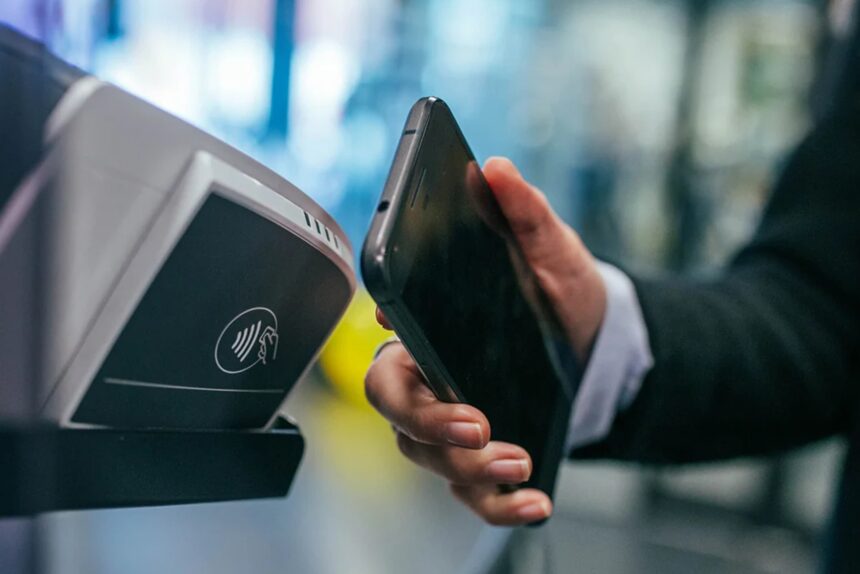
At the heart of the new service is a simple but transformative idea, that is turning everyday smart devices into electronic payment acceptance points. With the introduction of Soft POS applications, merchants can now accept payments by downloading a certified app on their mobile phones or tablets, eliminating the need for traditional hardware.
According to the CBE, “the service enables smart devices to operate as electronic acceptance points,” allowing merchants to receive payments from “various types of contactless cards” directly on their phones.
This means that customers can simply tap their contactless cards on a merchant’s device to complete a transaction. Where required, security is maintained through safe PIN entry directly on the smart device, ensuring that convenience does not come at the expense of protection.
This development significantly broadens access to electronic payment acceptance, particularly for micro and small enterprises that previously struggled with the costs and logistics of acquiring POS terminals.
Eliminating POS Costs to Empower Small Businesses
One of the most immediate benefits of the Soft POS rollout is the removal of the financial burden associated with traditional POS terminals. Under the new system, merchants no longer need to purchase, install, or maintain expensive hardware to accept card payments.
The CBE noted that the service “eliminates the purchase and maintenance costs of traditional POS terminals for Payment Service providers, companies or merchants.”
This cost reduction is especially impactful for small enterprises, informal traders, and startups, many of whom operate on thin margins and have historically relied on cash transactions.
By lowering entry barriers, the initiative integrates “new segments of small enterprises into the electronic payment acceptance ecosystem.”
This enables them to compete more effectively in an increasingly digital economy while offering customers modern, cashless payment options.
Strengthening Financial Inclusion and Digital Access
Beyond convenience and cost savings, the initiative plays a critical role in advancing financial inclusion across Egypt. By making electronic payments accessible “anytime and anywhere,” the CBE is expanding the reach of formal financial services to underserved populations and businesses.
CBE Governor, H.E. Mr. Hassan Abdalla, emphasized the broader vision behind the rollout, stating that the new service “aligns with the CBE’s progressive efforts to enable the infrastructure for the expansion of electronic payment systems and to facilitate financial transactions for citizens and merchants.”
He added that the initiative “supports financial inclusion’s strides and enhances the access to electronic financial services anytime and anywhere.”
This expanded access helps bring more individuals and businesses into the formal financial system, reducing reliance on cash and improving transparency, efficiency, and trust in digital transactions.
Improving Customer Experience Through Speed and Security
The Soft POS service is also designed to enhance the customer experience by making payments faster, safer, and more flexible. Contactless payments reduce transaction time, minimize physical contact, and lower the risks associated with carrying cash.
CBE noted further that, the service aims to provide “a swift, secure, and flexible payment process.”
Secure PIN entry on smart devices ensures compliance with payment security standards, while the contactless nature of transactions adds an extra layer of convenience for consumers increasingly accustomed to digital interactions.
As customer expectations evolve, the availability of seamless contactless payments is becoming a competitive advantage for merchants across sectors, from retail and hospitality to transport and informal trade.
From Pilot Phase to Nationwide Rollout
The official launch follows a pilot phase previously introduced by the CBE, which initially capped transaction limits at EGP 600. The transition from pilot to full rollout signals confidence in the system’s reliability and scalability.
The CBE explained that “the latest update and official launch of the service align with CBE’s efforts to advance payment services and strengthen the infrastructure of digital financial services.”
With the expanded rollout, merchants and payment service providers are now equipped with “flexible and low-cost e-payment acceptance solutions via smartphones.”
This evolution reflects a broader institutional commitment to modernizing Egypt’s payments ecosystem and ensuring that digital financial services keep pace with technological and economic realities.
Talking Points
Ultimately, the Soft POS initiative stands out as a pragmatic and forward-looking intervention, not because it introduces a radically new technology, but because it smartly lowers the real-world barriers that have long slowed digital payment adoption among small and informal businesses.
By turning everyday smartphones into payment acceptance tools, the CBE is addressing cost, access, and convenience in one stroke, which is critical in an economy where cash dominance is often driven by necessity rather than preference.
However, the long-term success of this shift will depend less on the technology itself and more on sustained merchant education, consumer trust, cybersecurity safeguards, and reliable network infrastructure, particularly outside major urban centers.
If these supporting elements are not strengthened alongside the rollout, the promise of inclusion could remain uneven.
Still, as a policy move, Soft POS speaks a clear understanding that financial modernization must meet people where they already are, on their mobile devices this time. This makes it a potentially transformative gateway to broader economic participation rather than just another digital payment option.
_____________________
Bookmark Techparley.com for the most insightful technology news from the African continent.
Follow us on X/Twitter @Techparleynews, on Facebook at Techparley Africa, on LinkedIn at Techparley Africa, or on Instagram at Techparleynews