



Outtake, a cybersecurity startup building an agentic platform to detect and dismantle digital identity fraud, has raised $40 million in Series B funding, cementing its position as one of the most closely watched players in the rapidly evolving AI security landscape.
While the size of the round may appear modest compared with the multi-billion-dollar raises seen across artificial intelligence, the list of investors reads like a roll call of the global technology elite, underscoring growing confidence in Outtake’s approach to a problem that has long resisted automation.
The round was led by Murali Joshi of Iconiq, a prominent growth investor whose portfolio includes companies such as Anthropic, Datadog, Drata, and 1Password.
A rare convergence of industry heavyweights
Alongside Iconiq, Outtake attracted a group of angel investors, including Microsoft chief executive Satya Nadella, Palo Alto Networks CEO Nikesh Arora, Pershing Square Holdings founder Bill Ackman, Palantir chief technology officer Shyam Sankar, Anduril co-founder Trae Stephens, former OpenAI vice-president Bob McGrew, Vercel CEO Guillermo Rauch, and former AT&T chief executive John Donovan.
Such a concentration of senior executives is unusual even by Silicon Valley standards and reflects both the scale of the problem Outtake is addressing and the credibility it has built in a short period.
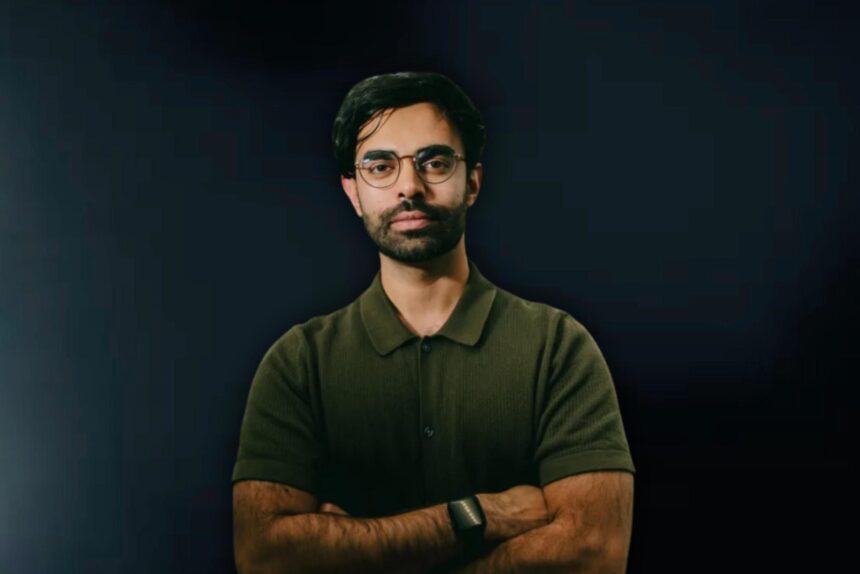
Founded in 2023 by Alex Dhillon, a former Palantir engineer, Outtake is tackling one of the most persistent and labour-intensive challenges in cybersecurity: identifying and taking down digital impersonation at internet scale.
Turning a ‘human problem’ into a software one
Enterprises today face a growing wave of identity-based attacks, including fake social media accounts impersonating brands or executives, malicious domains designed to deceive customers, fraudulent mobile applications, and AI-generated adverts used in scams.
These threats have become harder to detect as attackers increasingly deploy generative AI to produce convincing content at speed.
Historically, detection and takedown efforts have relied heavily on human analysts, legal teams, and slow-moving processes often leaving organisations permanently on the back foot.
“We kept hearing whispers in our network about an AI company that was finally solving digital misrepresentation at scale. Honestly, we were skeptical,” Joshi told TechCrunch. “Historically, detection and takedown was (and to some extent even today) a manual, human-intensive process that couldn’t keep up with the speed of the internet.”
According to Joshi, Iconiq’s view changed after conducting customer diligence and reviewing the product in action.
“They’ve turned a ‘human problem’ into a ‘software problem.’ Seeing AI take down digital frauds in real time is a game-changer for brand safety,” he said.
Agentic AI at the core
Outtake’s platform uses agentic AI, systems capable of autonomously reasoning, investigating, and acting to identify impersonation threats and initiate takedowns across multiple digital surfaces without waiting for human intervention.
The company says its technology can continuously scan for fraudulent domains, rogue applications, fake profiles, and malicious advertising, assess the risk, and execute enforcement actions in near real time.
This approach has gained traction as enterprises struggle to protect customers and reputations in an environment where the cost of inaction can include regulatory scrutiny, financial loss, and erosion of trust.
From Palantir roots to elite backing
Dhillon attributes much of Outtake’s early momentum and its access to influential angels to relationships formed during his time at Palantir.
“I worked directly for Shyam Sankar at Palantir when I was part of the experimental product team,” Dhillon explained.
Through those connections, Dhillon met figures such as Trae Stephens, who worked at Palantir in its early years and is now a partner at Founders Fund. One introduction led to another, eventually drawing interest from some of the most powerful decision-makers in technology.
Rapid growth and high-profile customers
Outtake counts OpenAI, Pershing Square, AppLovin, and several US federal agencies among its customers. In July 2025, OpenAI publicly profiled Outtake as an example of an agentic AI startup built on its reasoning models.
The company reports strong commercial momentum, with annual recurring revenue increasing sixfold year-on-year and its customer base growing more than tenfold. In the past year alone, Outtake says its systems scanned more than 20 million potential cyber threats.
As AI lowers the barrier to sophisticated impersonation attacks, demand for automated identity protection is expected to intensify. Regulators are also placing greater responsibility on companies to prevent consumer harm caused by digital fraud.
Outtake’s bet is that fully autonomous security agents, not larger human teams, are the only viable way to keep pace.
Talking Points
It is notable that Outtake is addressing identity fraud as an execution problem rather than a monitoring challenge, using agentic AI to automate detection, investigation, and takedown at scale.
This approach directly tackles one of the most persistent weaknesses in enterprise cybersecurity: the reliance on slow, human-led processes to combat fast-moving digital impersonation.
At Techparley, we see this as a meaningful shift in how brand protection and identity security are being redefined in the age of generative AI, where attackers now operate with unprecedented speed and realism.
The depth of backing behind Outtake, including senior leaders from Microsoft, Palo Alto Networks, and Palantir reinforces how urgent and strategic this problem has become at the highest levels of global technology companies.
Rather than competing on alerts or dashboards, Outtake is positioning itself around action, enabling enterprises to remove fraudulent domains, accounts, and assets in real time. However, autonomous enforcement at this scale raises important questions around accuracy, governance, and accountability, particularly as regulatory scrutiny around AI continues to intensify.
——————-
Bookmark Techparley.com for the most insightful technology news from the African continent.
Follow us on Twitter @Techparleynews, on Facebook at Techparley Africa, on LinkedIn at Techparley Africa, or on Instagram at Techparleynews.