



Egypt’s recycling economy, long sustained by informal collectors and fragmented trading networks, is entering a new phase of digitization and consolidation.
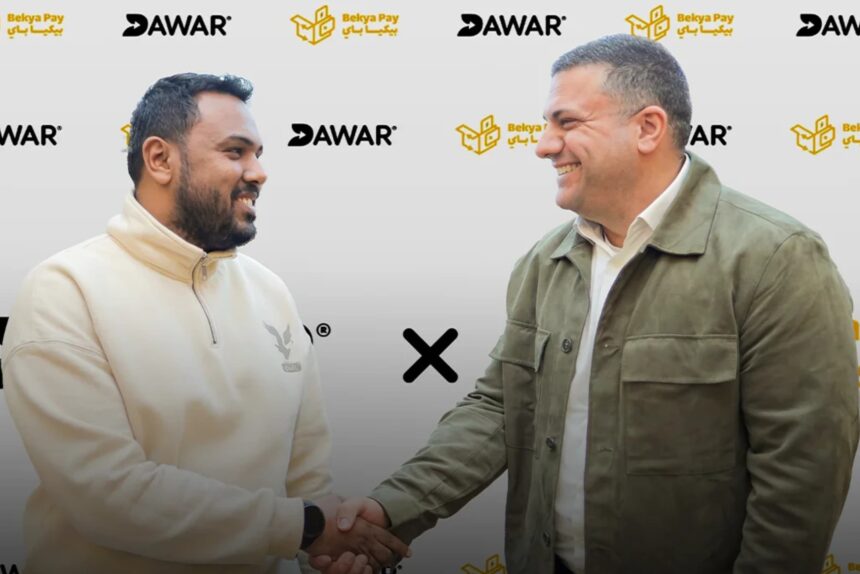
In a strategic move that could reshape how recyclable waste is tracked and monetized, Dawar by Environ Adapt has acquired a stake in BekyaPay, a fast-growing consumer-facing application that enables households to exchange sorted recyclable materials for cash.
The transaction extends Dawar’s digital oversight beyond midstream aggregation and trading activities to the very beginning of the recycling chain, the household.
More than a financial investment, the acquisition speaks of a structural shift in Egypt’s circular economy, from informal, undocumented material flows to traceable, compliance-ready infrastructure designed for an era of tightening environmental regulation and ESG reporting requirements.
What You Should Know About This Strategic Acquisition
At its midpoint, the acquisition gives Dawar early-stage visibility into recyclable material flows. Before the deal, Dawar’s digital platform largely tracked materials once they had already entered structured collection centers or aggregation hubs.
With BekyaPay integrated into its ecosystem, Dawar now gains access to data at the point of waste generation. This move closes what industry experts often call the “first-mile gap”, the stage where recyclable materials leave households but before they enter formal trade channels.
By digitizing this stage, Dawar strengthens its ability to record, verify, and structure waste recovery data across the value chain.
Importantly, this is not merely about expanding collection volume, it is, in fact, about strengthening data integrity.
In a regulatory climate where documentation is becoming mandatory rather than optional, early-stage data capture dramatically improves traceability and reporting credibility.
What Is Dawar and What Does It Do?
Founded as a circular economy infrastructure platform by Environ Adapt, Dawar operates less like a traditional recycling company and more like a digital backbone for waste recovery systems.
Instead of collecting or processing materials directly, the company provides a unified digital framework that connects collection points, aggregators, traders, and compliance reporting mechanisms.
Its platform records and verifies material flows, converting largely informal transactions into structured datasets. Over the past three years, Dawar reports documenting more than 90,000 verified tons of recyclable materials across 22 governorates in Egypt.
This data-driven model allows stakeholders, from aggregators to corporate producers, to access transparent recovery metrics.
In practical terms, Dawar’s value proposition lies in digitization.
By formalizing informal recycling transactions into traceable records, it positions itself as compliance infrastructure at a time when environmental accountability is tightening globally.
What Is BekyaPay?
BekyaPay operates at the consumer interface of the recycling chain. Launched less than a year ago, the application enables households, schools, and commercial establishments such as hypermarkets to monetize sorted recyclables through a structured network of collectors.
With more than 30,000 onboarded users, 500 collection points, and 120 collectors across two governorates, BekyaPay has demonstrated early traction in incentivizing source-level sorting.
The model is simple, users separate recyclable materials, submit them through the app, and receive financial compensation.
By introducing direct cash incentives at the household level, BekyaPay effectively bridges behavioral gaps in waste separation while feeding structured collection channels with cleaner, pre-sorted materials.
The State of Recycling in Egypt
Egypt’s recycling ecosystem is widely recognized for its efficiency despite being predominantly informal. Independent collectors and decentralized trading networks recover millions of tons of waste annually, often operating with minimal documentation and limited institutional oversight.
This informal system has historically thrived on personal relationships, cash transactions, and community-based operations. While operationally effective in many respects, it lacks standardized reporting, verified recovery metrics, and digital traceability.
As a result, large portions of recyclable flows remain undocumented, creating data blind spots that complicate regulatory enforcement and corporate sustainability reporting.
Fragmentation has been both a strength and a vulnerability, enabling flexibility but limiting scalability and transparency.
Why Does Tracking Matter So Much?
The urgency around traceability stems from shifting regulatory frameworks and global sustainability expectations. Extended Producer Responsibility (EPR) policies increasingly require manufacturers and brands to demonstrate how much of their packaging or materials are recovered and recycled.
Simultaneously, ESG disclosure standards are tightening across global markets. Companies must now provide verified environmental performance data to investors, regulators, and consumers.
In this context, recycling without documentation is insufficient. Material recovery must be measurable, verifiable, and reportable. Digital traceability platforms transform waste from an informal commodity into compliance-certified data.
For brands operating in Egypt or sourcing from the region, traceable recovery data reduces regulatory risk and enhances ESG credibility. For infrastructure providers like Dawar, this elevates their role from operational intermediary to regulatory enabler.
Why This Is Important
The acquisition signifies a broader consolidation trend within Egypt’s circular economy ecosystem. By integrating BekyaPay’s consumer-level collection model into its data architecture, Dawar effectively creates a vertically connected recycling intelligence network, spanning households to aggregators.
This move positions the company at a strategic intersection of environmental compliance, digital infrastructure, and sustainability reporting. It also reflects a deeper transformation underway, recycling is no longer evaluated solely by volume recovered, but by the quality and verifiability of recovery data.
As environmental regulation strengthens and sustainability metrics gain commercial weight, traceability may prove as valuable as the materials themselves. In that sense, Dawar’s acquisition of BekyaPay is less about expanding a recycling footprint and more about reshaping the informational architecture of Egypt’s waste economy.
In an industry historically defined by fragmentation, this transaction marks a deliberate shift toward structure, oversight, and measurable impact, a transition that could redefine how value is created within Egypt’s circular economy for years to come.
Talking Points
Dawar’s acquisition of a stake in BekyaPay is strategically sound, but its long-term impact will depend on execution within a deeply entrenched informal ecosystem.
On one hand, integrating first-mile household data into a broader digital traceability framework positions Dawar as more than a recycling facilitator, it becomes compliance infrastructure at a time when EPR mandates and ESG disclosures are reshaping waste economics.
Early-stage data capture strengthens verification, enhances reporting credibility, and potentially creates defensible competitive moats.
On the other hand, formalization in markets like Egypt is rarely frictionless. Informal collectors operate on trust networks, thin margins, and cash liquidity; digitization introduces transparency but may also disrupt existing incentives or trigger resistance if perceived as surveillance rather than empowerment.
The success of this model will therefore hinge on whether Dawar can align data capture with tangible economic benefits for grassroots actors rather than merely layering digital oversight atop them.
If managed inclusively, the move could accelerate the sector’s modernization; if misaligned, it risks creating parallel systems that fragment rather than unify the value chain.
___________________
Bookmark Techparley.com for the most insightful technology news from the African continent.
Follow us on X/Twitter @Techparleynews, on Facebook at Techparley Africa, on LinkedIn at Techparley Africa, or on Instagram at Techparleynews