



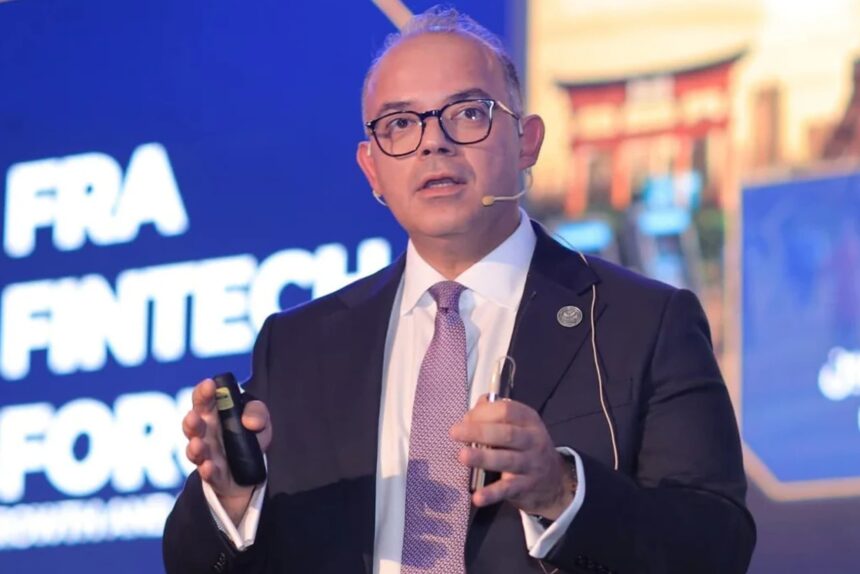
Egypt is preparing to roll out a major financing initiative aimed at strengthening its startup ecosystem and industrial sector, as the government unveils plans to establish a new venture capital investment fund alongside dedicated industrial investment funds.
The announcement was made by Egypt’s Minister of Investment and Foreign Trade, Mohamed Farid Saleh, during an interview on the sidelines of the annual iftar organised by the American Chamber of Commerce in Egypt in Cairo.
The initiative, according to the Minister, seeks to address funding shortages for expanding startups, support manufacturing growth, and enhance the country’s export capacity through targeted financing mechanisms and stronger collaboration between the public and private sectors.
According to the minister, the venture capital fund will operate as a co-investor alongside long-term investment funds to help startups scale and attract further capital.
“The venture capital fund will act as a co-investor alongside funds that provide long-term financing to startups,” Farid explained.
He added that the initiative is designed to address the persistent “bottleneck” in expansion-stage financing that often forces startups to seek foreign investors.
Egypt Plans a Venture Capital Fund to Strengthen Startup Growth
At the centre of the government’s strategy is the creation of a venture capital fund that will help startups secure the capital needed to grow beyond their early stages.
While early-stage startups often receive seed funding from angel investors or small venture funds, many struggle when they reach the expansion phase, where larger capital injections are needed to scale operations, enter new markets, and build stronger teams.
The planned venture capital fund aims to close this gap by investing alongside other funds that specialise in long-term financing. By acting as a co-investor, the government-backed fund will help reduce risks for private investors while ensuring that promising startups have access to the capital they need to expand locally and internationally.
Farid emphasised that entrepreneurship remains a critical pillar of economic growth, noting that “the sector is the backbone of the economy.” The government hopes that stronger financial support for startups will not only stimulate innovation but also create jobs and accelerate economic diversification.
Addressing the Expansion-Stage Funding Gap
One of the central challenges facing startups in Egypt and across many emerging markets is the lack of funding available at the expansion stage, particularly during Series A, B, and C investment rounds.
These rounds typically involve larger investments that help startups scale their operations, refine their business models, and reach profitability.
Farid highlighted that the new venture capital fund is specifically designed to address this challenge. Currently, many startups seeking expansion-stage capital are forced to look abroad for investors, which can result in foreign ownership of promising local companies and capital flowing out of the domestic economy.
By establishing a large venture capital fund in collaboration with the country’s sovereign investment arm, the government hopes to keep more startup financing within Egypt while encouraging international investors to participate in local ventures.
New Industrial Investment Funds to Boost Manufacturing and Exports
Beyond the startup ecosystem, the government is also developing industrial investment funds aimed at strengthening the country’s manufacturing sector.
According to Farid, the Ministry of Finance and the Ministry of Investment and Foreign Trade are collaborating to establish these funds as part of a broader strategy to expand industrial capacity and increase exports.
The funds will provide targeted financing for factories, enabling them to expand production lines, modernise equipment, and increase output. The initiative is expected to play a significant role in strengthening Egypt’s manufacturing base and positioning the country as a more competitive exporter in regional and global markets.
Farid explained that these funds are intended to “support the manufacturing sector, provide financing for factory expansion and capacity growth, and help boost exports.”
By improving access to capital for manufacturers, the government hopes to unlock greater productivity across key industries.
Strengthening Government–Private Sector Partnerships
A recurring theme in Farid’s remarks was the importance of collaboration between the government and private sector in driving sustainable economic growth. He described the current period as a critical stage for Egypt’s economic development, stating that the country is at a “pivotal moment.”
According to the minister, genuine partnership between public institutions and private investors is essential for building trust, attracting investment, and improving the overall business climate.
Stronger cooperation will also help accelerate dialogue on reforms designed to make the business environment more competitive and supportive of innovation.
Farid noted that the goal of these partnerships is to “enhance trust, attract investment, and achieve sustainable growth based on strong economic fundamentals,” while also improving competitiveness and expanding export opportunities.
Why This Matters
The planned venture capital and industrial investment funds represent a strategic effort by Egypt to address two key economic challenges simultaneously, supporting high-growth startups and strengthening industrial production.
By targeting both sectors, the government is attempting to build a more diversified and resilient economy.
For startups, the new venture capital fund could significantly improve access to expansion-stage financing, enabling innovative companies to scale without relying heavily on foreign investors. This could help keep more intellectual property, talent, and financial returns within the country.
For the manufacturing sector, increased financing for factory expansion could lead to higher production capacity, greater export competitiveness, and stronger integration into global supply chains. In the long term, these measures could also stimulate job creation, attract foreign investment, and enhance Egypt’s position as a regional economic hub.
Taken together, the initiatives signal a broader policy shift toward leveraging investment partnerships and targeted financing to accelerate economic growth.
As Egypt moves forward with these plans, the success of the funds will likely depend on effective implementation, transparent governance, and sustained collaboration between government institutions and private investors.
Talking Points
Egypt’s plan to launch both venture capital and industrial investment funds reflects a strategic attempt to tackle two structural gaps in its economy, startup expansion financing and manufacturing capacity growth, but the success of the initiative will largely depend on execution and investor confidence.
While the proposed VC fund could ease the persistent funding bottleneck at Series A, B, and C stages and reduce the need for startups to seek foreign investors, government-backed funds often face challenges related to bureaucratic processes, slow capital deployment, and potential political influence in investment decisions.
If structured with strong governance and operated alongside experienced private-sector partners, however, the initiative could significantly strengthen the local startup ecosystem by crowding in private capital and retaining high-growth companies within the domestic market.
Similarly, the planned industrial funds could help revive manufacturing and boost exports, yet their impact will depend on whether financing is paired with broader reforms such as improving infrastructure, reducing regulatory barriers, and ensuring competitive production costs.
Ultimately, the emphasis by Mohamed Farid Saleh on deeper government–private sector collaboration is a positive signal, but translating this policy vision into tangible economic gains will require transparency, efficient fund management, and sustained engagement with investors and entrepreneurs.
_______________________
Bookmark Techparley.com for the most insightful technology news from the African continent.
Follow us on X/Twitter @Techparleynews, on Facebook at Techparley Africa, on LinkedIn at Techparley Africa, or on Instagram at Techparleynews