One of the Africa’s big four is again proving it rightfully belongs to the continent’s technology leadership category. Egypt has launched an ambitious national Startup Charter aimed at transforming the country into a regional innovation powerhouse.
The elaborated tech policy is targeting up to $5 billion in venture investment, supporting 5,000 startups, and generating approximately 500,000 direct and indirect jobs.
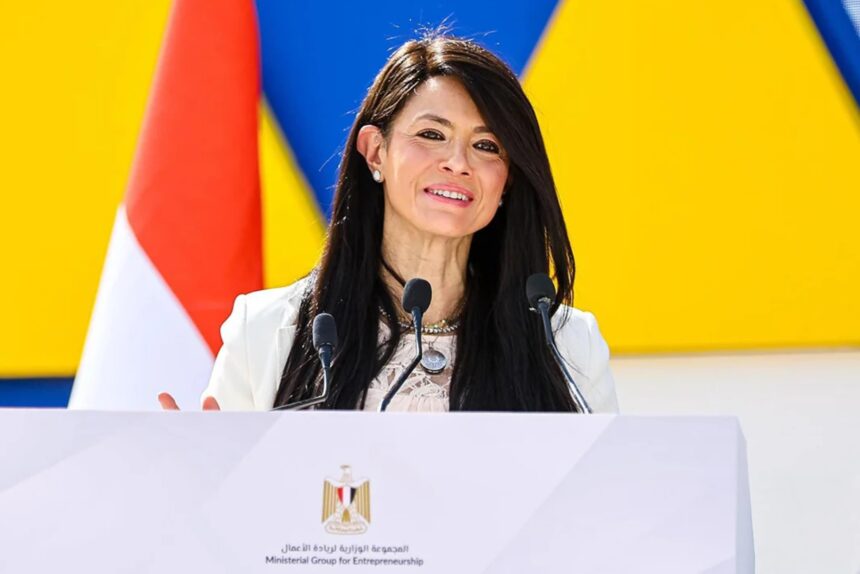
Announced during the RiseUp Summit in the presence of Prime Minister Moustafa Madbouli and senior cabinet officials, the charter introduces a unified regulatory guide, coordinated government financing mechanisms, and a sweeping package of tax and customs incentives for qualifying startups.
At its centre, the initiative seeks to “encourage venture capital activity and attract up to USD 5 billion in startup investment” through government resources, guarantees, and co-investments, while aligning public policy to strengthen Egypt’s entrepreneurial ecosystem and reduce barriers to growth.
What You Should Know About the Startup Charter
The Startup Charter represents Egypt’s first unified regulatory guide tailored specifically to startups. Designed as a comprehensive framework, it consolidates procedures, documentation requirements, fees, and issuance processes into a single, coordinated system.
According to the announcement, it is “a unified financing initiative aiming to coordinate available financing resources across government entities,” while activating innovative mechanisms to maximize their impact “by up to fourfold.”
By formalizing processes that were previously fragmented across institutions, the charter seeks to simplify the startup journey, from registration to scaling, while ensuring that relevant authorities adopt the guide as a standard operating framework.
A dedicated feedback and complaints channel will also allow founders to report implementation challenges, reinforcing the charter’s commitment to responsiveness and policy refinement through data and real-time startup feedback.
Driving $5 Billion in Venture Capital Investment
A core pillar of the charter is its ambitious investment target. The government intends to attract up to $5 billion in startup funding by deploying public resources, offering guarantees, and co-investing alongside venture capital funds and private-sector financiers.
By sharing risk and capital commitments, the state aims to catalyze private investment flows into high-growth ventures. This blended finance approach showcases a strategic shift, rather than relying solely on public funding, Egypt is addressing itself as a partner to private investors.
The objective is not only to increase capital availability but also to stimulate a more mature and sustainable venture ecosystem capable of long-term expansion.
Supporting 5,000 Startups and Creating 500,000 Jobs
Beyond investment inflows, the charter outlines clear economic development goals.
Among its key objectives is to “align government policies to effectively empower the startup ecosystem and support the growth of up to 5,000 startups.”
These firms are expected to expand their economic footprint and contribute to the creation of “approximately 500,000 direct and indirect jobs.”
By emphasizing both direct employment within startups and indirect job creation across supply chains and service sectors, the charter underscores entrepreneurship as a lever for broad-based economic impact.
The initiative also aims to support startups in expanding into international markets, while strengthening local talent pipelines and reducing brain drain.
A Unified Regulatory Guide and Monitoring Framework
The Startup Charter introduces more than financial incentives, it embeds oversight and accountability mechanisms into the ecosystem.
The guide details “the required documents, applicable fees, and issuance procedures,” and will be formally adopted by relevant authorities to ensure consistency in implementation.
Importantly, it will be linked to monitoring, evaluation, and tracking systems to ensure “continuous improvement of processes and their development based on data and feedback.”
In parallel, the Ministerial Group for Entrepreneurship plans to launch an observatory dedicated to monitoring entrepreneurship policy implementation.
This observatory is expected to track progress, assess policy outcomes, and recommend adjustments to improve effectiveness over time.
Simplified Tax System for Qualifying Startups
One of the charter’s most notable features is its simplified tax regime for startups generating annual revenues not exceeding EGP 20 million. Eligible enterprises will benefit from a streamlined income tax ranging between 0.4% and 1.5%, depending on annual business volume.
In addition, participating startups will be exempt from taxes on “capital gains resulting from the disposal of fixed assets, machinery, or production equipment,” as well as from taxes on dividends, stamp duty, and registration and documentation fees.
They will also be exempt from the application of the discount system or advance payments. VAT returns may be submitted quarterly instead of monthly.
Also, the first tax inspection will only occur after five years, providing young firms with operational breathing space during their early growth stages.
Customs Relief and Import Incentives
The charter further addresses operational costs for startups reliant on imported machinery and production inputs.
Companies that obtain a startup classification certificate will benefit from a unified customs tax rate of 2% on imported machinery and equipment necessary for their activities.
Additionally, beneficiary startups may pay customs duties on imported production supplies in installments over a six-month period.
This measure is particularly significant for hardware, manufacturing, and industrial startups, where upfront equipment and supply costs can pose substantial financial barriers.
Why this Matters
Beyond fiscal incentives, the Startup Charter reflects a broader strategic vision. By aligning government agencies, simplifying compliance, and institutionalizing monitoring systems. Egypt aims to build a cohesive entrepreneurial ecosystem capable of retaining local talent and competing globally.
The initiative explicitly seeks to support startups in expanding into international markets while strengthening domestic talent pipelines.
In doing so, policymakers hope to curb the migration of founders and skilled professionals, positioning Egypt as a viable and competitive base for innovation-driven enterprises.
Talking Points
Egypt’s Startup Charter is undeniably ambitious and structurally well thought-out, particularly in its attempt to combine investment mobilization, tax relief, regulatory clarity, and policy monitoring under one coordinated framework.
Targeting $5 billion in venture capital and 500,000 jobs signals strong political will, and the simplified tax regime, especially rates as low as 0.4% and delayed tax inspections, could meaningfully ease early-stage pressure on founders.
However, the real test lies not in policy design but in execution. Egypt, like many emerging markets, has historically struggled with bureaucratic bottlenecks and uneven policy implementation. So, the promise of a “unified regulatory guide” and monitoring systems will only matter if agencies truly align and enforcement is consistent.
Additionally, while tax and customs incentives are attractive, they may not be sufficient on their own to unlock $5 billion in venture capital without parallel improvements in currency stability, exit opportunities, investor protection, and macroeconomic confidence.
The observatory and feedback channels are promising accountability tools, but their effectiveness will as well depend on whether startup feedback genuinely influences policy adjustments.
In essence, the Charter provides a strong structural blueprint for ecosystem growth, yet its success hinges heavily on sustained political commitment, institutional coordination, and broader economic stability beyond the startup sector itself. These are factors that have, over the years, handicapped promising policies across Africa.
______________________
Bookmark Techparley.com for the most insightful technology news from the African continent.
Follow us on X/Twitter @Techparleynews, on Facebook at Techparley Africa, on LinkedIn at Techparley Africa, or on Instagram at Techparleynews