


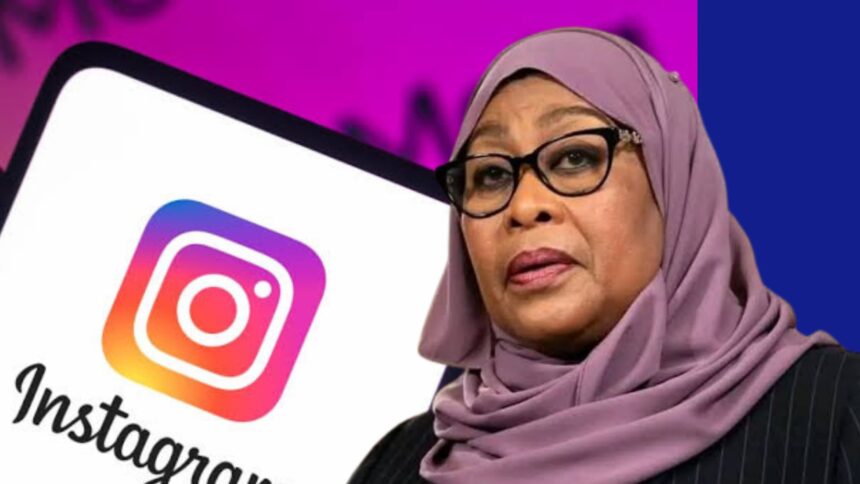
Meta’s restriction of Instagram accounts belonging to prominent Tanzanian activists has triggered widespread concern across East and West Africa, after internal records revealed that the Tanzanian government requested the removal of content it claimed violated several national laws.
The request, issued through the Tanzanian Communication Regulatory Authority (TCRA), cited statutes ranging from the Constitution (1977) to the Cybercrime Act (2015) and the National Security Act.
Alleging that the activists’ posts, including calls for peaceful protests and criticism of state actions during the tense post-election period, breached national security and online-content regulations.
According to Meta, the company “removed two items for violating Community Standards” and “temporarily restricted one item in Tanzania in response to regulatory demands,” noting that non-compliance risked a nationwide shutdown of Meta platforms.
The decision immediately drew criticism from digital rights experts, who described the takedowns as targeted, politically influenced, and harmful to public-interest reporting at a critical moment for Tanzanian democracy.
What Is Happening in Tanzania?
Tanzania has witnessed heightened political tension following its recent elections, with reports of protests, clashes, and allegations of suppression of opposition voices.
Activists and citizen journalists have increasingly turned to Instagram, TikTok, and X to document events on the ground, often posting faster and more comprehensively than traditional newsrooms.
According to digital rights experts, these platforms have become essential for transparency.
As PolicyLab’s Africa Senior Program Manager Lucy Ezemba noted, “These big voices in Tanzania aren’t just posting; they document the happenings for future references.”
For many within and outside Tanzania, social media has become the primary source for real-time updates on unrest, election disputes, and human-rights allegations.
The Tanzanian Government–Meta Account Banning
The TCRA’s request to Meta involved a sweeping citation of Tanzanian laws, from cybercrime to child protection and personal-data regulation, arguing that certain posts made by the activists incited unrest.
Meta acknowledged receiving explicit warnings from regulators that failure to comply could lead to a nationwide blockade of its platforms. As a result, Meta took down two posts and geo-restricted one within Tanzania.
However, experts argue that the government’s justification lacks transparency.
Ezemba labeled the intervention as unusually aggressive, saying:
“For their accounts to be taken down… at a time like this when they are reporting post-election protests… is very targeted.”
She added that such takedowns often resemble “a court order… where government just points out these are the important accounts we want you to get down for us.”
Activists Affected and What They Did
The most notable targets are Mange Kimambi, who has more than 2.7 million Instagram followers, and Maria Sarungi-Tsehai, both longstanding critics of the Tanzanian government and key figures in mobilizing civil awareness online.
Their pages frequently shared protest updates, eyewitness videos, and commentary on state actions.
The restricted content reportedly included calls for peaceful demonstrations and criticism of official responses to electoral disputes.
According to Ezemba, silencing such voices at such a moment undermines public documentation of state behavior.
“If someone like me from Lagos wants access to these events… these are the right activists’ pages to go to for details.” She warned that removing them now “is very unusual in a time like this.”
Experts’ Position on the Banning Action
Reactions from regional analysts paint a picture of political overreach paired with platform compliance driven by fear of economic sanctions.
Kenyan government and policy analyst Abdullahi Alas questioned the government’s claim of preventing incitement, arguing as follows:
“The question now should be who is inciting violence? It’s the government because they have monopoly of violence.”
He added that shutting down online voices does not erase evidence.
“Even if you shut down the internet, the recorded postings are going to be archived.”
Meanwhile, Nigerian tech analyst Ridwan Adelaja highlighted the conflicting incentives between public interest and corporate survival.
He noted that platforms often comply with government directives to protect their market access.
“To the platforms… it is business as usual. They don’t want to lose their businesses by being sanctioned by governments.”
He added that this compliance becomes troubling when citizens’ rights are dismissed as secondary to political pressure.
Why This Matters to Africa’s Technology and Sociopolitical Environment
This episode underscores a growing trend across Africa where governments leverage digital-regulation frameworks to silence dissent, especially when facing political pressures.
Experts warn that Tanzania’s actions could inspire similar tactics in other countries, particularly where political tensions run high.
As Adelaja emphasized, “When you go about silencing them, it becomes a serious pain point… governments will always try to protect their entities and images… but when the citizens want to express those rights, the government might see it as a threat to national security.”
The incident also raises pressing questions about the responsibility of global tech platforms operating in politically sensitive environments.
Rights advocates argue that companies like Meta must conduct deeper human-rights assessments before acting on government takedown requests.
Ezemba stressed the importance of “content-specific” evaluations, saying Meta “did not really care” to assess whether complying with the order would contribute to suppression of democratic rights.
For African civil society, the implications go far beyond Tanzania, the continent’s digital spaces are increasingly becoming battlegrounds where government power, platform compliance, activism, and democracy intersect.
How this case unfolds will shape the future of online political speech, and perhaps determine whether social media remains a tool for liberation or a controlled extension of state authority.
Talking Points
Meta’s decision to restrict the accounts of Tanzania’s most influential activists at the height of post-election unrest is deeply troubling, not only for what it says about state pressure, but for what it reveals about the fragility of digital rights across Africa.
When governments can easily trigger takedowns by invoking broad, ambiguous laws, and when platforms comply out of fear of market retaliation, democracy becomes the casualty.
These activists were not merely posting opinions; they were documenting events, preserving evidence, and offering alternative narratives in a political climate where official accounts dominate.
Silencing them, whether through legal requests, opaque content policies, or quiet algorithmic suppression, undermines public transparency and signals to other African governments that digital repression is both possible and cost-free.
This moment demands scrutiny of not only of Tanzania’s use of regulatory power, but of Meta’s and other platforms’ willingness to prioritize business continuity over fundamental rights to information, expression, and civic participation.
_____________________
Bookmark Techparley.com for the most insightful technology news from the African continent.
Follow us on X/Twitter @Techparleynews, on Facebook at Techparley Africa, on LinkedIn at Techparley Africa, or on Instagram at Techparleynews