



African startups and small businesses often receive considerable attention at the idea stage, attracting incubators, accelerators, grants, and seed funding designed to help founders transform concepts into viable enterprises.
Yet for thousands of businesses that have successfully crossed the startup hurdle and begun generating revenue, a different challenge emerges, how to scale sustainably without access to experienced senior leadership.
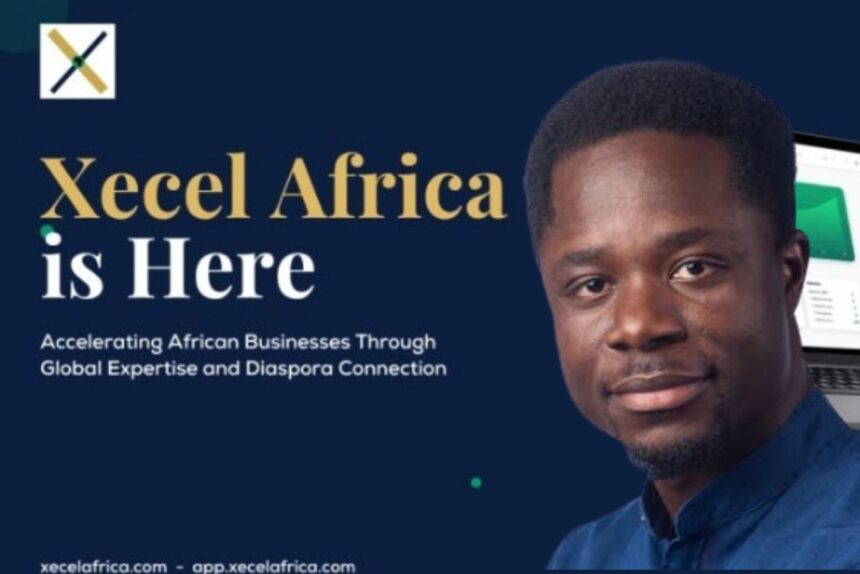
It is this overlooked segment of Africa’s entrepreneurial ecosystem that Ghanaian startup, XecelAfrica, is seeking to serve through a new fractional executive platform designed specifically for growth-stage small and medium-sized enterprises (SMEs).
Founded in February 2026 by Florence Antwi and Oscar Asamoah, the company aims to connect revenue-generating African businesses with experienced C-suite professionals. This includes vital portfolios like chief financial officers, chief operating officers, chief marketing officers, chief human resources officers, and chief technology officers, on flexible and affordable terms.
By leveraging technology and a structured engagement model, the startup hopes to help ambitious African businesses avoid costly growth mistakes, strengthen leadership capacity, and unlock sustainable expansion across the continent.
What is XecelAfrica?
XecelAfrica is a Ghana-based startup building a platform that matches growth-stage African businesses with experienced executives drawn from across Africa and the African diaspora.
Rather than requiring companies to hire expensive full-time executives, the platform provides access to high-level leadership expertise on a flexible basis, enabling businesses to benefit from strategic guidance without incurring the costs associated with permanent executive appointments.
The founders believe that many African businesses possess strong products, loyal customers, and promising growth prospects but lack access to the senior-level expertise needed to navigate expansion successfully.
Through its platform, XecelAfrica seeks to bridge this gap by creating a marketplace where experienced business leaders can work directly with SMEs facing operational, financial, marketing, technology, or human resource challenges.
According to co-founder Florence Antwi, the platform relies on intelligent matching mechanisms to ensure businesses are paired with the most suitable professionals for their circumstances.
“Our platform uses AI-assisted matching to pair businesses with the right expert based on sector, growth stage, and challenge type. Engagements follow a structured 90-day arc, Scope, Rhythm, Review, with agreed deliverables and KPIs tracked throughout,” the founder explained.
The Problem XecelAfrica Wants to Solve
At the heart of XecelAfrica’s mission is what its founders describe as a largely overlooked structural gap within Africa’s entrepreneurial support ecosystem. While startup-focused initiatives have expanded significantly across the continent over the past decade, businesses that have progressed beyond the startup phase often find themselves without adequate support.
They are no longer early-stage ventures seeking basic training or seed capital, yet they have not reached the scale where they can comfortably employ experienced C-suite executives. Antwi argues that this “missing middle” has received little attention from investors, development organisations, and entrepreneurship support programmes.
“The gap is structural, and largely invisible in public discourse,” Antwi said. “Most support for African businesses focuses on early-stage training, grants, and seed funding. But there is a critical middle-layer of businesses with revenue between US$50,000 and US$5 million, employees, repeat customers, and genuine ambition that is completely under-served.”
According to the founder, the consequences of this gap can be severe. Without access to strategic leadership, many businesses struggle with cash-flow management, operational inefficiencies, failed expansion efforts, and avoidable growth-related crises that ultimately limit their long-term success.
“These businesses are too sophisticated for startup incubators, and too small to afford full-time C-suite executives. They make costly scaling mistakes, cash flow crises, operational chaos, failed market expansion, precisely because they have no access to the strategic thinking that would prevent them,” Antwi added.
“Fractional Executive”: What It Means
One of the key concepts underpinning XecelAfrica’s model is the idea of the “fractional executive.”
In practical terms, a fractional executive is a highly experienced senior leader who works with a company on a part-time, project-based, or temporary basis rather than as a full-time employee. This approach allows businesses to access executive-level expertise without bearing the substantial costs associated with permanent leadership hires.
For many SMEs, employing a full-time chief financial officer, chief operating officer, or chief technology officer may be financially unrealistic despite the strategic value such professionals can bring.
Fractional executives offer a middle ground by providing targeted expertise for specific challenges, growth phases, or transformation projects.
Through XecelAfrica’s platform, businesses can engage seasoned executives who bring years of leadership experience while maintaining the flexibility needed by growing enterprises. The model is particularly relevant in emerging markets where access to executive talent remains limited and affordability is a major concern.
The Businesses in Focus
Unlike many entrepreneurship support initiatives that primarily target startups, XecelAfrica is focused on businesses that have already demonstrated market viability.
The company specifically serves SMEs that have achieved product-market fit, are generating revenue, and have begun building operational structures around their businesses. These enterprises typically employ staff, maintain recurring customer bases, and possess clear ambitions for growth and expansion.
According to Antwi, the target businesses generally generate annual revenues ranging from US$50,000 to US$5 million. While they have moved beyond the uncertainty of the startup phase, they often face increasingly complex decisions regarding finance, operations, technology, market expansion, talent management, and organisational growth.
These businesses represent a critical segment of Africa’s economy, contributing significantly to employment generation, innovation, and economic development. Yet many remain constrained by leadership gaps that prevent them from reaching their full potential.
The “90-Day Process”: How the Platform Will Work
To ensure accountability and measurable outcomes, XecelAfrica has developed a structured engagement framework built around a 90-day cycle known as “Scope, Rhythm, Review.”
The first stage, Scope, focuses on identifying the business’s core challenges, defining objectives, and agreeing on deliverables. During this phase, both the business and the executive align expectations and establish key performance indicators (KPIs) that will be used to measure success.
The second stage, Rhythm, involves the active implementation period, during which executives work closely with business leaders to address identified challenges, strengthen processes, and execute agreed strategic initiatives.
The final stage, Review, assesses performance against predetermined goals and evaluates the outcomes achieved during the engagement period. This process enables businesses to measure impact while ensuring that executive support remains focused on tangible results rather than general advisory services.
According to the company, all engagements are supported by AI-assisted matching and performance tracking systems designed to maximise the effectiveness of each executive-business relationship.
Building Partnerships and Preparing for Launch
Although XecelAfrica remains in its validation phase, the startup has already begun establishing relationships across the African entrepreneurship ecosystem.
Antwi revealed that the company has engaged with several potential partners, including the founder of ABC Penthouse in Nigeria, who has mentored hundreds of entrepreneurs across the continent.
“We have had conversations with the founder of ABC Penthouse in Nigeria, a mentor to more than 300 businesses and entrepreneurs across the continent,” the founder noted.
The startup is also exploring collaboration opportunities with Duapa Werkspace, a Ghanaian organisation that supports entrepreneurs and is expected to play a key role in the company’s pilot programme.
In addition, XecelAfrica has connected with a Belgium-based university lecturer responsible for developing the Nchungang Mix framework, an African-focused business model designed to adapt management principles to local market realities.
“We are also actively engaging with media partners and working to onboard our first businesses onto the platform,” co-founder Antwi expressed.
Currently, the company is conducting interviews with Ghanaian SMEs, refining its AI-powered matching model, and expanding its network of executive professionals ahead of the launch of its minimum viable product (MVP), which is scheduled for the third quarter of 2026.
Why This is Important
The significance of XecelAfrica’s approach extends beyond the launch of another startup platform. It speaks directly to one of the most persistent challenges facing African entrepreneurship, the shortage of accessible strategic leadership for businesses transitioning from survival to scale.
While funding remains important, business growth often depends just as much on sound decision-making, operational discipline, financial planning, talent management, and market expansion strategies.
These are areas where experienced executives can make the difference between sustainable growth and costly failure.
By making executive expertise more accessible through a fractional model, XecelAfrica is attempting to democratise strategic leadership for Africa’s growing businesses.
If successful, the platform could help reduce scaling failures, strengthen SME resilience, improve job creation, and support the emergence of a stronger generation of African companies capable of competing regionally and globally.
__________________________________
Bookmark Techparley.com for the most insightful technology news from the African continent.
Follow us on X/Twitter @Techparleynews, on Facebook at Techparley Africa, on LinkedIn at Techparley Africa, or on Instagram at Techparleynews