


Artificial intelligence is transforming classrooms worldwide, but are schools ready for the change? New AI tools promise speed, personalization, and efficiency, making them an attractive addition to modern education.
The global AI in education market size reached USD 4.8 Billion in 2024. In a recent report by IMARC Group, the market is expected to reach USD 75.1 Billion by 2033, exhibiting a growth rate (CAGR) of 34.03% during 2025-2033.
The increasing availability of digital devices, escalating demand for personalized learning experiences, the rising need to alleviate administrative tasks, expanding educational opportunities, and the rapid advancement of AI technologies are some of the major factors propelling the market.
Tech giants like Microsoft, OpenAI, and Google are racing to embed AI in schools, with initiatives like Microsoft’s AI training for 200,000 students and educators in the United Arab Emirates, and OpenAI’s pledge to make ChatGPT available to teachers in government schools across India.
Despite this promise and momentum, 70% of educators report feeling unprepared to integrate AI effectively, a development that has highlighted the need for strategic implementation, as many fear losing critical learning standards and values.
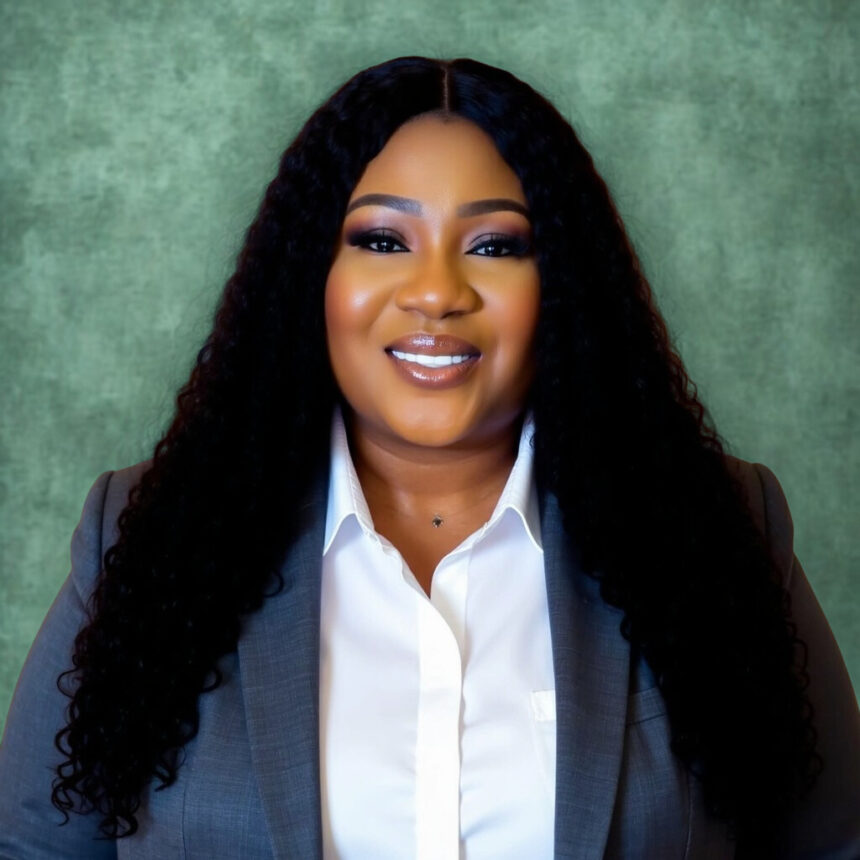
To shed light on this issue, we spoke with the CEO and Co-founder of GMind AI, Dr. Success Ojo, a cybersecurity and AI strategist, who shares insights from her work with hundreds of thousands of educators and school leaders on how to implement AI safely and effectively.
According to the AI expert, “the schools that succeed won’t be the ones that adopted AI first, but the ones that adopted it well enough to last.”
Writer: Artificial intelligence is entering schools at a remarkable pace. What are you seeing right now?
Dr. Success Ojo: AI is becoming part of school life very quickly. Sometimes through official pilots, sometimes through individual teachers experimenting on their own, and sometimes because school leaders feel pressure to keep up. What’s happening more quietly is that many schools are adopting AI faster than they are deciding what role it should play.
Writer: You don’t sound opposed to adoption itself. What concerns you most?
Dr. Success Ojo: I’m not opposed to AI in education at all. I believe it’s inevitable. What concerns me is not speed, but speed without intention. Education is one of the few systems where moving fast without clarity can create long-term damage that’s difficult to undo.
Writer: What questions do you think some schools are asking today that top schools are not putting forward before adopting AI?
Dr. Success Ojo: Most schools start with questions like: What can this tool do? How much time will it save? How quickly can we deploy it?
Those questions focus almost entirely on capability and efficiency.
Writer: And you don’t think those are enough?
Dr. Success Ojo: No, they aren’t. They miss what matters most.
The better questions are: What kind of thinking do we want to protect? Where must human judgment always lead? What rules need to exist before AI is allowed to scale?
When schools don’t ask those questions first, AI ends up amplifying weaknesses that already exist in the system. Top schools understand this, which is why they are building safe, well-defined systems alongside their adoption of AI, not after it.
Writer: From your perspective, what does AI fundamentally change about schools?
Dr. Success Ojo: It reinforces an important truth. Schools are not software environments. They are institutions. They carry values, responsibility, and long-term consequences. If AI is introduced without respecting that, schools gradually lose control over how learning happens.
Writer: How has that belief shaped your work at GMind AI?
Dr. Success Ojo: At GMind AI, we don’t build standalone tools. We build school AI infrastructure. AI is designed alongside a school’s curriculum, policies, data boundaries, and identity.
Teachers remain the authority in classrooms. Students engage with AI in guided ways. School leaders decide where AI can support learning and where human judgment must always lead. In this model, AI adapts to the school, not the other way around.
Writer: Many people assume educators are resisting AI. Has that been your experience?
Dr. Success Ojo: Not at all. In 2025 alone, I led AI and digital learning training for over 350,000 educators and school leaders worldwide. A clear pattern emerged.
Educators are not afraid of AI. They are afraid of losing control. They want support, not surrender. They want tools that reduce workload without weakening pedagogy or standards.
Writer: How does GMind AI help schools apply these ideas without adding complexity?
Dr. Success Ojo: Most schools don’t want to design systems from scratch. They want clarity. They don’t want additional complexity or workload, yet they want safe AI for their schools.
GMind AI works by translating a school’s existing rules, curriculum, and policies into how AI behaves. Schools tell the system what they want AI to support, what they want it to restrict, and where humans must always decide. We automate those choices, so schools don’t have to manage AI every day. The system already reflects their intent.
Writer: What does that mean in practical terms for teachers and school leaders?
Dr. Success Ojo: Teachers don’t need to figure out how to use AI correctly each time they open a tool. The boundaries are already there.
For school leaders, it means oversight without micromanagement. They can be confident that AI is working within agreed rules, aligned with curriculum and standards, rather than reacting to issues after they surface.
Writer: You often speak about institutional memory. Why does that matter now?
Dr. Success Ojo: When experienced teachers leave, years of instructional insight often leave with them. Curriculum knowledge lives in people rather than systems. AI should help schools retain and grow that knowledge over time, not erase it.
Efficiency matters. Continuity matters more.
Writer: Some argue that rules slow innovation. How do you respond?
Dr. Success Ojo: Rules don’t slow meaningful innovation. They make it durable. Once learning habits change, they’re hard to reverse. Boundaries must exist before scale, not after.
Writer: How do you see this approach shaping schools in 2026?
Dr. Success Ojo: By 2026, the difference will be very clear. Not between schools that use AI and those that don’t, but between schools that treated AI as a quick add-on and those that treated it as infrastructure.
The schools that get this right will have safer learning environments, more confident teachers, and stronger institutional memory. AI will be everywhere, but leadership will show up in how well it was governed.
Writer: If schools take just one thing from this moment, what should it be?
Dr. Success Ojo: AI is inevitable. What matters is how it’s governed. When schools design AI alongside their values and systems, they can scale it safely without losing control. That is what I advocate for.
2026 takeaway
By 2026, the schools that succeed won’t be the ones that adopted AI first, but the ones that adopted it well enough to last.
——————-
Bookmark Techparley.com for the most insightful technology news from the African continent.
Follow us on Twitter @Techparleynews, on Facebook at Techparley Africa, on LinkedIn at Techparley Africa, or on Instagram at Techparleynews.