



Saudi Arabia’s HALA Capital is sharpening its focus on fintech, artificial intelligence and logistics, three of the Kingdom’s most strategic growth sectors. This is as it prepares to roll out new investment structures following regulatory approval to scale its activities.
With a newly granted licence from the Capital Market Authority, the Riyadh-based firm is positioning itself at the heart of an ecosystem that is increasingly drawing interest from global investors seeking exposure to Saudi Arabia’s economic transformation.
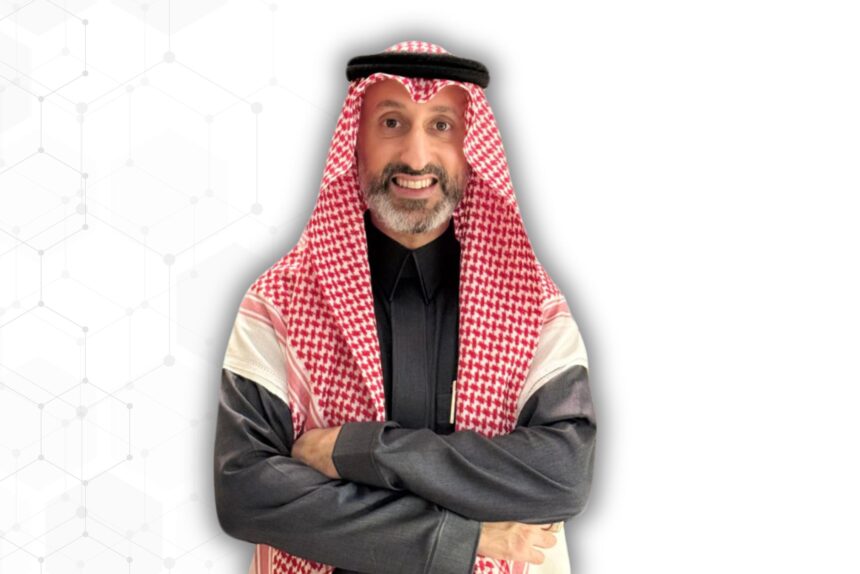
Ali Abussaud, founder and chief executive of HALA Capital, described the licence as both a regulatory milestone and a validation of the firm’s long-term strategy.
“This is the realization of an ambition that once felt remote,” Abussaud told Arab News. “It reflects accumulated knowledge, market experience and clarity on what kind of gaps in the market — and also what kind of problems — we are going to end up solving.”
Expanding the mandate
The startup says the approval from the Capital Market Authority significantly broadens HALA Capital’s operational scope, enabling it to deploy more sophisticated investment vehicles and play a deeper role across Saudi Arabia’s venture and mid-cap landscape.
Abussaud argues that while attention often gravitates towards early-stage startups or mega-projects, a critical segment of the market remains underserved: Gulf mid-cap and legacy firms.
HALA Capital aims to occupy this gap as what Abussaud describes as a “boutique capital house”, offering customised solutions and hands-on engagement that larger institutions, constrained by scale and process, often cannot provide.
From banking to venture investing
HALA Capital’s strategy has its roots in a period when venture capital activity across the Middle East and North Africa was sparse and fragmented.
Abussaud, who transitioned into investing after a career in banking and corporate consulting, recalls questioning the absence of a structured venture ecosystem in the region.
That question led to HALA’s first true venture-style investment in 2016, a Dubai-based insurtech startup. The experience proved formative, exposing the limits of applying traditional financial metrics to early-stage companies.
Between 2016 and 2019, Abussaud and his partners invested their own capital into 12 startups, effectively testing and refining their investment thesis before formalising HALA Capital’s model.
What you need to know
Among HALA’s priority sectors, artificial intelligence stands out as both promising and misunderstood. For HALA, genuine AI innovation must be rooted in local data, regional use cases and defensible intellectual property, rather than surface-level adoption of global tools.
Logistics, which Abussaud describes as “one of the biggest sectors we have,” presents a different set of challenges.
He notes that many founders stumble by attempting to compete head-on with entrenched players in first- and last-mile delivery, a capital-intensive and highly competitive space.
HALA Capital instead favours startups that introduce new frameworks or technologies and collaborate with incumbents, often through offtake agreements or partnership-based models.
Redefining what counts as a Saudi startup
As Saudi Arabia attracts a growing number of international founders, HALA Capital has tightened its definition of what constitutes a Saudi startup.
Nationality, Abussaud stressed, is not the determining factor. A company qualifies if it is headquartered in the Kingdom or has established, substantive operations there, with Saudi Arabia as its primary market.
An Egyptian-founded business that relocates its team and focuses its commercial activity on Saudi Arabia qualifies. What does not qualify, he said, are companies seeking funding merely to “expand into Saudi Arabia” at some future point.
Remote management models are insufficient, he added, particularly in a market where relationships, local presence and regulatory engagement matter deeply.
As Saudi Arabia’s venture and mid-market ecosystem matures, experts say HALA Capital is betting that the Kingdom’s next phase of growth will be driven not just by capital, but by tailored support for businesses ready to scale.
Talking Points
HALA Capital’s expanded mandate following its Capital Market Authority licence is a strong signal that Saudi Arabia’s venture and mid-market ecosystem is entering a more mature phase, where specialised capital providers can play a decisive role.
What stands out is HALA’s deliberate focus on underserved Gulf mid-cap and legacy businesses, firms that are often too large for venture capital but overlooked by traditional banks, despite running sizeable operations.
At Techparley, we see HALA’s focus on underserved Gulf mid-cap and legacy businesses as particularly significant. These are companies with real traction and scale, yet they often fall through the cracks of traditional banking and mainstream venture capital.
The firm’s tightened definition of what constitutes a Saudi startup underscores a broader market reality: success in the Kingdom increasingly requires physical presence, local teams, and the ability to operate within Saudi Arabia’s regulatory and commercial environment.
Overall, HALA Capital’s strategy reflects a shift from speculative investing to problem-solving capital, supporting businesses that are already operating on the ground and need structure, insight and patient backing to scale sustainably.
——————-
Bookmark Techparley.com for the most insightful technology news from the African continent.
Follow us on Twitter @Techparleynews, on Facebook at Techparley Africa, on LinkedIn at Techparley Africa, or on Instagram at Techparleynews.