



Nigeria’s urban population has grown steadily over the past decade, but its waste management systems have struggled to keep pace.
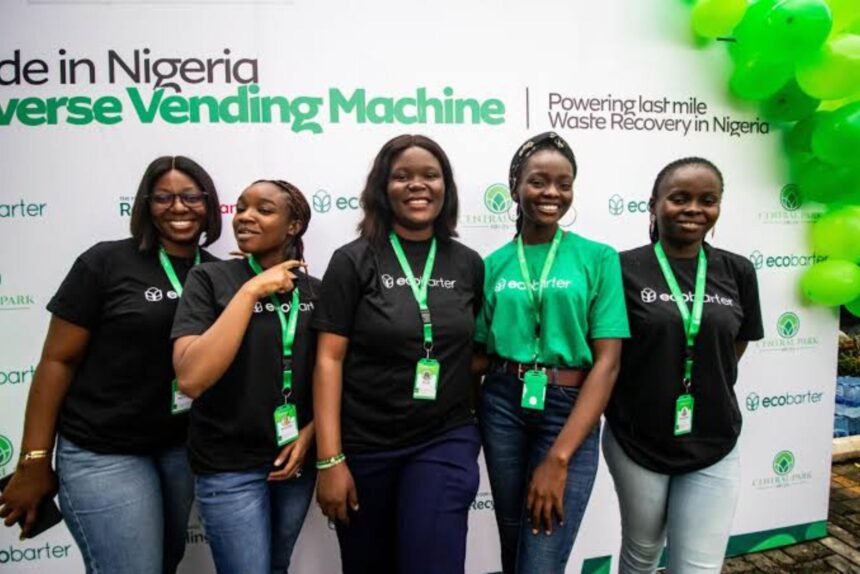
Amid this environmental and operational chaos, Ecobarter, a tech-enabled social enterprise, is positioning itself as a solution. Founded in 2018 by Rita Idehai, the company was born from her frustration with the lack of recycling infrastructure for items she collected at home.
The Lagos-based startup incentivises households and businesses to recycle, using digital tools and strategic partnerships to scale in a challenging waste management landscape
“When we think about scale, we’re no longer thinking about complete ownership,” Idehai explains. “We’re thinking about becoming an infrastructure backbone that others can plug into.”
Nigeria’s urban waste crisis
In major cities such as Lagos, Abuja, and Port Harcourt, the consequences are visible. Overflowing refuse along streets, plastic-clogged drains, and the persistent stench of unmanaged waste in dense neighbourhoods are so rampant.
Estimates suggest Nigeria generates over 30 million tonnes of waste annually, yet much of it goes uncollected for days or weeks.
Disposal is frequently inadequate, with garbage often dumped rather than properly processed. Local government councils shoulder most responsibility for collection, supported by a handful of private operators.
What you should know
Ecobarter monetises waste, plastic, aluminium, and other metals by transforming it into new products. Unlike conventional waste collection services that charge households, Ecobarter pays users for recyclable materials. In 2025, the company expanded to organic waste, channelled into a biogas plant in Abuja.
Idehai emphasises that the model is behavioural as much as operational. By assigning monetary value to waste, the company incentivises proper separation and storage at the source.
Initially, operations were largely manual. Between 2018 and 2021, Idehai relied on direct outreach to neighbours and local residents to onboard users. Scheduling involved phone calls, informal agreements, and Google forms, while payments were improvised.
In 2021, Ecobarter launched a mobile application to streamline its operations. The app allows customers to schedule pickups, track collections, and receive payments, which can be withdrawn or used to pay for utilities like airtime and electricity.
On collection days, waste is weighed on-site and logged into the app, with users receiving immediate confirmation and earnings details. Drop-off points with QR codes offer flexibility for those unable to wait for scheduled pickups.
A hybrid collection network
Ecobarter’s collection system combines three models:
- Company-employed collectors in high-density areas to maintain control and service quality.
- Partnerships with informal waste operators, digitising their operations and enabling efficient management of collections and payments.
- Small businesses acting as collection points, expanding Ecobarter’s reach without heavy investment in infrastructure.
This distributed approach allows the company to scale efficiently. It currently serves over 3,600 households, collecting between 250,000 and 400,000 kilograms of waste annually. Since inception, Ecobarter has processed more than one million kilograms of waste.
Turning waste into products and revenue
Revenue comes from two streams: in-house recycling to produce new products, and sales to third-party processors.
For difficult-to-recycle materials like sachet water packaging, Ecobarter converts them into fabrics used to produce tote bags, school bags, and other items, which are purchased by organisations including the Tony Elumelu Foundation and UNICEF.
Operating in Nigeria’s waste sector is not without challenges. Turf wars with government agencies and infrastructure constraints complicate collection and processing.
Ecobarter mitigates friction by encouraging households to store recyclables at home rather than leaving them for municipal collection.
Scaling with partners, not trucks
Rather than continuing as a fully integrated operator, Ecobarter is increasingly positioning itself as a technology layer within the waste management value chain.
In cities like Port Harcourt and Ibadan, the company operates without owning collection trucks, relying on local partners. Even in Lagos, only one truck is company-owned, with additional capacity supplied by partners.
This asset-light model reduces capital expenditure while allowing Ecobarter to focus on technology, coordination, and user engagement.
Funding and future plans
Since its founding, Ecobarter has been largely bootstrapped, supplemented by grants. Idehai notes that traditional venture capital models often do not align with the realities of waste management, which is capital-intensive and slower to scale.
The company is exploring alternative financing structures and aims to raise $1.5 million to expand its partner network and invest in shared infrastructure. Proposed mechanisms include a lease-to-own model, enabling collection partners to access equipment without high upfront costs.
By combining technology, behavioural incentives, and strategic partnerships, Ecobarter is redefining waste management in Nigeria.
Experts say its model demonstrates that tackling environmental challenges can go hand-in-hand with creating economic value for households and businesses, providing a potential blueprint for urban sustainability across Africa.
Talking Points
Ecobarter is turning Nigeria’s waste crisis into an economic opportunity by paying households and businesses for recyclable materials, incentivising proper waste separation.
The company’s approach is as much behavioural as operational: assigning monetary value to waste encourages users to store and segregate materials rather than discard them indiscriminately.
At Techparley, we see Ecobarter’s digital platform as a game-changer, providing predictability and transparency in a sector traditionally plagued by inconsistent collection and payment.
The hybrid collection model, combining company-employed collectors, partner networks, and local business drop-off points allows scale without heavy investment in infrastructure.
Renewable energy and organic waste collection, including biogas production, demonstrate the company’s ability to create both environmental and social impact.
Ecobarter’s technology layer, including a mobile app for scheduling, tracking, and payments, enhances efficiency for both end-users and partner collectors.
Turning hard-to-recycle plastics into products like tote bags and school bags illustrates innovative circular economy thinking and creates additional revenue streams.
——————-
Bookmark Techparley.com for the most insightful technology news from the African continent.
Follow us on Twitter @Techparleynews, on Facebook at Techparley Africa, on LinkedIn at Techparley Africa, or on Instagram at Techparleynews.