



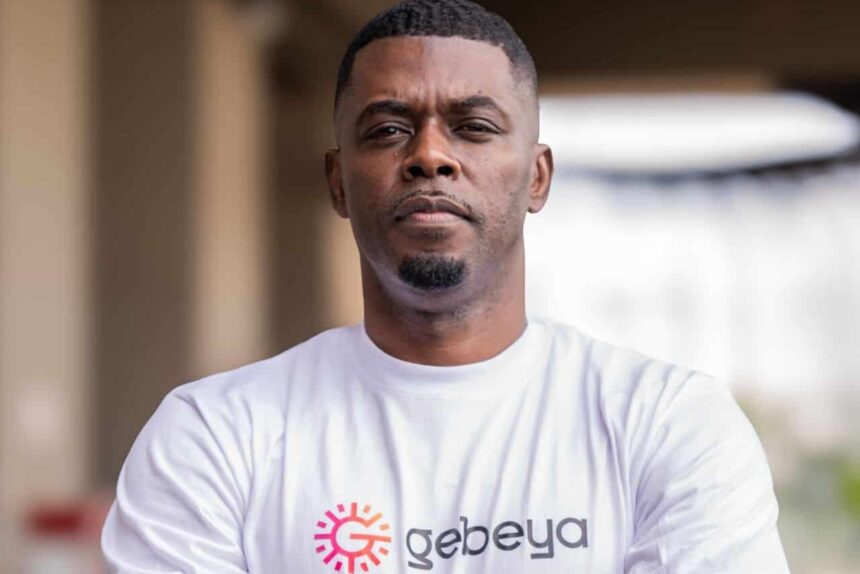
When Ethiopian startup, Gebeya, launched its new suite of AI products just four months ago, few would have predicted the speed of adoption. Today, the company reports 85,000 users across its tools, with its flagship product, Dala, emerging as the clear breakout success.
The team says Dala, short for Gebeya Dala, allows users to build applications using natural language prompts, removing the need for coding skills.
The concept mirrors the rapid rise of platforms such as Lovable, the multi-billion-dollar AI startup that inspired its creation. But Gebeya Dala’s founder, Amadou Daffe insists Dala is not merely an African replica.
“The first version of Gebeya (Gebeya 1.0) was actually a school, and the purpose was to train many high-end software engineers on the continent and eventually provide an outsourcing opportunity,” said Amadou Daffe.
What You Should Know
While AI-powered “vibe coding”, generating software from text prompts has captured global attention, Daffe believes adoption in Africa remains nascent. Rather than focusing solely on app generation for developers, Dala broadens its appeal.
The idea evolved in unexpected ways. After informal interviews with younger users, including his nephews, Daffe began exploring features such as AI-assisted comic book creation, allowing users to design, publish and even monetise digital comics.
“It turns out it is actually easier to build that than to create a pure vibe-coding platform,” he says.
The approach reflects a broader thesis: Africa’s AI opportunity may lie less in competing head-on with Silicon Valley’s developer tools and more in democratising creative and entrepreneurial expression for a mobile-first population.
A Decade of Reinvention
Daffe’s pivot into agentic AI did not happen overnight. Since founding Gebeya in 2016, he has reshaped the company multiple times.
Gebeya 1.0 began as a training academy designed to develop high-end software engineering talent across East Africa, a model comparable to early Andela, though with a regional focus. It later transformed into a Pan-African talent marketplace, an “Upwork for Africa” before evolving again into a SaaS platform enabling other entrepreneurs to launch their own talent marketplaces.
The latest transition into AI products, Daffe argues, is simply the next logical chapter.
The specific trigger for Dala’s creation came when a non-technical staff member successfully built a working product using Lovable. That moment crystallised the power of natural-language software building and the opportunity to localise it for Africa.
Ethiopia’s Quiet Contender
Ethiopia is rarely mentioned among Africa’s leading startup ecosystems. Investment headlines typically centre on Egypt, South Africa, Kenya and Nigeria. Yet Daffe has secured backing from global investors including Partech Africa and Orange Digital Ventures.
The key, he says, was structuring Gebeya as a Pan-African company rather than a purely Ethiopian one.
“By default, Gebeya was built in Africa. if I just stayed in Ethiopia and created a company in Ethiopia, it would have been impossible to raise money,” he notes.
Years of cultivating engineering talent have also paid dividends. Daffe claims Gebeya’s technical team ranks among the strongest globally, a critical asset in navigating the complexities of AI orchestration and infrastructure.
Conversion in a Crowded AI Market
While many AI products boast viral user growth, monetisation remains elusive. Dala, however, reports that 8 per cent of its users are paying customers, significantly higher than the industry average of roughly 3 per cent.
Daffe attributes this to localisation. Users can pay in local currencies and through familiar channels such as mobile money, a decisive advantage in markets where credit card penetration remains limited.
Still, he is realistic about scale. Lovable reportedly reached 300,000 monthly active users within two months and 8 million within a year, fuelled by substantial capital, including a $500 million funding round.
Gebeya has yet to raise fresh capital specifically for its AI expansion. But Daffe believes Africa offers structural advantages that money alone cannot replicate.
Dala is deeply integrated with messaging platforms such as WhatsApp and Telegram, reflecting how Africans primarily access the internet, via mobile devices rather than desktop browsers.
The platform also supports multiple African languages, targeting users who may otherwise remain excluded from mainstream AI tools. The founder sees Dala as a potential first point of AI exposure for millions across the continent.
The Orchestrator Strategy
Technically, Dala relies on foundational AI models developed by companies such as OpenAI and Google. But Gebeya adds a proprietary “orchestrator” layer that routes each user prompt to the most suitable model.
This architecture enables cost optimisation and performance tuning, particularly important in markets where compute costs must be tightly managed.
Long term, however, Daffe wants to move beyond reliance on external providers. Rather than building a massive general-purpose large language model, Gebeya aims to develop a smaller, context-specific model trained on its own user interactions.
That ambition requires infrastructure. Gebeya’s collaboration with Cassava Technologies could provide access to GPU-ready data centres across Africa.
As governments tighten data residency requirements, local hosting may become essential. Leasing infrastructure within specific countries would allow Gebeya to train and deploy models without relying exclusively on overseas cloud environments.
In effect, Cassava supplies the physical backbone for a potentially sovereign African AI layer.
The continent may not yet be “vibe coding” at scale. But if Dala’s early momentum is any indication, it may soon be vibing everything, from comics and games to full-fledged digital enterprises.
Talking Points
It is impressive that Gebeya has grown its AI suite to 85,000 users in just four months. In a global AI race dominated by heavily funded Silicon Valley players, that level of traction from an African-founded company signals both product–market fit and strong execution.
Dala’s positioning is particularly strategic. Rather than competing solely as a “vibe coding” tool similar to Lovable, it expands the use case to what its founder calls “vibe anything”, from building apps to creating comics and digital products. This broader creative focus may resonate more deeply with Africa’s mobile-first, youth-driven market.
At Techparley, we see this as an important shift. Africa’s AI opportunity may not lie in replicating developer-heavy ecosystems, but in democratising creation for non-technical users. If AI becomes a tool for entrepreneurs, artists and small business owners — not just engineers, the addressable market expands significantly.
However, scale remains the defining challenge. Competing against globally funded AI giants will require more than product innovation. Distribution, brand visibility, infrastructure access and sustained capital will determine whether early momentum converts into continental dominance.
Ultimately, Dala represents more than an AI tool. It is a test case for whether Africa can build, monetise and scale its own contextual AI platforms rather than remain a passive consumer of foreign technologies.
——————-
Bookmark Techparley.com for the most insightful technology news from the African continent.
Follow us on Twitter @Techparleynews, on Facebook at Techparley Africa, on LinkedIn at Techparley Africa, or on Instagram at Techparleynews.