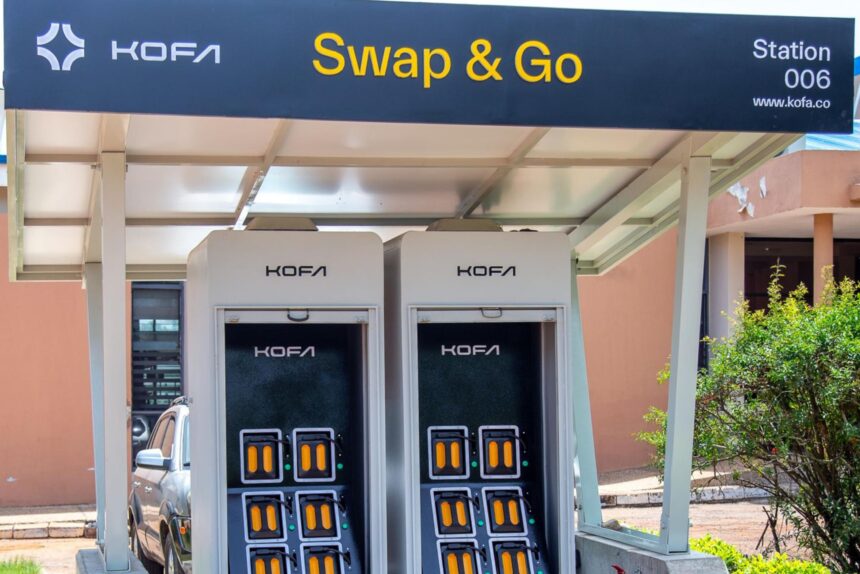
In a continent where unreliable electricity remains a major concern, Kofa, a Ghanaian energy startup is betting that Africa can leapfrog legacy power infrastructure altogether.
Kofa, founded in 2021 and headquartered in Accra, is deploying a network of battery swapping stations designed to deliver clean, reliable electricity without the need for costly grid expansion.
Founded by Erik Nygard, Kofa was established to re-engineer how people access green energy. The company says its mission is to create an affordable, sustainable and customer-driven electricity network for Africa, one connected by 21st-century thinking rather than hard wires.
“At Kofa, we are intent on developing solutions that will have a significant and positive impact on the planet. We hold ourselves accountable to this in all we do, the company said on its website. “The technology we develop can be transformative for transport, energy, and climate change not only in Africa, but globally.”
Rethinking Energy Access
At the heart of Kofa’s approach is its Battery Network, a distributed system of sustainably charged, portable batteries that users can swap at dedicated stations.
The model sidesteps the capital-intensive challenges of traditional power infrastructure, offering accessible electricity to users who are poorly served or entirely excluded by existing grids.
Kofa’s batteries are engineered to support multiple high-energy demand applications, from electric vehicles to off-grid and backup power for homes and businesses.
By design, the system is modular and scalable, allowing the company to roll out energy access incrementally while responding to real customer needs on the ground.
Starting with Electric Motorcycles
Kofa’s initial use case is electric motorcycles, a strategic choice in cities like Accra where two-wheelers play a central role in urban mobility and delivery services.
By enabling riders to swap depleted batteries for charged ones in minutes, the company removes one of the biggest barriers to electric vehicle adoption: long charging times.
Products powered by Kofa batteries, the company says, exceed the performance of petrol alternatives while significantly reducing lifetime costs. Just as importantly, they cut carbon dioxide emissions and improve local air quality, an increasingly urgent concern in Africa’s fast-growing cities.
From electric motorcycles, Kofa plans to open up its battery network to support broader energy needs, including small business operations and household power, positioning the system as both a mobility and energy solution.
Understanding Kofa’s Model
Rather than building everything in-house, Kofa partners and co-develops products with established industry leaders. This approach allows the startup to bring world-class products to market quickly and cost-effectively, while ensuring that designs are tailored to African operating conditions.
The company’s emphasis on collaboration extends beyond suppliers to customers and communities. Kofa says it works closely with stakeholders to ensure its technology delivers tangible benefits where it is deployed.
Starting in Accra, Kofa plans to expand its battery swapping network across Sub-Saharan Africa, with ambitions that stretch beyond the continent.
The underlying technology, the company argues, is adaptable enough to transform transport, energy access and climate outcomes globally.
Africa as a Green Energy Leader
Kofa’s vision goes beyond solving local power shortages. The company believes Africa has a unique opportunity to lead globally in green energy solutions by re-engineering legacy systems in energy, transport and productivity.
By prioritising accountability and environmental impact, Kofa positions itself not just as an energy provider, but as a climate-conscious technology company intent on delivering measurable change.
As Africa’s energy demand continues to rise, solutions that are affordable, scalable and clean will be critical. With its battery-first, wire-free approach, experts say Kofa is making the case that the future of power on the continent may not lie in extending old grids, but in building entirely new ones.
Talking Points
It is compelling that Kofa is rethinking electricity access from first principles, choosing a battery swapping network over costly, legacy grid infrastructure that has failed to keep pace with Africa’s energy needs.
By delivering portable, swappable batteries, Kofa is offering a practical, scalable alternative for communities and businesses that cannot depend on the grid.
Starting with electric motorcycles is a strategic move. It targets a high-usage, high-impact segment of urban transport, where fuel costs, emissions, and downtime significantly affect livelihoods. Battery swapping removes charging delays and makes clean mobility economically viable.
At Techparley, we see Kofa’s model as a strong example of how African startups can leapfrog legacy systems entirely, using modern technology to build energy infrastructure that is fit for local realities rather than inherited constraints.
As Kofa expands across Sub-Saharan Africa, partnerships with mobility operators, energy players, and local communities could accelerate adoption and deepen trust. With the right ecosystem support, Kofa has the potential to become a cornerstone of Africa’s clean energy transition.
——————-
Bookmark Techparley.com for the most insightful technology news from the African continent.
Follow us on Twitter @Techparleynews, on Facebook at Techparley Africa, on LinkedIn at Techparley Africa, or on Instagram at Techparleynews.