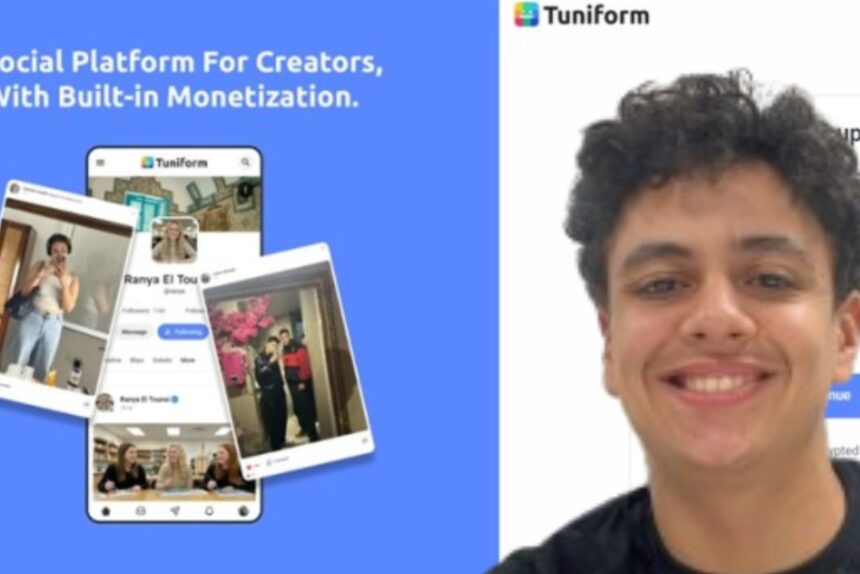
In a digital economy increasingly driven by creators, Tuniform is positioning itself as a game changer for African startups. This Tunisian social media startup is tackling one of the biggest challenges facing creators in emerging markets, getting paid.
Launched last year, Tuniform allows creators and influencers to earn directly from their audiences through subscriptions and exclusive content, an option that remains largely inaccessible on global platforms due to payment restrictions, compliance barriers, and lack of localisation.
Unlike traditional social networks that focus primarily on reach and engagement, Tuniform was built with monetisation at its core, integrating local payment flows, creator wallets, and monetisation tools directly into the social experience.
According to co-founder and CEO Yacine Aridhi, the company’s mission is to ensure that creators in emerging markets can access “the same earning mechanics that are common in developed ecosystems, but adapted to local financial and regulatory realities.”
What Is Tuniform?
Tuniform is a homegrown Tunisian social media platform designed to help creators monetise their content without relying on external tools or foreign payment platforms. At its core, the platform enables creators to charge fans for subscriptions and offer exclusive content to paying audiences.
This model mirrors popular creator-economy platforms in developed markets, but Tuniform distinguishes itself by tailoring these features to local conditions.
“Our goal was to build monetisation directly into the platform, rather than treat it as an add-on,” Aridhi explained. “This removes the need for external tools and makes earning more accessible from day one.”
By embedding monetisation into its foundation, Tuniform seeks to address a long-standing gap in the regional creator economy, where many talented creators build engaged audiences but struggle to convert that engagement into income.
How the Platform Functions
Tuniform integrates monetisation features directly into the user experience. Creators can set up paid subscriptions, restrict premium content, and receive earnings through an internal creator wallet, all within the platform.
Localised payment flows ensure that transactions comply with domestic regulations and support local currencies, removing friction for both creators and users.
“Existing social networks focus on content distribution and visibility but leave monetisation either inaccessible or indirect,” Aridhi said. “Global monetisation platforms exist, but they are not designed for local currencies and markets, local regulations, or local payout realities.”
This approach allows creators to focus on producing content and engaging their audience, rather than navigating complex payment systems or third-party services.
Solving a Structural Monetisation Problem
One of the key insights behind Tuniform’s creation was the difficulty creators in Tunisia and similar markets face when attempting to monetise through global platforms like Patreon or Stripe-based tools.
Payment restrictions, compliance hurdles, and limited localisation often make these services impractical or entirely unavailable.
The result, according to Aridhi, is a creator ecosystem where visibility does not translate into income.
Tuniform addresses this structural problem by offering monetisation tools that are native, local, and accessible, ensuring creators can actually earn from their work.
“Tuniform competes indirectly with global social networks,” Aridhi noted, “but our real differentiation is that monetisation is native, local, and accessible from day one.”
Creator Adoption and Platform Growth
Currently bootstrapped, Tuniform has focused on growing its creator base organically across multiple content categories.
Early adoption has been driven mainly by creators and influencers who already have engaged audiences but lack reliable ways to monetise them.
“Early users are actively testing subscriptions and exclusive content features, with usage patterns helping shape product priorities,” Aridhi said. “The focus so far has been on quality of adoption rather than raw scale.”
This measured growth strategy reflects Tuniform’s emphasis on usability, trust, and inclusivity. By prioritising ease of use and transparency, the platform allows creators to begin monetising without technical complexity or external dependencies.
A Diversified, Creator-Centric Business Model
Tuniform operates a diversified monetisation model that scales alongside creator success. The platform generates revenue through fees on creator earnings, including subscriptions and exclusive content.
In addition, it has developed a native advertising system that allows brands to promote content in ways aligned with creator audiences.
The platform also offers a premium subscription tier for users and creators, unlocking advanced features, enhanced visibility, and additional engagement and monetisation tools.
According to Aridhi, the focus at this stage is not short-term profit, but ensuring that monetisation systems are effective and trusted.
“At this stage, the focus is on validating and strengthening these monetisation systems rather than optimising short-term financial performance,” he said.
Tuniform for African Creators: Expansion Beyond Tunisia
While Tuniform currently operates only in Tunisia, its infrastructure has been designed with expansion in mind. From a technical and product standpoint, the platform is built to scale into other emerging markets that face similar challenges around payments and creator monetisation.
“Future expansion plans include North Africa and other regions where creators face the same structural barriers to monetisation that Tuniform was designed to solve,” Aridhi said.
As the global creator economy continues to grow, Tuniform’s local-first approach positions it as a potential blueprint for how emerging markets can build sustainable, inclusive platforms that empower creators economically, not just socially.
Talking Points
Critically, Tuniform reflects a growing shift across Africa toward locally built creator platforms that address monetisation challenges global networks have failed to solve.
While platforms like Instagram and YouTube offer visibility, many African creators remain excluded from reliable earnings due to payment restrictions and poor localisation.
Tuniform’s approach, embedding monetisation directly into the social experience with local payment flows, mirrors similar efforts such as Nigeria’s MyArteLab, which enables photographers and visual creatives to earn directly from clients within an Africa-centred marketplace.
These platforms recognise that creator monetisation in Africa cannot simply copy Western models but must align with local currencies, regulations, and payout realities.
However, Tuniform’s long-term success will depend on its ability to scale beyond Tunisia, maintain user trust, and balance monetisation with community growth in an increasingly competitive creator economy.
______________________
Bookmark Techparley.com for the most insightful technology news from the African continent.
Follow us on X/Twitter @Techparleynews, on Facebook at Techparley Africa, on LinkedIn at Techparley Africa, or on Instagram at Techparleynews