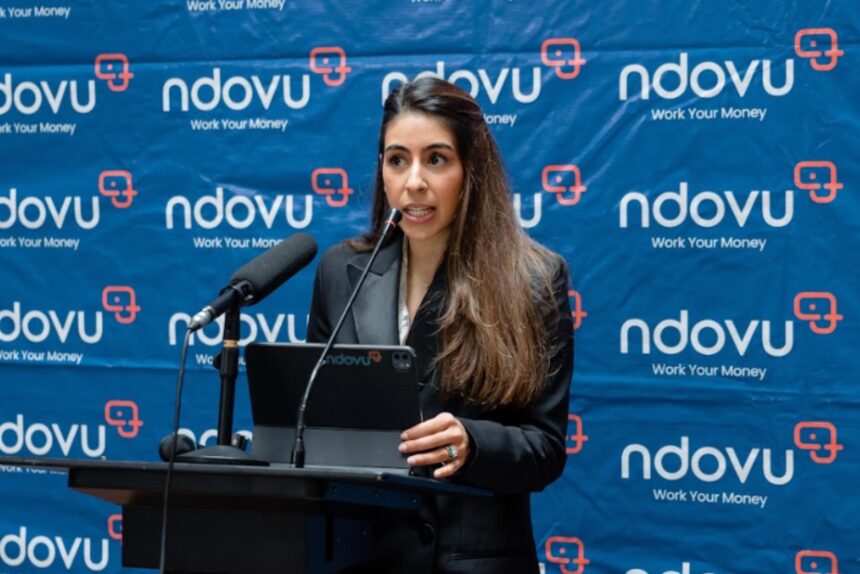
Ndovu Wealth, a Kenyan fund manager, has launched a new multi-asset fund with a minimum investment threshold of $2,500, marking a pivot towards higher-income investors as wealthtech firms evolve beyond mass-market offerings.
The Kibaba Multi-Asset Special Fund provides investors with diversified exposure to global asset classes including equities, fixed income, real estate investment trusts (REITs), exchange-traded funds (ETFs), and commodities.
Accessible through Ndovu’s app, the fund requires a minimum investment of KES 250,000 (approximately $1,930) or $2,500 for dollar-denominated accounts, placing it well above the entry thresholds that defined the first wave of Kenyan investing platforms.
“We created the Kibaba Multi-Asset Special Fund in response to the evolving investor demands in the region,” said chief executive Radhika Bhachu, pointing to rising interest in offshore exposure.
What You Should Know
The launch underscores a broader shift within Kenya’s fintech ecosystem, where startups that initially scaled by targeting entry-level investors are now moving upmarket, challenging traditional private wealth managers and offshore brokerages.
This shift reflects a broader trend among retail investors who initially entered financial markets through money market funds and savings platforms but are now seeking to hedge against currency depreciation and inflation by moving into dollar-based instruments.
In Kenya, demand for global assets has intensified as the Kenyan shilling weakened significantly through 2023 and 2024, eroding local purchasing power and prompting investors to seek stability in foreign markets.
The country’s collective investment schemes sector has expanded steadily in response, with fund managers reporting increased inflows into foreign-denominated products.
However, the higher minimum investment required for Ndovu’s new fund may limit its reach in a market where a large portion of retail investors remain highly price-sensitive.
From Mass Market to Wealth Management
Kenya’s wealthtech startups have been effective at onboarding first-time investors but have struggled with retention as user balances grow.
As portfolios expand, many users migrate to global platforms such as Interactive Brokers, which offer broader asset access, or to traditional asset managers that provide structured advisory services.
Ndovu’s approach seeks to address this gap by embedding a regulated fund within a digital platform that manages onboarding, payments, and portfolio tracking, while dynamically adjusting asset allocation based on market data.
This hybrid model positions the company at the intersection of fintech convenience and traditional wealth management, placing it in more direct competition with both international brokerages and established local institutions such as Standard Investment Bank.
A Test of Depth in Africa’s Wealthtech Market
Experts say the success of Ndovu’s latest offering will likely hinge on whether Kenya’s emerging class of affluent, digitally native investors is large and confident enough to sustain higher-ticket products.
As wealthtech firms across Africa mature, the focus is increasingly shifting from access to depth, not just bringing new users into the financial system, but retaining them as their wealth grows.
Ndovu’s bet is that the next phase of growth will come not from the masses, but from those ready to invest more and demand more sophisticated financial solutions.
Talking Points
It is a notable shift that Ndovu Wealth is launching a $2,500 minimum multi-asset fund, signalling how African wealthtech firms are moving beyond entry-level investing into higher-value segments.
This positions the Kibaba fund as a step towards bridging the gap between fintech accessibility and traditional private wealth management, particularly for digitally savvy, higher-income investors.
At Techparley, we see this as part of a broader evolution in Africa’s investment landscape, where users who started with low-ticket products are now seeking more sophisticated, globally diversified portfolios.
Ndovu’s model of embedding a regulated fund within a digital interface is a strong play, combining convenience with structured portfolio management, but execution will be critical.
As the company scales, there is a clear opportunity to introduce tiered products that cater to different income levels, ensuring it does not lose the mass-market base that originally powered fintech growth.
With the right balance between accessibility and sophistication, Ndovu could help define the next phase of wealthtech in Africa, one that moves from simple access to long-term wealth building and retention.
——————-
Bookmark Techparley.com for the most insightful technology news from the African continent.
Follow us on Twitter @Techparleynews, on Facebook at Techparley Africa, on LinkedIn at Techparley Africa, or on Instagram at Techparleynews.