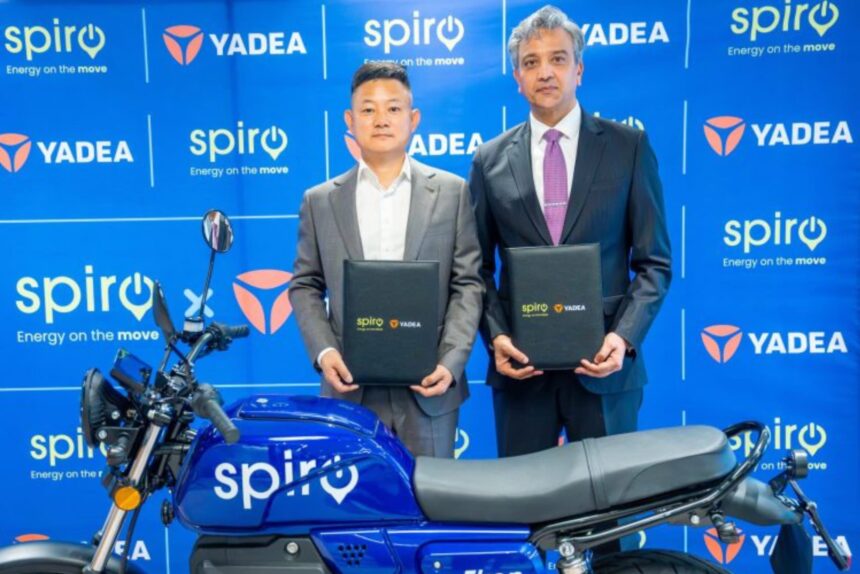
Kenya-based electric mobility company Spiro partners with Chinese electric two-wheeler manufacturer Yadea to expand access to affordable electric transportation across the continent.
The strategic partnership brings together Yadea’s large-scale manufacturing and research capabilities with Spiro’s growing network of electric motorcycles and battery-swapping infrastructure across Africa.
Spiro is one of Africa’s largest electric mobility companies, currently operates in seven African countries, with more than 95,000 electric motorcycles and over 2,500 battery-swapping stations.
The company says its vehicles have completed more than 30 million battery swaps and travelled over one billion kilometres.
The partnership is expected to target commercial riders, delivery services, logistics providers, fleet operators and everyday commuters as electric mobility adoption expands across African markets.
What to Know About the Partnership
The partnership is designed to combine the strengths of two companies operating at different but complementary points in the electric-mobility value chain.
Under the agreement, Yadea will supply electric two-wheelers and other electric-vehicle products to Spiro, which will integrate the vehicles into its existing battery-swapping and energy infrastructure across Africa.
The companies also plan to jointly develop customised electric two-wheelers designed for African road conditions and commercial applications.
This means the partnership goes beyond simply importing motorcycles into African markets. It seeks to build vehicles and supporting infrastructure around the specific needs of African riders and businesses.
Spiro founder and Equitane chairman Gagan Gupta described the deal as “a major endorsement” of the company’s execution and said it would create opportunities to “pioneer the next era of electric mobility in emerging markets.”
Spiro and Yadea: The Two Partners
Spiro is an African electric-mobility company focused primarily on electric two-wheel transportation and battery-swapping infrastructure.
It currently has operational assembling facilities in Uganda, Kenya, Nigeria, Rwanda, Togo, Cameroon and Benin, giving it a presence across several important African markets.
Yadea, meanwhile, is a major Chinese manufacturer of electric two-wheelers with operations in more than 100 countries and more than 100 million users globally.
The partnership therefore brings together Spiro’s African market experience and infrastructure with Yadea’s manufacturing and research-and-development capabilities.
Yadea’s senior vice president, Wang Jiazhong, said the partnership would combine “global innovation with local infrastructure” to provide sustainable mobility solutions.
The arrangement could consequently allow both companies to expand their respective strengths while pursuing the growing demand for electric transportation in African cities.
Why Battery Swapping Matters
One of the defining features of Spiro’s model is its battery-swapping system. Instead of waiting for an electric motorcycle’s battery to recharge, riders can visit a swapping station, exchange a depleted battery for a charged one and continue their journey.
This model is particularly relevant to commercial riders and delivery operators whose businesses depend on keeping motorcycles on the road for long periods.
Spiro says it has already established more than 2,500 battery-swapping stations and facilitated over 30 million battery swaps.
Its motorcycles have also covered more than one billion kilometres while generating lower carbon emissions than conventional fossil-fuel-powered transportation.
By integrating Yadea’s motorcycles into this infrastructure, Spiro can potentially expand the number of electric vehicles using its network while increasing the utilisation of its battery ecosystem.
The African Market Opportunity
The partnership comes as electric mobility attracts increasing attention as African cities deal with rising transportation costs, fuel expenses and environmental concerns.
For motorcycle-dependent businesses, the operating cost of petrol can represent a significant recurring expense, making electric alternatives potentially attractive where charging and battery-swapping infrastructure are sufficiently available.
Spiro says its objective is to substitute expensive imported fossil-fuel-based transportation with more affordable and sustainable alternatives.
Its CEO, Anant Badjatya, said the partnership would help the company respond to growing demand at scale, arguing that by combining Yadea’s manufacturing strength with Spiro’s ecosystem, the companies could accelerate the transition to cleaner transportation.
The immediate focus is expected to include commercial fleets, delivery companies, logistics providers and daily commuters across some of Africa’s fastest-growing mobility markets.
From Electric Motorcycles to a Wider Mobility Ecosystem
The significance of the agreement extends beyond the number of motorcycles Yadea may supply to Spiro. The companies intend to create a broader electric-mobility framework connecting vehicles, batteries, swapping stations and commercial users.
Their planned customised two-wheelers could also allow them to address specific African operating conditions rather than relying entirely on products originally designed for other markets.
Spiro’s existing scale gives the partnership an operational foundation, with the company reporting 95,000 electric motorcycles, more than 2,500 swapping stations and over 30 million battery swaps.
In June, Spiro also raised an additional $55 million, taking its latest funding round to $270 million.
Together, the investment and Yadea partnership position Spiro for further expansion as it seeks to make electric two-wheel transportation more accessible across Africa.
________________________
Bookmark Techparley.com for the most insightful technology news from the African continent.
Follow us on X/Twitter @Techparleynews, on Facebook at Techparley Africa, on LinkedIn at Techparley Africa, or on Instagram at Techparleynews