



Finding a marketing agency may take minutes, but choosing the right one can take weeks, consume valuable resources and potentially derail a company’s growth plans.
That is the problem Indian startup, Curato is attempting to solve with an AI-powered procurement and matchmaking platform designed to help businesses identify suitable marketing partners based on verified capabilities and outcomes.
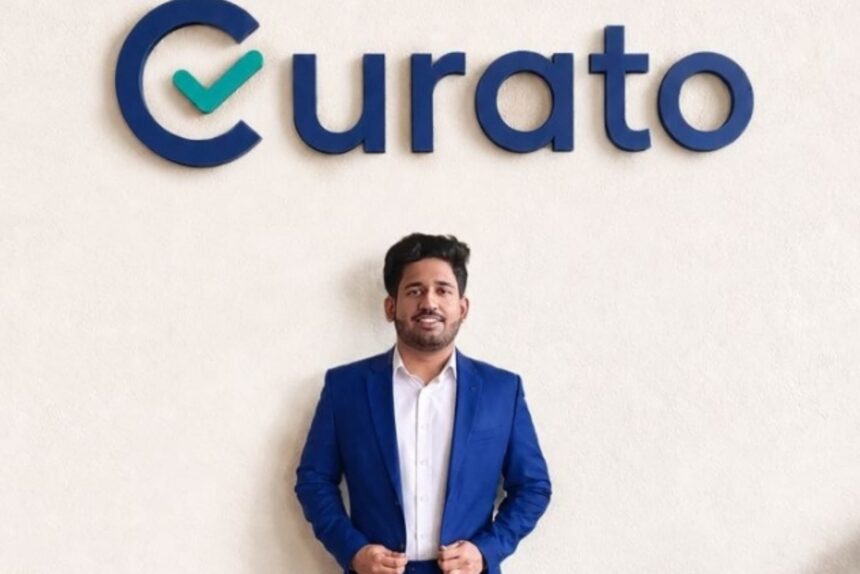
Founded by brand and marketing professional Sarath Chandran, Curato emerged from Chandran’s experience managing agencies and execution partners across India, the United States, Europe and Africa.
“Finding a marketing agency takes minutes. Choosing the right one takes weeks,” he said, arguing that “one wrong hire doesn’t just waste your marketing budget. It delays your roadmap and costs months of momentum.”
The startup says it has built a curated network of more than 300 verified agency partners.
What is Curato and what does it do?
Curato is designed to simplify the process of finding, evaluating and hiring marketing agencies by replacing open-ended searches and referral-driven decisions with curated recommendations.
The company describes itself as a platform that combines intelligent matchmaking with expert evaluation, using business goals, budget, industry, timeline and project requirements to identify suitable agency partners.
So, instead of functioning as a conventional agency directory or an open marketplace, Curato says every agency must pass its evaluation process before being recommended.
Its assessment considers portfolio quality, past outcomes, client references, domain expertise, team capabilities, service quality, industry experience, cultural fit and project suitability.
The platform currently covers areas including branding, performance marketing, SEO, design and packaging, social media, PR and media, content production and website development.
Curato’s process begins with a free consultation during which the company seeks to understand a prospective client’s goals, budget, business stage, industry and timeline.
It then determines whether the business actually needs an external agency and what type of partner would be appropriate before producing three best-fit recommendations.
According to the company, its first project is free for founders and CMOs, while subsequent projects attract a platform fee. Curato says it charges agencies a flat fee for the first project and introduces a client-side platform fee from the second project onward.
The pain points Curato is targeting
The fundamental problem Curato is addressing is not a shortage of marketing agencies but an abundance of choices without sufficient information to determine which provider is genuinely capable of delivering a particular outcome.
Businesses can encounter agencies with attractive portfolios, persuasive presentations and competing price quotations, yet still struggle to establish whether those agencies have the expertise, experience and team required for their specific needs.
Chandran said her experience showed her that agencies could quote different prices for essentially the same scope while presenting similarly polished credentials.
“Referrals reflect someone else’s success, not necessarily your best fit. Directories prioritize ad spend. Search engines rank for SEO, not capability,” he wrote.
Curato argues that a bad agency decision can result in wasted budget, lost time, delayed growth, poor execution and another expensive hiring cycle.
The startup therefore positions itself around reducing what it calls hiring risk, rather than simply generating introductions.
Its website explicitly distinguishes Curato from conventional directories, open marketplaces and lead-generation platforms. Instead, it says its agencies are curated and matched using a combination of Curato AI and strategic human evaluation.
The company claims to have screened and vetted more than 2,500 agencies, with more than 300 becoming verified agency partners. It also says its approach can save businesses two to three weeks of agency-search time.
Why Curato matters now
Curato’s launch comes at a time when marketing itself is becoming increasingly complex, fragmented and technology-driven.
Businesses can now engage specialised agencies for performance marketing, search optimisation, branding, social media, content, websites, public relations and other functions, while artificial intelligence is simultaneously creating new marketing tools, workflows and service providers.
This expansion gives businesses more options, but it can also make procurement more complicated. For founders and marketing executives operating under pressure to demonstrate measurable returns, selecting an unsuitable partner can have consequences far beyond the agency fee.
Curato’s approach is therefore built around making agency selection more evidence-based. Its website says recommendations are based on portfolio fit, past outcomes and client feedback, while its agency network is intentionally curated rather than open to every applicant.
Agencies applying to join are reviewed against case-study outcomes, client references and category depth. This focus on verified outcomes is central to the startup’s proposition.
As Chandran put it, “Agency discovery isn’t the problem. Decision-making risk is.”
If Curato can consistently reduce that risk while producing successful agency-client relationships, it could position itself as an important intermediary between businesses seeking growth and agencies competing to deliver it.
Who is Sarath Chandran?
Sarath Chandran is a brand and marketing professional whose career has centred on brand strategy, advertising, marketing campaigns, consumer behaviour, go-to-market strategy and product marketing.
He earned an MBA from the Indian School of Business in Hyderabad, where he was a Merit Scholar and elected President of the student body, leading more than 50 team members across various councils, clubs and major events.
His career has also included roles at Husk Power Systems, Walmart and Microsoft, where he led branding, digital and social-media marketing. Earlier, he led the marketing of Ruuh, an AI-based product, and achieved 200% of user-acquisition targets.
He has conceptualised and directed more than 20 advertising campaigns while combining storytelling, consumer insights and full-funnel marketing strategy.
His decision to establish Curato represents a shift from helping individual brands grow to building infrastructure intended to influence how thousands of businesses select growth partners.
“I always knew I’d build my own company someday,” Chandran said. “I just didn’t know what, until I found a gap in the exact system I was working in.”
He says the startup spent five months speaking with more than 650 founders, marketing leaders and agency owners before identifying decision-making risk as the central problem.
“I’ve spent years helping brands tell their stories. Now, I’m building my own,” he added.
Curato’s bigger ambition
Beyond simply connecting businesses with agencies, Curato is attempting to build a more structured system in which agency reputation is increasingly determined by demonstrated performance rather than presentation quality or promotional claims.
The company says agencies can build their standing through verified outcomes, while businesses receive recommendations based on their particular requirements rather than broad service categories.
For agencies, Curato promises pre-qualified, high-intent clients, structured briefs, organised project workflows and milestone-based approvals.
That creates the possibility of a feedback loop in which successful projects generate stronger evidence about agency capabilities, which can subsequently improve future matching.
The model will ultimately be tested by whether Curato can consistently match businesses with agencies that deliver measurable results, rather than merely reducing the time required to find them.
For Chandran, however, the ambition is clear, the startup is an attempt to turn one of the most subjective and consequential decisions in modern marketing into a more transparent, evidence-driven procurement process.
“Finding an agency shouldn’t feel like playing roulette,” he said. “So I decided to do something about it.”
_________________________________
Bookmark Techparley.com for the most insightful technology news from the African continent.
Follow us on X/Twitter @Techparleynews, on Facebook at Techparley Africa, on LinkedIn at Techparley Africa, or on Instagram at Techparleynews