



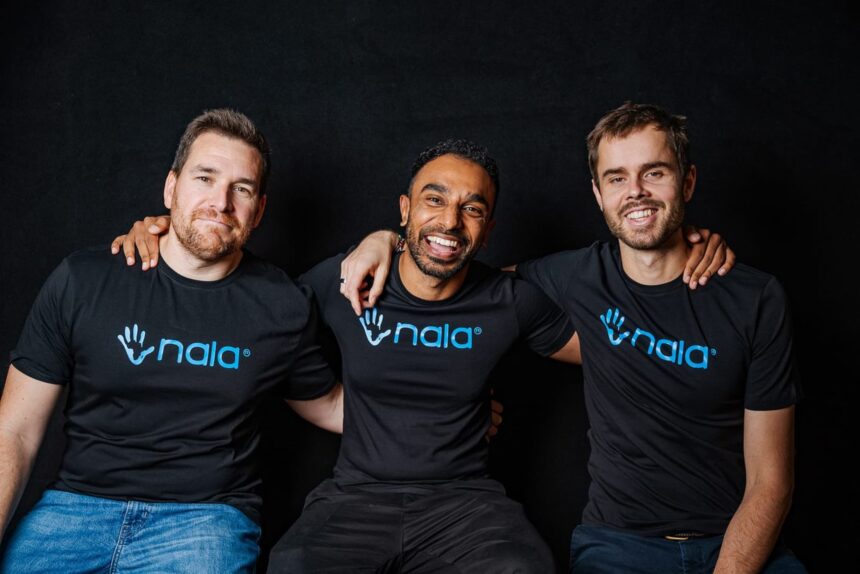
African payments startup NALA has taken a major step toward reshaping cross-border payments in emerging markets through a new partnership with global payments infrastructure company Noah, launching an instant stablecoin settlement network designed to dramatically reduce the time and friction associated with international money movement.
The collaboration speaks a growing shift away from slow, legacy banking rails toward blockchain-powered, compliant payment infrastructure tailored to the realities of Africa and Asia.
Under the partnership, businesses operating across emerging markets will be able to collect US dollars globally and pay out local currencies in minutes rather than days, a longstanding challenge that has constrained trade, digital services, and financial inclusion.
By combining Noah’s global USD collection capabilities with NALA’s licensed stablecoin on- and off-ramp network, the new system enables instant USD settlement, real-time local currency payouts, 24/7 cross-border treasury operations, and fully compliant bilateral flows between digital dollars and local money.
For businesses that depend on speed, reliability, and liquidity, the implications are significant.
What You Should Know About the NALA-Noah Partnership
At its core, the NALA-Noah partnership is about rebuilding global payment infrastructure for emerging markets, rather than retrofitting systems originally designed for developed economies.
The collaboration introduces a settlement network that uses stablecoins, digital currencies pegged to the US dollar, as the underlying rail for instant value transfer, while remaining compliant with regulatory requirements.
Underscored this motivation, stating, Shah Ramezani, founder and CEO of Noah said, “For years, emerging markets have been underserved by global payment infrastructure that was never designed for its scale, speed, or realities.”
According to Ramezani, the partnership is not simply about adopting new technology, but about addressing deep structural inefficiencies.
“This partnership with NALA is about building a new payment network that removes structural friction, restores trust in settlement, and gives businesses and consumers reliable access to global money movement.”
Who Is NALA and What Do They Do?
NALA is an African payments company and money transfer app that enables secure, near-instant payments from Europe, the UK, and the US to key African markets, including Tanzania, Kenya, Rwanda, Uganda, and Ghana.
The company positions itself as a bridge between the African diaspora and the continent’s financial systems, focusing on speed, reliability, and accessibility.
In 2023, NALA expanded into the European Union, adding 19 new send countries and strengthening its mission of connecting Africans globally.
Its rapid growth trajectory was further validated last year when the company raised a US$40 million funding round, reflecting investor confidence in its infrastructure-first approach to payments.
Beyond consumer remittances, NALA has increasingly focused on enterprise-grade payments infrastructure, particularly stablecoin-based settlement solutions for emerging markets.
A Short Note on Noah
Noah operates as a global payments infrastructure provider, enabling businesses to collect and move US dollars across borders efficiently.
While largely operating behind the scenes, the company plays a critical role in enabling global USD access, particularly for businesses in regions where traditional correspondent banking relationships are slow, expensive, or unreliable.
By partnering with NALA, Noah extends its infrastructure into emerging markets through a localized, licensed network that can seamlessly convert digital dollars into local currencies.
The Stablecoin Settlement Network: What It Means
The newly launched settlement network allows businesses in Africa and Asia to collect USD globally and settle transactions instantly using stablecoins, before paying out in local currency.
Rather than waiting days for bank transfers to clear, companies can now complete cross-border settlements in minutes.
This is achieved by combining Noah’s global USD collection with NALA’s regulated stablecoin on- and off-ramps, enabling smooth conversion between digital dollars and local money.
As Ramezani noted, “Stablecoins are not the story on their own, they are the rail that finally makes instant, compliant USD settlement possible at scale.”
In practical terms, stablecoins serve as the invisible infrastructure layer that allows money to move faster and more predictably than traditional banking systems.
What Problem Does NALA-Noah Partnership Solve?
For decades, businesses in emerging markets have faced delayed settlements, limited access to foreign currency, and high transaction costs due to outdated global payment systems.
Cross-border transfers often take days, disrupt cash flow, and expose businesses to currency and liquidity risks.
NALA’s founder and CEO, Benjamin Fernandes, highlighted the scale of this challenge when said that, “Access to compliant USD collection and stablecoin settlement at scale has been one of the biggest constraints for global businesses operating in these regions.”
The new network directly addresses these constraints by offering round-the-clock settlement, faster liquidity access, and reduced dependency on correspondent banking chains.
Why This Matters for Emerging Markets
The significance of the NALA-Noah partnership extends beyond payments efficiency. It represents a broader shift toward financial infrastructure built specifically for emerging markets, rather than adapted as an afterthought. NALA’s growth as a stablecoin payments provider underscores this demand.
The company revealed that its infrastructure payments grew from zero to US$1 billion in volume within 18 months, driven by strong demand for stablecoin solutions that function effectively in emerging economies.
Its infrastructure platform, Rafiki, has expanded 30-fold in the last 12 months and now powers partners including MoneyGram.
Fernandes emphasized the strategic vision behind the partnership, noting that, “We built NALA and Rafiki to power global money movement into emerging markets, not just remittances.”
He added that demand for stablecoin on- and off-ramps has surged dramatically.
“We’ve seen a 100x demand increase for stablecoin on and off-ramp in emerging markets over the last 12 months.”
Talking Points
The NALA–Noah partnership represents a meaningful shift from experimental stablecoin use toward institutional-grade payment infrastructure tailored for emerging markets, addressing long-standing inefficiencies in cross-border settlements rather than merely layering blockchain onto broken systems.
Unlike many fintech solutions that focus narrowly on consumer remittances, this collaboration targets the deeper problem of USD liquidity access, settlement speed, and treasury reliability for businesses operating in Africa and Asia, where delays of days can cripple cash flow.
NALA’s traction, scaling to US$1 billion in payment volume within 18 months and a 100x surge in stablecoin on- and off-ramp demand, suggests that the solution is responding to real market needs rather than speculative interest in digital assets.
However, the model’s long-term impact will depend on sustained regulatory alignment across jurisdictions, stable local currency off-ramps, and resilience against macroeconomic shocks that often affect emerging markets.
If successfully executed at scale, the partnership could redefine how global capital moves into and within emerging economies, positioning stablecoins not as disruptive hype but as pragmatic financial rails capable of integrating these markets more efficiently into the global financial system.
_____________________
Bookmark Techparley.com for the most insightful technology news from the African continent.
Follow us on X/Twitter @Techparleynews, on Facebook at Techparley Africa, on LinkedIn at Techparley Africa, or on Instagram at Techparleynews