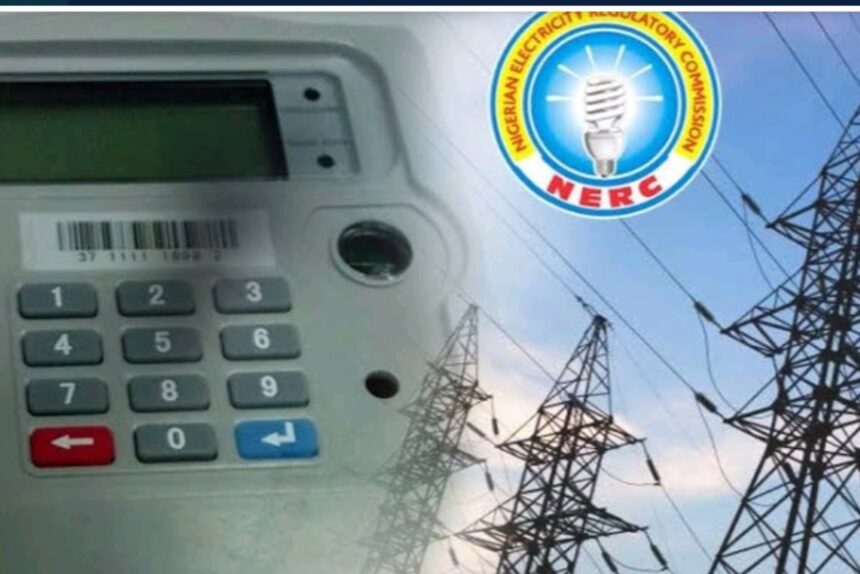
Twenty years ago, the idea that an ordinary Nigerian could generate electricity and sell it back to the grid would have been dismissed as a fantasy. Power was a service you waited for; intermittent, unreliable, and dispensed at the grid’s pleasure. When it did not come, you depended on generators, fuel queues, and the familiar hum of diesel engines.
That calculus is now changing. A shop owner in Lafia, a farmer cooperative in Plateau State, or a school in Aba can invest in solar, export their surplus, and receive a credit against their electricity bill.
What began as a mandate in Section 164 of the Electricity Act 2023, directing the Nigerian Electricity Regulatory Commission (NERC) to issue guidelines on net metering for rooftop solar and small wind, has now been operationalised as the NERC Net Billing Regulations 2026, gazetted after a multi-stage public consultation process.
For the first time, “consumer” and “producer” are no longer separate categories, as we now have “Prosumers”. Your rooftop can be a power plant, your business can be a mini-utility, and your community can stop begging for light and start building it.
The contextual backdrop matters. Nigeria is estimated to have roughly 90 million people without electricity, the highest access deficit on the African continent. Those who are connected fare little better, with just over 4,000 megawatts serving over 220 million people.
This energy deficit stands at approximately 40% nationwide, rising to 73% in rural areas. Businesses and households have adapted contingent alternatives around the national grid via diesel generators, inverters, and, increasingly……solar.
In 2025, the total cumulative value of imported solar panels into Nigeria reached approximately N435.52 billion, according to Foreign Trade Statistics from the National Bureau of Statistics (NBS). Concurrently, Nigeria added a record 803 MW of new solar photovoltaic capacity in 2025 alone (representing a staggering 141% year-on-year surge from 2024), according to the Global Solar Council’s Africa Market Outlook 2026.
Consequently, cumulative installed solar capacity increased from roughly 385 MW at the close of 2024 to about 1.19 GW by the end of 2025. Crucially, the market remains overwhelmingly driven from the bottom up as distributed, off-grid systems comprise approximately 96% (1.15 GW) of this entire cumulative asset base.
The prosumer economy was already forming without a policy framework to catalyze it.
The new regulations, in simple terms, state that if you invest in solar, you do not have to waste what you do not use. You can push it back to the grid and get credit. If your neighbor’s meter is running at night, your daytime sunshine can pay their bill. The policy moves energy from merely being a cost center to becoming an asset.
The framework covers solar PV and small wind systems with an installed capacity between 50 kWp and 1.5 MWp per user, a deliberate design choice that opens the door to commercial and industrial prosumers without creating competing generation assets at utility scale.
Why does this matter for Nigeria now? As a country with a forward-looking energy policy, we are at an inflection point. Grid demand is rising, gas prices are volatile, and climate shocks are here. Net metering does not replace the grid. It strengthens it. Every kWh exported from a rooftop is one less kWh the grid has to generate. In terms of functionality, it reduces strain, lowers losses, and brings power closer to where it is needed the most.
The comparison with peer markets is instructive. Brazil established a national net billing framework through ANEEL Resolution in 2012 and its subsequent legislative anchor in 2022. South African municipalities, including Cape Town and Nelson Mandela Bay, permit embedded generation with defined feed-in tariffs.
Ghana operationalised prosumer participation under its Renewable Energy Act 2011 and the 2023 Net Metering Code. Nigeria arrives at this framework with a larger solar deployment base than many of these markets had at an equivalent stage. South Africa’s private rooftop sector morphed from 1,500 MW in 2022 to over 9,000 MW by 2024 following the operationalisation of its SSEG framework.
That trajectory is instructive for what a functional net billing regime can catalyse.
At Husk Power, we operate the largest fleet of community minigrids in Nigeria with a core mandate to Power Prosperity in un(der)served communities. This net metering policy framework turbocharges that mandate. Now, the community is not just the customer……they have become part of the supply!
Additionally, the regulations have direct implications for minigrids beyond rooftop solar. The definition of User under the regulations explicitly includes Solar and Wind Interconnected Mini-Grids as eligible commercial prosumers.
This means that an operator running a commissioned NERC-permitted minigrid that is interconnected to or sits within the DisCo service territory can, in principle, participate in the Net Billing arrangement by exporting surplus DER capacity to the distribution network and earning credit. This means that the Net Billing Regulations, properly interpreted and implemented, opens up a commercial pathway for that asset base that did not exist before.
Policy architecture, however, is not delivery. Three execution risks stand between this framework and the outcomes it promises.
1. Metering
The regulations require NEMSA-certified bidirectional meters at every prosumer connection point, a reasonable standard, but one that sits against the backdrop of a metering gap. Fewer than 8 million of Nigeria’s approximately 15 million registered electricity customers had been metered by 2025.
The scale-up of revenue-grade bidirectional metering across DisCo networks is a capital and logistics challenge that the regulations do not address. Without a clear metering rollout plan, the framework risks being technically sound but practically inaccessible.
2. Injected Energy Tariff
The regulations vest tariff determination with NERC, specifying that the export credit shall be calculated using a net metering tariff tool, with a fixed component anchored to average grid-connected hydropower generation tariffs and a variable component reflecting interconnection costs.
The precise tariff level will determine whether exporting to the grid generates meaningful economic return or merely offsets a fraction of consumption costs. Market participants and investors will need regulatory certainty on this rate before committing capital to prosumer-scale assets. NERC should prioritise early publication of the tariff methodology.
3. NERC-SERCs Coordination Dynamics
The application timelines embedded in the regulations are only as credible as the enforcement mechanism behind them.
In states where subnational electricity market regulation is maturing, the interaction between NERC’s federal framework and state-level SERCs creates an additional coordination layer. DisCos operating within state electricity markets will need clarity on which regulatory authority has primacy over prosumer connection disputes, and SERCs will need to align their own frameworks accordingly.
Overall, the Net Billing Regulations should not be viewed as a terminal destination but as an enabling layer. The community is no longer just the customer, it is part of the supply stack.
A market cooperative pooling rooftop arrays, a minigrid operator with exportable DER surplus, a commercial building with 200 kWp of solar, and a daytime energy surplus are all now recognised participants in the Nigerian electricity economy. That recognition, enshrined in regulation, is the foundation everything else will be built on. The hard work of making it real starts now.
About Emmanuel Effiong
Emmanuel Effiong, Associate Director at Husk Power, is a public policy and government relations expert with extensive experience in policy advocacy, stakeholder engagement, regulatory affairs, and sustainable development across Sub-Saharan Africa.
He specializes in connecting evidence-based research with practical reforms that drive impact. Passionate about Africa’s future, he actively champions greater youth participation in governance and policymaking, believing young leaders are critical to shaping a more effective and prosperous continent.
_________________________________
Bookmark Techparley.com for the most insightful technology news from the African continent.
Follow us on X/Twitter @Techparleynews, on Facebook at Techparley Africa, on LinkedIn at Techparley Africa, or on Instagram at Techparleynews