



Onafriq, one of Africa’s largest digital payments networks, has entered a partnership with global stablecoin payments platform Conduit in a move aimed at accelerating stablecoin-powered treasury management and cross-border settlement across the continent.
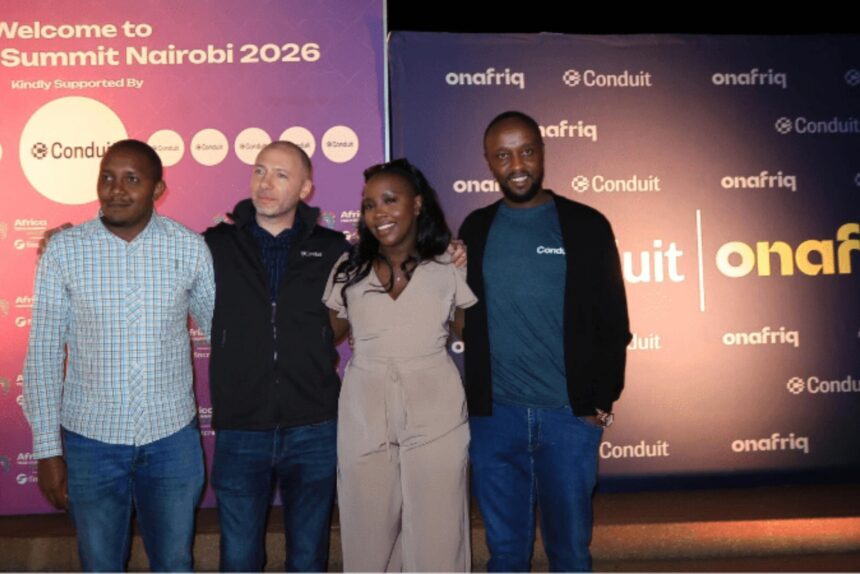
The agreement was announced at the opening Welcome Reception of the Africa Tech Summit in Nairobi, where executives from both companies unveiled the collaboration at the Zen Garden venue.
Framed as a milestone for stablecoin adoption in African fintech, the partnership underscores how digital dollar infrastructure is moving rapidly from crypto-native use cases into mainstream enterprise payments.
“Conduit’s infrastructure will help us move toward streamlining our global treasury management through stablecoins and drive faster payouts for our customers,” said Luke Kyohere, Onafriq’s Group Chief Product and Innovation Officer.
What You Need to Know
Founded in 2010, Onafriq has built one of the most extensive financial interoperability networks on the continent. The company connects more than one billion mobile money wallets and 500 million bank accounts across over 40 African markets.
Its services span cross-border payments, collections, card issuing and processing, agent banking, and foreign exchange and treasury operations.
Through the new partnership, Conduit will provide Onafriq with access to its global B2B stablecoin payments network. The infrastructure is designed to support seamless stablecoin on- and off-ramping, global treasury management and faster cross-border settlement.
For Onafriq, the agreement marks a significant step towards settling a meaningful share of its transaction volumes via stablecoins, particularly dollar-pegged assets such as USDC.
The integration is expected to enable more efficient USDC onramps, streamline treasury flows and facilitate same-day payouts into markets where settlement previously required several days.
A Shift from Traditional Correspondent Banking
Cross-border payments in Africa have long been hampered by delays, high fees and layers of intermediaries embedded within traditional correspondent banking systems, including SWIFT-based transfers.
Stablecoin rails offer an alternative. Transactions can settle near-instantly on blockchain infrastructure, often at lower cost and with programmable capabilities that allow for automation and greater transparency.
Onafriq says it is witnessing rising demand from businesses seeking faster, more predictable settlement channels, particularly amid foreign exchange volatility and constrained access to US dollars in several African economies.
Inflationary pressures and currency fluctuations have prompted corporates and fintechs alike to explore digital dollar alternatives to safeguard treasury operations and reduce exposure to local currency instability.
Conduit’s African Footprint Expands
For Conduit, which launched its cross-border stablecoin platform in 2023, the partnership substantially deepens its presence across African markets.
The company reports that the number of African customers transacting on its platform increased by 80 per cent between the third and fourth quarters of 2025, a surge that reflects growing enterprise appetite for blockchain-based settlement infrastructure.
“Onafriq is a global poster child for the impact a fintech can have in a developing market,” Kirill Gertman, founder and CEO of Conduit. “Their impact is clear, and it can only be amplified by the power and potential of stablecoins.”
By integrating with Onafriq’s network, Conduit’s infrastructure will connect to hundreds of millions of end users indirectly through local payment methods, merchants and financial institutions.
Treasury Modernisation and Interoperability
Interoperability remains central to Onafriq’s long-term vision. The company has consistently advocated for interconnected, real-time trade across African currencies and payment systems.
The partnership reflects a broader structural shift across Africa’s fintech ecosystem. Stablecoins, once primarily associated with retail cryptocurrency trading are increasingly being deployed for B2B settlement, payroll, supplier payments and treasury management.
For Onafriq, the collaboration with Conduit signals an intent to remain at the forefront of payments innovation. For Conduit, it represents access to one of the continent’s most expansive financial networks.
Together, analysts say the two companies are betting that stablecoins will not merely supplement Africa’s payment systems but help redefine how value moves across borders in the years ahead.
Talking Points
It is significant that Onafriq is not merely experimenting with stablecoins, but actively embedding them into its treasury and settlement infrastructure. For a network that connects over a billion mobile wallets and 500 million bank accounts, this is more than a pilot, it is a strategic shift.
The partnership with Conduit highlights how stablecoins are moving beyond crypto-native circles into serious B2B finance. This is about enterprise liquidity, cross-border efficiency and treasury optimisation, not speculation.
At Techparley, we see this as a reflection of a broader evolution in African fintech. Infrastructure players are increasingly looking at blockchain rails as complementary tools to traditional banking systems, especially where correspondent banking remains slow and expensive.
For African businesses dealing with currency volatility and constrained access to US dollars, dollar-pegged stablecoins such as USDC present a practical workaround. Faster settlement and more predictable liquidity could materially improve cash flow management for importers, exporters and cross-border operators.
Conduit’s reported 80 per cent surge in African customers within a single quarter underscores the pace at which enterprise adoption is accelerating. Demand appears to be market-driven rather than hype-driven.
The real differentiator for Onafriq lies in interoperability. By integrating stablecoin rails into an already vast payments network, the company could help bridge mobile money, bank accounts and blockchain infrastructure into a more unified system.
——————-
Bookmark Techparley.com for the most insightful technology news from the African continent.
Follow us on Twitter @Techparleynews, on Facebook at Techparley Africa, on LinkedIn at Techparley Africa, or on Instagram at Techparleynews.