



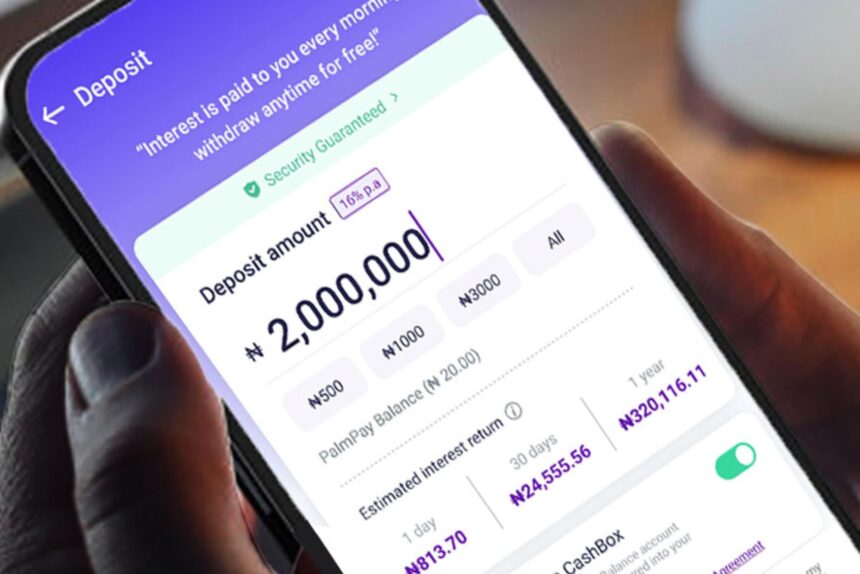
A Facebook post by a Nigerian, Idris AbdulRahman Omeiza, has gone viral after he revealed that his PalmPay account has been under a Post No Debit (PND) restriction for exactly one year, without any clear explanation from the fintech platform or any regulatory institution allegedly involved.
In his post, Idris said his account had been frozen for 365 days, claiming PalmPay told him a court-ordered PND was placed on the account, a claim he has spent one year trying to verify.
According to Idris, the freeze triggered a long, exhausting journey across the country in search of clarity. He said he visited the Nigeria Police Force Headquarters in Abuja, the Central Bank of Nigeria (CBN), and the Federal Ministry of Finance, but none of the institutions could confirm that a court order existed.
“Today makes it exactly 1 year that PalmPay Nigeria placed my account on PND. I mean, good 365 days with no sensible reason on WHY exactly a court ordered them to place my account on PND,” he wrote on Facebook.
Engagements With PalmPay Yield No Results
Idris said his attempts to resolve the issue with PalmPay directly were equally unsuccessful. He reportedly visited a PalmPay branch in Lokoja, Kogi State, and later travelled to the company’s Lagos headquarters, but said he was not given any formal document or explanation supporting the freeze.
He stated that despite approaching the matter calmly and professionally, the company did not provide clarity on why the restriction remains in place.
After a full year without progress, Idris expressed intense frustration, accusing PalmPay of mishandling the situation and threatening to return to the company’s Lagos office if his account remains blocked.
His Facebook post, which has gained significant engagement, reflects growing public concern about transparency and the processes fintech platforms follow when restricting user accounts.
Questions Over Regulatory Processes
A PND order normally requires a clear paper trail, a court directive, communication between regulators and the financial institution, and formal notice to the affected customer.
The absence of documented proof in this case has raised questions about how compliance-related freezes are executed in Nigeria’s fintech ecosystem.
As at the time of filing this report, PalmPay Nigeria has not issued a public response to Idris’s claims. Regulators including the CBN have also not commented.
What Exactly Is a PND?
Post No Debit (PND) is a regulatory instruction placed on a customer’s bank or wallet account, preventing all outgoing transactions.
A PND can be triggered by:
- A court order, usually related to investigations, fraud claims, or legal disputes.
- A directive from regulatory bodies such as the CBN, EFCC, or NFIU.
- Compliance concerns flagged by a financial institution.
Key requirements for a lawful PND include a verifiable legal or regulatory basis, the financial institution must maintain documentation, the affected customer must receive adequate communication regarding the restriction.
Where these are absent, consumer rights advocates say customers have grounds to escalate the matter formally.
Experts Weigh In on Fintech Accountability
To understand the broader implications, Techparley spoke with digital finance analysts who reviewed Idris’s claims and the regulatory gaps it exposes.
Chibuzo Amadi, a digital banking policy researcher, said the absence of clear documentation is deeply troubling.
“Any PND without accessible documentation undermines the integrity of compliance processes. Customers deserve to know why their money is inaccessible, and regulators must enforce stricter transparency,” he said.
Olumide Adesola, a fintech compliance consultant, noted that fintech companies must improve customer communication in cases involving regulatory actions.
“Fintech growth has been phenomenal, but consumer protection has not grown at the same pace. Cases like this highlight why dispute resolution mechanisms need to be faster, clearer and better enforced,” she said.
“Seizing of Funds for over 12 Months without prior notice and clarity or explanation, there’s almost a 100% guarantee that he can sue for damages at a high financial tune,” added Dexter Olocha, founder of EduTransConnect (ETC), a platform redefining long-distance student travel.
The experts agreed that PalmPay and all licensed mobile money operators must adopt more rigorous customer-facing procedures when accounts are restricted.
Broader Implications for Fintech Trust
The incident underscores ongoing concerns about consumer protection in Nigeria’s fast-growing digital banking sector. With Nigerians depending on mobile financial services for savings and daily transactions, cases like Idris’s highlight more transparent communication from fintech providers.
The unresolved nature of Idris’s case highlights the urgent need for better systems governing account restrictions, dispute escalation, documentation access and communication between fintech platforms and their users.
With digital banking adoption rising, analysts believe that establishing transparent, legally compliant processes for PND instructions is essential for maintaining user trust.
Techparley will continue following the situation and will update readers when PalmPay or regulatory authorities issue clarifications.
Talking Points
The situation surrounding Idris AbdulRahman’s year-long PND restriction highlights a critical gap in the operational transparency of Nigeria’s fast-growing fintech ecosystem. When a digital wallet can be frozen for 365 days without a verifiable explanation, it raises urgent questions about consumer protection protocols within the industry.
This incident underscores a recurring challenge: many Nigerian fintech users do not fully understand their rights or the procedures behind regulatory account restrictions.
For a sector that thrives on trust, clarity, and user adoption, cases like this threaten confidence, especially among everyday users who rely on mobile wallets as their primary financial tool.
At Techparley, we see this case as symptomatic of a deeper structural issue. Fintech operators often scale faster than their internal compliance and dispute-resolution frameworks can handle.
As a result, users face delays, miscommunication, or complete silence when their accounts encounter regulatory flags. This imbalance ultimately weakens the credibility of digital finance platforms.
As PalmPay and other major players continue to expand, we believe that strategic investments in customer protection frameworks, regulatory compliance clarity, and real-time user support will be essential.
With the right reforms, incidents like this can become catalysts for improving fairness, accountability, and user confidence across Nigeria’s digital financial landscape.
——————-
Bookmark Techparley.com for the most insightful technology news from the African continent.
Follow us on Twitter @Techparleynews, on Facebook at Techparley Africa, on LinkedIn at Techparley Africa, or on Instagram at Techparleynews.