



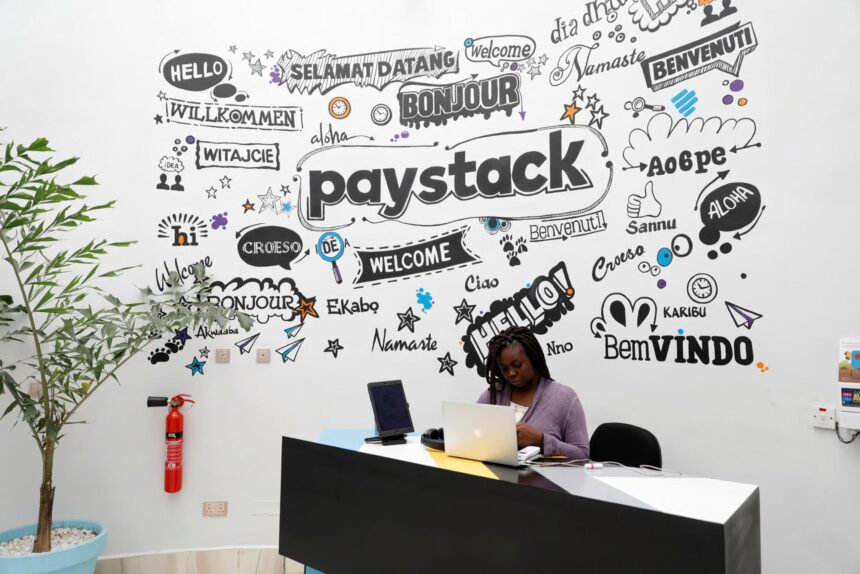
Nigerian fintech Paystack Inc., owned by Stripe, has officially entered the country’s banking sector with the acquisition of Ladder Microfinance Bank.
The move marks a shift for the decade-old payments company, enabling it to exert greater control over the funds it processes and expand into lending and banking-as-a-service (BaaS) offerings.
The newly acquired entity, now branded Paystack Microfinance Bank (Paystack MFB), will initially focus on lending to businesses before gradually offering services to consumers. It will also provide BaaS products to companies building financial tools and treasury management solutions.
“After 10 years of building payment infrastructure and going deep, we realised that businesses needed more than just getting paid to grow,” Amandine Lobelle, Paystack’s Chief Operating Officer told TechCabal. “We wanted to leverage the expertise that we have built over the last decade to continue to address some of the pain points that (businesses) have.”
What You Need to Know
The acquisition is the latest in Paystack’s strategic expansion into consumer-facing financial services. The company launched its consumer payments app Zap last year and is now stepping into deposit-taking activities, securing regulatory approval to operate as a licensed microfinance bank.
Paystack MFB will operate alongside Paystack Payments, but as a legally and operationally independent entity under the company’s American parent.
“The two entities (Paystack MFB and Paystack Payments) will collaborate closely within the relevant regulatory framework but fundamentally have their own licences, governance, scope, products and services,” Lobelle said.
This structure allows Paystack to test lending and deposit products without assuming the full cost or regulatory scrutiny associated with a commercial banking licence, while still leveraging its existing payment infrastructure.
Driving Business Growth Through Banking Services
With trillions of naira flowing through its network for over 300,000 Nigerian businesses each month, Paystack now has the infrastructure to upsell tailor-made banking solutions, improving margins and creating new revenue streams.
The microfinance bank will also lower barriers for companies wishing to launch their own banking products via its BaaS platform, mirroring how Paystack simplified online payments a decade ago.
“By adding Paystack MFB to our family of brands, we’re finding the right balance through combining the rapid innovation of a tech-first platform with the stability of traditional banking,” Lobelle said.
The move represents a structural shift: while Paystack became a core payments layer for Nigeria’s digital economy, it remained reliant on partner banks to hold funds. Owning a licensed microfinance bank enables the fintech to move into areas where higher margins exist and address friction points most acutely felt by small businesses.
Credit Strategy to Address Nigeria’s Business Financing Gap
Nigeria’s small business financing gap, estimated at $32 billion, remains a pressing challenge. Paystack aims to tackle this by combining transactional visibility, deposit control, and regulatory coverage to deploy capital efficiently.
Paystack MFB will offer a suite of lending products, including working capital loans, merchant cash advances, overdrafts, and term loans, initially targeting businesses. By using real-time payment data, the bank can underwrite credit more accurately than competitors relying solely on static financial statements.
Paystack MFB will compete directly with traditional microfinance banks such as LAPO, Accion, and Baobab, as well as digital-first lenders like Carbon and Fairmoney, and embedded finance players such as Moniepoint, OPay, PalmPay, and Kuda.
Unlike digital-first banks, which typically begin with consumer deposits before layering in credit, Paystack is approaching banking from an infrastructure-first perspective. Despite the expansion, Paystack’s existing partnerships with commercial banks, such as Titan Trust, remain unaffected.
What This Means
The microfinance licence complements Paystack’s heavily invested transfer rails, which achieve success rates close to 99%, allowing transactions to settle in seconds. Experts say housing a microfinance bank alongside this infrastructure reduces reliance on legacy institutions for liquidity management, compliance, and regulatory oversight.
While revenue-linked lending exposes lenders to demand shocks, microfinance regulations impose caps that limit rapid loan growth. However, Paystack can price risk more precisely by leveraging its transactional data, improving underwriting efficiency and mitigating default risk.
Paystack’s acquisition of Ladder Microfinance Bank signals a new phase in Nigeria’s fintech ecosystem, moving beyond payments into integrated banking services and lending.
By combining cutting-edge infrastructure with regulatory coverage, industry leaders say Paystack aims to tackle the financing gap for businesses while expanding its influence across the country’s rapidly evolving digital economy.
Talking Points
It is impressive that Paystack has taken a bold step by acquiring Ladder Microfinance Bank, giving the fintech greater control over the funds flowing through its network.
This acquisition positions Paystack as more than just a payments processor, allowing it to offer banking and lending services tailored to the real needs of Nigerian businesses, from working capital loans to treasury management.
At Techparley, we see how integrating microfinance capabilities with a decade of payments expertise can strengthen the financial infrastructure for small and medium-sized enterprises, creating faster, more reliable, and data-driven access to capital.
The combination of banking-as-a-service, real-time payment data, and deposit-taking capabilities means Paystack can now operate with greater independence while continuing to innovate, ensuring businesses get access to both seamless payments and flexible financial products.
As Paystack MFB grows, we see opportunities for partnerships that could deepen its reach across Nigeria, accelerate credit access for underserved businesses, and position the fintech as a true catalyst for financial empowerment in the country’s digital economy.
——————-
Bookmark Techparley.com for the most insightful technology news from the African continent.
Follow us on Twitter @Techparleynews, on Facebook at Techparley Africa, on LinkedIn at Techparley Africa, or on Instagram at Techparleynews.