Saudi Arabia-based fintech startup Vrtx has raised $3.6 million in pre-seed funding to help businesses integrate financial services into their products without building complex financial systems from scratch.
The funding round attracted investments from SC Ventures by Standard Chartered, Sadu Capital, BYLD, Suhail Ventures, F6 Ventures, TAZ Investment and Palm Ventures.
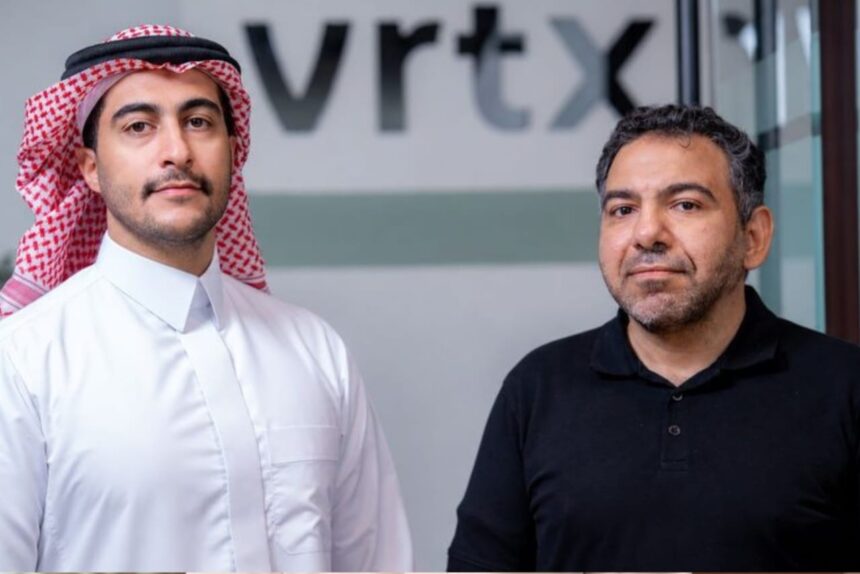
Founded in 2025 by Mishal Bin Slimah and Omar Shaaban, the Riyadh-based company is developing infrastructure that enables businesses to offer digital wallets, money transfers, payment cards, payouts and transaction processing through their platforms.
Vrtx has also received In-Principle Approval from the Saudi Central Bank (SAMA) for an Electronic Money Institution licence, marking a significant preliminary regulatory milestone as the startup works towards delivering its services within Saudi Arabia’s financial regulatory framework.
What is Vrtx and What Does It Do?
Vrtx is a financial technology company building infrastructure that allows businesses to integrate financial services into their existing products and platforms.
Known as embedded finance, this approach enables companies to offer services such as digital wallets, payments, money transfers and payment cards without independently developing all the underlying financial technology and operational systems.
For example, an e-commerce company could integrate payment capabilities into its shopping application, while a delivery platform could use financial infrastructure to facilitate payments to its drivers.
Rather than developing every component internally, these businesses could rely on Vrtx’s infrastructure to support their financial offerings, subject to applicable technical and regulatory requirements.
The company aims to simplify the process of developing and launching financial products by bringing essential technology and operational capabilities together. Its services are intended to help businesses reduce development complexity, accelerate product deployment and maintain better oversight of transactions and balances.
Vrtx’s co-founder and chief executive officer, Mishal Bin Slimah, explained the company’s ambition, saying, “Our goal is to make fintech capability a standard building block for any business, with Vrtx as the destination for the fintech capability they need.”
The company’s broader objective is to make financial technology more accessible to businesses that want to expand their offerings without building an entire financial services infrastructure independently.
Simplifying Financial Services for Businesses
Developing financial products requires more than creating an application or designing an attractive digital interface.
Businesses must establish secure transaction systems, connect payment processes, manage financial records, implement operational controls and address regulatory obligations before they can deliver reliable financial services.
These requirements can create significant financial and technical barriers, particularly for startups and companies whose primary activities are unrelated to banking or payments. Vrtx aims to address these challenges by providing infrastructure that businesses can integrate into their products according to their specific needs.
The platform is designed to support digital wallets, payouts, card issuance, transfers and transaction processing. Its approach also includes a secure testing environment, guided workflows and operational capabilities intended to support businesses as they develop and scale their financial products.
Through these features, Vrtx hopes to help companies move from the initial idea stage to operational deployment more efficiently. Its infrastructure is also intended to give businesses greater control over financial balances, transactions and operating rules.
The founders’ experience developing financial products informed this approach. According to the announcement, their previous work showed them how difficult it could be to bring seemingly simple financial services to market when technology, operations, compliance and security must all be established simultaneously.
Vrtx Secures $3.6 Million in Pre-Seed Funding
Vrtx’s $3.6 million pre-seed funding round brought together seven investors: SC Ventures by Standard Chartered, Sadu Capital, BYLD, Suhail Ventures, F6 Ventures, TAZ Investment and Palm Ventures.
The investment provides early-stage capital to support the company’s development as it seeks to establish its position in Saudi Arabia’s embedded finance market.
Pre-seed funding is an early form of startup financing that typically helps companies develop their products, strengthen their teams, establish operational capabilities and prepare for commercial growth.
For Vrtx, building financial infrastructure that businesses can depend on will require continued investment in technology, security, operations and regulatory compliance.
The participation of investors with interests in financial technology and venture development signals confidence in the opportunity to make financial services easier for businesses to integrate.
However, the announcement does not disclose the amount contributed by each investor, the company’s valuation or the ownership stakes associated with the round.
SC Ventures by Standard Chartered’s country lead for Saudi Arabia, Gabriel Heredia, said the investment reflected the firm’s confidence in embedded finance and the importance of financial infrastructure to businesses across the Kingdom.
“This investment reflects our conviction in the growth of embedded finance in Saudi Arabia and the increasing role that financial infrastructure will play in enabling businesses across the Kingdom,” Heredia said.
He added that Vrtx combines market understanding with the technology and capabilities needed to address the opportunity.
Saudi Central Bank Approval Marks a Regulatory Milestone
Vrtx has received In-Principle Approval (IPA) from the Saudi Central Bank, known as SAMA, for an Electronic Money Institution (EMI) licence. The development represents an important preliminary step towards offering its planned services within Saudi Arabia’s regulated financial system.
SAMA oversees key aspects of the country’s financial sector, including the regulation of relevant payment and electronic-money activities. An EMI licence concerns authorised electronic-money services, subject to the applicable regulatory conditions.
For a startup seeking to provide financial infrastructure, progressing through the licensing process is important because financial services involve the handling of funds, sensitive information and transactions that require appropriate safeguards.
However, in-principle approval should not be confused with the granting of a final licence. The announcement indicates that Vrtx is still working towards offering its services within the Kingdom’s regulatory framework, and it does not establish that every planned service is already authorised or commercially available.
BYLD co-founder and managing partner Youcef Oudjidane emphasised the importance of combining innovation with regulatory compliance when developing financial infrastructure.
“Embedded finance has the potential to become an important layer of economic infrastructure, allowing financial services to be integrated into the businesses people use every day,” Oudjidane said.
He added that Vrtx’s regulatory focus was an important factor in his confidence in the company.
The Future of Embedded Finance in the Kingdom
Vrtx was founded by Mishal Bin Slimah and Omar Shaaban, who previously worked together at Tweeq, an early Saudi digital financial platform that was acquired by Tabby.
Their experience building financial products exposed them to the technical, operational and compliance challenges involved in introducing financial services to customers.
That experience helped shape Vrtx’s strategy of bringing essential financial capabilities together in a platform that other businesses can use. Instead of requiring every company to assemble its own financial infrastructure, Vrtx aims to provide a more accessible route to developing embedded financial products.
The startup’s ambitions come amid growing interest in financial technology solutions that connect payments and other financial services with everyday business activities.
If successful, its approach could help e-commerce companies, digital platforms and other businesses incorporate financial capabilities into their customer experiences while focusing on their core operations.
Nevertheless, Vrtx will need to demonstrate that its platform can attract business customers, operate securely at scale and meet applicable regulatory requirements. Competition from established payment providers and other financial infrastructure companies could also influence its growth.
________________________
Bookmark Techparley.com for the most insightful technology news from the African continent.
Follow us on X/Twitter @Techparleynews, on Facebook at Techparley Africa, on LinkedIn at Techparley Africa, or on Instagram at Techparleynews