



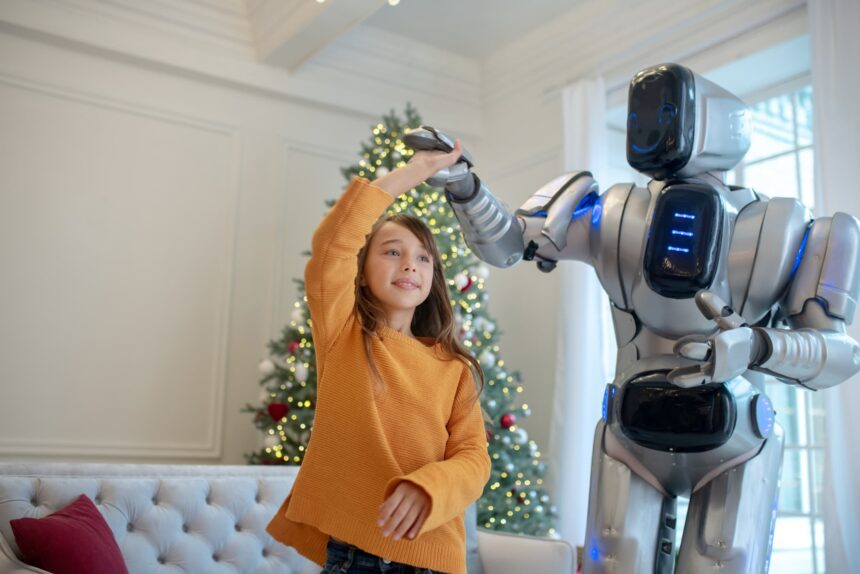
In this rapidly digital-evolving world, robots are becoming an important part of everyday life. From cleaning homes and helping doctors perform delicate surgeries to exploring distant planets and assisting in factories, robots are transforming how humans live and work.
Simply put, robots are smart machines designed to carry out tasks automatically. Some follow instructions written by humans, while others use advanced technologies like artificial intelligence to learn from their environment and make decisions.
What makes robots unique is their ability to sense the world around them, process information, and respond with actions, sometimes faster and more accurately than humans. Because of these abilities, robots are increasingly used to perform repetitive tasks, dangerous jobs, and complex operations that would be difficult or unsafe for people.
For teenagers and young learners interested in technology, understanding how robots work and how they support humans is an exciting step into the future of science, engineering, and innovation.
What Exactly Is a Robot?
A robot is a machine designed to perform tasks automatically, often with little or no human control once it starts working. Unlike ordinary tools such as hammers or calculators, robots can interact with their surroundings. They can detect changes in their environment, make decisions based on data, and perform actions.
Although many people imagine robots as human-like machines with arms, legs, and faces, most robots are actually built for specific tasks. Some look like robotic arms in factories, some move on wheels in warehouses, and others are small machines designed to clean floors or deliver items.
At the heart of every robot is a combination of hardware (physical parts) and software (programs that tell the robot what to do). These two elements work together to allow the robot to perform tasks efficiently and safely.
The Four Main Parts That Make a Robot Work
Every robot, no matter how simple or complex, is built around four key components that allow it to function properly.
The Controller: The Robot’s Brain
The controller is the robot’s central computer system. It processes information and sends instructions to other parts of the robot. Just like the human brain controls our movements and decisions, the controller tells the robot when to move, stop, or perform certain actions.
Programs installed in the controller guide the robot’s behavior. In advanced robots, this controller may also use artificial intelligence to help the robot learn from its experiences.
Actuators: The Robot’s Muscles
Actuators are the parts that create movement. They include motors, engines, and hydraulic systems that allow the robot to move its arms, wheels, or other mechanical parts. For example, in a factory robot that assembles cars, actuators help the robot lift parts, weld metal pieces, or tighten bolts with precision.
Sensors: The Robot’s Senses
Sensors allow robots to observe and understand their surroundings. These devices collect information such as light, temperature, distance, sound, or motion. Some robots use cameras to “see,” microphones to “hear,” or touch sensors to detect pressure. This information helps the robot make decisions about what action to take next.
Power Supply: The Robot’s Energy Source
Just like humans need food to stay active, robots need energy to operate. This energy usually comes from batteries, electricity, or sometimes fuel systems. Without a reliable power supply, a robot cannot move, process information, or perform tasks.
How Robots Help Humans in Everyday Life
Robots are not just machines in science fiction movies. They are already helping people in homes, workplaces, hospitals, and even outer space. Their main role is to assist humans by making tasks faster, safer, and more efficient.
Robots at Home: Helping With Daily Tasks
Many homes today already use simple robots to make everyday chores easier. These robots are designed to handle repetitive tasks that people often find tiring.
For example, robotic vacuum cleaners such as the Roomba can automatically move around a room and clean the floor without human supervision. They use sensors to avoid obstacles and navigate through furniture.
Other household robots include automated lawn mowers that cut grass on their own and smart home assistants that help control lights, temperature, and security systems.
By taking care of these routine chores, robots give people more time to focus on work, hobbies, and family activities.
Robots in Industry: Building and Moving Products
Factories and warehouses rely heavily on robots to manufacture goods and move materials efficiently.
In manufacturing plants, robotic arms assemble electronics, weld car parts, and package products with incredible speed and precision. These robots can work continuously without getting tired, which increases productivity and reduces mistakes.
In large warehouses, autonomous mobile robots transport packages from one area to another. These robots help companies deliver products faster and manage large inventories more effectively.
Because robots can perform repetitive tasks accurately, they help industries maintain consistent product quality while improving safety for workers.
Robots in Healthcare: Assisting Doctors and Patients
Robots are also playing an important role in modern medicine. They assist doctors, nurses, and patients in ways that improve healthcare outcomes.
One example is the da Vinci Surgical System, a robotic system that helps surgeons perform delicate operations with high precision. The system allows doctors to control robotic instruments that can move more accurately than human hands during certain procedures.
Robots also help patients recover from injuries. Robotic exoskeletons can support people who have difficulty walking, helping them regain mobility during rehabilitation therapy.
In hospitals, service robots transport medicine, medical tools, and supplies between departments, helping healthcare workers focus more on patient care.
Robots in Dangerous Environments
Some tasks are too risky for humans, especially in environments that are unsafe or difficult to reach. Robots are extremely useful in these situations.
Rescue robots can enter collapsed buildings after earthquakes to search for survivors. Bomb disposal robots safely handle explosives to protect human lives. Robots are also used in nuclear facilities to handle dangerous materials and clean up hazardous environments.
In space exploration, robotic spacecraft such as the Mars rovers travel across the surface of Mars to collect scientific data. These robots explore places that would be extremely difficult or dangerous for humans to reach.
Robots in Education and Public Services
Robots are becoming valuable tools in schools and learning environments, especially in science, technology, engineering, and mathematics (STEM) education.
Educational robots like the NAO robot are used to teach programming, robotics, and problem-solving skills. Students can program these robots to move, speak, or complete tasks, helping them learn coding in a fun and interactive way.
In public spaces such as hotels, airports, and shopping centers, service robots help guide visitors, answer questions, and manage simple customer service tasks. Some robots also provide companionship for elderly individuals, helping reduce loneliness and supporting daily care.
Benefits and Challenges of Using Robots
Robots bring many advantages to society. They increase efficiency by performing tasks quickly and accurately. They improve safety by taking over dangerous jobs that could harm humans. Robots also help people with disabilities perform everyday activities more easily.
However, there are also challenges. Advanced robots can be expensive to build and maintain. Some people worry about privacy and ethical issues, especially when robots collect data about their surroundings.
In addition, robots cannot fully replace human judgment, emotions, or empathy.
For this reason, robots are best seen as helpers and partners rather than replacements for humans.
Frequently Asked Questions (FAQs)
Are robots the same as artificial intelligence?
No. A robot is a physical machine that performs tasks, while artificial intelligence is the technology that allows machines to learn, think, or make decisions. Some robots use AI, but not all robots have AI.
Do all robots look like humans?
No. Most robots do not look like humans. Many are designed specifically for tasks such as cleaning, manufacturing, or exploring space.
Can robots replace human workers?
Robots can perform certain tasks faster and more safely, especially repetitive or dangerous jobs. However, humans are still needed for creativity, decision-making, and emotional understanding.
How are robots controlled?
Robots are controlled by computer programs stored in their controllers. Some robots follow simple instructions, while advanced ones can learn from data and respond to their environment.
Can teenagers learn to build robots?
Yes. Many schools and coding programs teach robotics. Teenagers can learn programming, electronics, and engineering skills that allow them to design and build their own robots.
_________________________
Bookmark Techparley.com for the most insightful technology news from the African continent.
Follow us on X/Twitter @Techparleynews, on Facebook at Techparley Africa, on LinkedIn at Techparley Africa, or on Instagram at Techparleynews


