



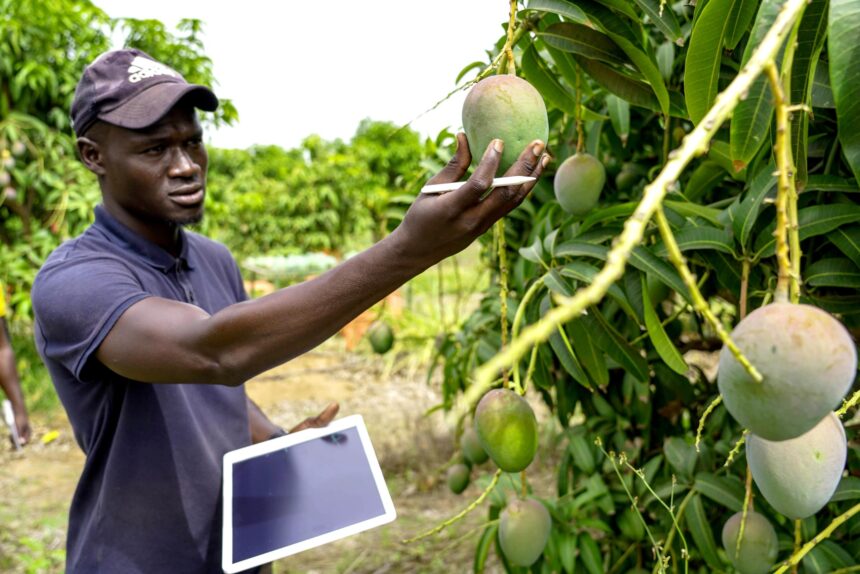
Agriculture is undergoing a significant transformation as AgriTech startups increasingly leverage digital tools, data analytics, artificial intelligence, and financial innovation to address long-standing inefficiencies across the food value chain.
From precision farming and digital marketplaces to climate-smart advisory platforms and embedded finance, AgriTech startups are redefining how food is produced, processed, distributed, and financed.
This shift is particularly visible in emerging markets, where agricultural productivity gaps, fragmented supply chains, and limited farmer access to capital create fertile ground for innovation.
Understanding AgriTech and its evolution
AgriTech, short for agricultural technology, refers to the application of modern technological solutions to improve agricultural productivity, sustainability, and profitability. Historically, agricultural innovation centred on mechanisation and improved seed varieties. However, the past decade has seen a new wave driven by connectivity, mobile adoption, cloud computing, and affordable sensors.
Globally, startups such as Indigo Ag, Farmers Business Network, and CropX have demonstrated how digital agriculture can optimise farm operations and unlock new revenue streams. In Africa, companies like ThriveAgric, Twiga Foods, and Hello Tractor highlight how innovation is being tailored to local realities such as smallholder farming and infrastructure gaps.
Key drivers behind the rise of AgriTech startups
1. Growing food demand and population pressures
The global population continues to expand, increasing demand for food production while available arable land remains constrained. AgriTech startups offer scalable solutions that improve yield efficiency without proportionate land expansion.
2. Climate change and sustainability imperatives
Climate variability, extreme weather events, and soil degradation are reshaping agriculture. Many startups now focus on climate-smart agriculture, carbon measurement, regenerative farming practices, and predictive analytics that help farmers adapt to changing conditions.
3. Digital penetration in rural economies
Rising smartphone usage, mobile payments, and improved connectivity across developing regions have enabled digital agricultural platforms to reach smallholder farmers at scale. This infrastructure allows startups to deliver advisory services, input financing, and market access remotely.
4. Investment momentum and venture interest
Venture capital and impact investors increasingly view AgriTech as a strategic sector combining financial returns with social impact. Blended finance structures and development finance participation have further accelerated capital flows into early-stage ventures.
5. Supply chain inefficiencies and market fragmentation
Agricultural markets in many regions suffer from price opacity, post-harvest losses, and intermediary-driven value leakage. AgriTech marketplaces and logistics platforms address these inefficiencies by connecting producers directly with buyers while improving traceability.
Major opportunity areas within AgriTech
Digital marketplaces and aggregation
Startups that aggregate farmers and connect them with buyers, processors, and exporters are reshaping agricultural trade. These platforms reduce transaction costs, improve price discovery, and enable bulk purchasing of inputs.
Embedded finance and farmer credit
Access to finance remains a critical barrier for farmers. AgriTech startups increasingly integrate credit scoring, insurance, and payments into their platforms, using alternative data such as farm activity and transaction history to underwrite risk.
Precision agriculture and farm analytics
Sensors, drones, satellite imagery, and AI-driven insights allow farmers to monitor crop health, soil conditions, and water usage. Precision agriculture helps reduce input waste and improves yield predictability.
Mechanisation as a service
Rather than owning expensive equipment, farmers can now access machinery through sharing platforms and pay-per-use models. This asset-light approach lowers capital barriers and improves productivity.
Climate and sustainability solutions
Carbon markets, regenerative agriculture platforms, and climate-risk advisory tools represent emerging AgriTech frontiers. Startups in this segment may unlock new income streams for farmers while supporting environmental goals.
Post-harvest and logistics innovation
Cold storage, warehousing optimisation, and digital logistics coordination help minimise post-harvest losses, which remain a major challenge across developing agricultural systems.
Challenges confronting AgriTech startups
Infrastructure limitations
Unreliable electricity, limited rural connectivity, and weak logistics networks can constrain platform performance and increase operational costs.
Farmer adoption barriers
Technology adoption among farmers may be slowed by digital literacy gaps, trust deficits, and behavioural resistance to new practices. Effective onboarding, training, and demonstration effects are essential.
Unit economics and scalability concerns
Serving dispersed rural customers often results in high customer acquisition and servicing costs. Many startups struggle to balance growth with sustainable margins.
Data availability and reliability
AgriTech models frequently depend on high-quality agricultural data. However, fragmented record-keeping and inconsistent farm-level data can affect predictive accuracy and credit assessments.
Regulatory and policy uncertainties
Agricultural trade policies, export restrictions, and digital finance regulations can influence startup operations and investment attractiveness.
Climate and production risks
Unlike many technology sectors, AgriTech startups are inherently exposed to biological and climate risks that can disrupt farmer productivity and platform transaction volumes.
Investment trends and ecosystem evolution
AgriTech investment has gradually shifted from experimental pilots toward scalable business models with clearer revenue streams. Investors increasingly prioritise startups demonstrating integrated ecosystems rather than single-solution offerings. For example, platforms combining market access, finance, and advisory services often exhibit stronger retention and monetisation potential.
In Africa and other emerging regions, development finance institutions and philanthropic capital continue to play catalytic roles by de-risking early innovation and supporting ecosystem infrastructure such as data platforms and farmer registries.
Future outlook for AgriTech startups
The next phase of AgriTech growth is likely to be characterised by platform consolidation, deeper integration of AI-driven decision support, and expanded climate-linked revenue models. Partnerships between startups, governments, agribusinesses, and financial institutions will also shape the sector’s trajectory.
Additionally, interoperability across agricultural data systems and increasing participation in global carbon and sustainability markets could create new monetisation pathways for startups and farmers alike. As food security and climate resilience remain central policy priorities worldwide, AgriTech innovation is expected to maintain strategic relevance.
FAQs — The Rise of AgriTech Startups
What are AgriTech startups?
AgriTech startups are companies that use technology such as data analytics, mobile platforms, artificial intelligence, and IoT solutions to improve agricultural productivity, supply chain efficiency, farmer access to finance, and market connectivity.
Why are AgriTech startups gaining momentum globally?
AgriTech startups are growing rapidly due to rising food demand, climate pressures, digital penetration in rural areas, investor interest in impact sectors, and the need to solve persistent inefficiencies across agricultural value chains.
How do AgriTech startups benefit smallholder farmers?
They provide farmers with market access, input financing, mechanisation services, weather and agronomy advisory, price transparency, and logistics coordination, helping increase productivity and income stability.
What are the biggest challenges facing AgriTech startups?
Key challenges include infrastructure gaps, farmer adoption barriers, high operational costs in rural markets, regulatory uncertainties, data limitations, and exposure to climate and production risks.
What is the future outlook for AgriTech startups?
The sector is expected to expand through integrated platforms, AI-powered decision tools, climate-focused business models, ecosystem partnerships, and consolidation among startups offering complementary services.
——————-
Bookmark Techparley.com for the most insightful technology news from the African continent.
Follow us on Twitter @Techparleynews, on Facebook at Techparley Africa, on LinkedIn at Techparley Africa, or on Instagram at Techparleynews.