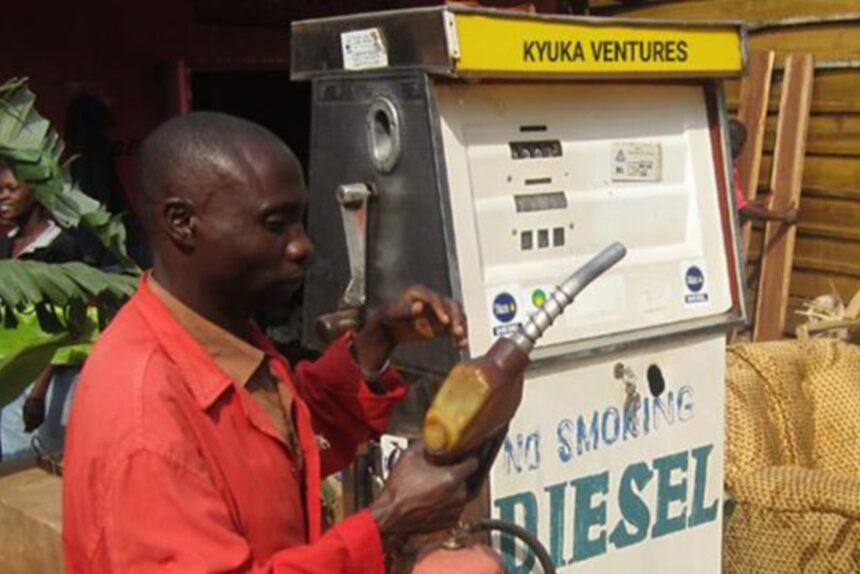
As Uganda, like many other African countries, grapples with mounting plastic pollution and widespread dependence on smoky, health-damaging cooking fuels, Ugandan startup Kyuka Ventures is offering a rare solution that tackles both crises at once.
Founded in 2022 by Sonko Jamal, the clean energy and circular economy company is converting low-value plastic waste, often burned or dumped, into affordable LPG cooking gas for low-income households.
Using its patent-pending Soot-Free Reactive Extraction Technology (SFRET), Kyuka is not only diverting plastic from landfills and open burning but also reducing household reliance on charcoal and firewood, cutting indoor air pollution, and creating green jobs for women and youth.
Already operating a functional plastic-to-LPG pilot plant in Uganda, the company has reached over 25,000 households, processed more than 100 tonnes of plastic waste, and built a steady demand base that validates both its technology and business model.
As founder, Sonko Jamal puts it, “There was no scalable, locally adapted solution that could turn problematic plastic waste into a clean, affordable cooking fuel for low-income households. Kyuka Ventures was founded to close this gap.”
What You Should Know About Kyuka Ventures
Kyuka Ventures positions itself at the intersection of clean energy, waste management, and climate action. The startup focuses on plastics that have little or no recycling value, materials that typically end up being burned in open spaces or dumped in landfills.
Rather than viewing this waste as a problem alone, Kyuka treats it as a resource.
“Our process safely breaks down mixed plastics into usable fuel in a closed, controlled system, producing significantly lower emissions than traditional disposal or basic pyrolysis,” Jamal explained.
The result is LPG cooking gas that is supplied directly to households as a cleaner and more affordable alternative to charcoal and firewood. By design, the company combines environmental impact with social inclusion.
“Beyond energy production, we operate an inclusive model that creates green jobs for women and youth as plastic collectors and plant operators, and we track environmental impact such as plastic diverted and CO₂ emissions avoided,” Jamal added.
Step-by-Step: How Kyuka Ventures Operates
Kyuka’s operations begin at the community level, where plastic waste is collected from urban areas, particularly low-income neighborhoods. These plastics, often considered worthless by conventional recycling systems, are transported to Kyuka’s processing facility.
At the plant, the waste is converted into LPG through Kyuka’s SFRET technology, a process designed to operate in a closed and controlled environment.
This significantly reduces harmful emissions compared to open burning or crude plastic processing methods.
Once produced, the LPG is distributed to households that would otherwise rely on charcoal or firewood for daily cooking.
The model ensures a continuous loop, plastic waste becomes fuel, fuel demand sustains production, and communities benefit both economically and environmentally.
Who Benefits from Kyuka’s Model
The most immediate beneficiaries of Kyuka Ventures are low-income households, particularly in urban communities. These families gain access to cleaner cooking gas that is cheaper, faster, and safer than traditional fuels.
Women stand out as key beneficiaries. “We have seen particularly high uptake among women-led households, who value the health and time-saving benefits,” Jamal noted.
Reduced smoke exposure lowers health risks, while faster cooking frees up time for other economic or domestic activities.
Beyond households, Kyuka’s model creates employment for women and youth as plastic collectors and plant operators, embedding livelihood creation directly into its operations.
What Makes Kyuka Ventures Unique
What sets Kyuka apart is its ability to solve two problems that have traditionally been addressed separately.
As Jamal observed, “Existing solutions addressed these problems separately, waste companies focused on collection and disposal, while energy providers sold LPG without solving affordability or waste challenges.”
Kyuka bridges this gap by turning problematic plastic waste into a clean energy product that is locally produced and priced for low-income users.
This circular approach links waste management, clean energy access, and climate impact into one scalable business model.
“In Uganda and many emerging markets, large volumes of low-value plastic waste have no viable recycling pathway,” Jamal said, “while at the same time most households still rely on charcoal and firewood because LPG is unaffordable or inaccessible.”
Market Capacity and Expansion Plans
Currently, Kyuka Ventures operates in Kampala and surrounding urban communities, where both plastic pollution and reliance on dirty cooking fuels are most acute.
The company’s near-term strategy is to deepen its presence within Uganda by expanding into additional high-density cities and municipalities.
“This includes setting up more modular processing units and expanding our plastic collection and LPG distribution networks,” Jamal said.
Looking further ahead, Kyuka plans to enter other East African markets facing similar challenges, positioning itself as a regional solution for plastic waste and clean cooking energy.
Traction and Milestones So Far
Despite being self-funded, Kyuka Ventures has already achieved milestones that many early-stage startups struggle to reach. The company has successfully designed, built, and operated a working plastic-to-LPG pilot plant in Uganda. This validates its SFRET technology under real-world conditions.
It has reached over 25,000 low-income households, diverted more than 100 tonnes of plastic waste from open burning and landfills, and established consistent daily processing capacity.
“Uptake has been strong and consistent, especially within low-income urban communities,” Jamal said. “From the early pilot phase, demand for our clean cooking gas grew quickly because households immediately experienced lower fuel costs, faster cooking, and reduced smoke compared to charcoal and firewood.”
Community word-of-mouth has played a critical role in adoption, helping Kyuka build repeat usage and steady demand that absorbs its daily production capacity.
Why This Matters
Kyuka Ventures’ model speaks directly to some of the most pressing challenges facing emerging markets such as plastic pollution, energy poverty, public health risks, and unemployment.
By transforming waste into a widely needed household fuel, the company demonstrates how circular economy principles can deliver real, everyday benefits.
In Jamal’s words, Kyuka Ventures turns “plastic waste into clean energy, livelihoods, and measurable climate impact.”
If successfully scaled, the model could offer a blueprint for how African cities can tackle environmental degradation while expanding access to clean, affordable energy. It would prove that sustainability and social impact do not have to come at the expense of economic viability.
Talking Points
Kyuka Ventures presents a compelling and well-aligned response to two structurally linked challenges in emerging markets, plastic waste mismanagement and limited access to affordable clean cooking energy, but its long-term success will hinge on execution at scale.
The startup’s core strength lies in its circular model, which converts low-value plastic waste into LPG while embedding social inclusion through job creation and affordability, a combination that gives it both environmental and market relevance.
Its early traction, evidenced by a working pilot plant, consistent daily processing, and adoption by over 25,000 households, suggests strong product–market fit, particularly among low-income and women-led households.
However, scaling this model will require careful navigation of regulatory approvals for fuel production, sustained feedstock supply as operations expand, and significant capital investment to replicate modular plants across new cities and markets.
Additionally, while the emissions profile is described as cleaner than traditional disposal or basic pyrolysis, sustained transparency, independent verification, and compliance with environmental standards will be critical to maintaining credibility as the company grows.
Overall, Kyuka Ventures demonstrates a promising, locally grounded innovation with real impact, but its transition from a successful pilot to a scalable, regional solution will depend on disciplined growth, regulatory alignment, and access to patient capital.
_______________________
Bookmark Techparley.com for the most insightful technology news from the African continent.
Follow us on X/Twitter @Techparleynews, on Facebook at Techparley Africa, on LinkedIn at Techparley Africa, or on Instagram at Techparleynews