



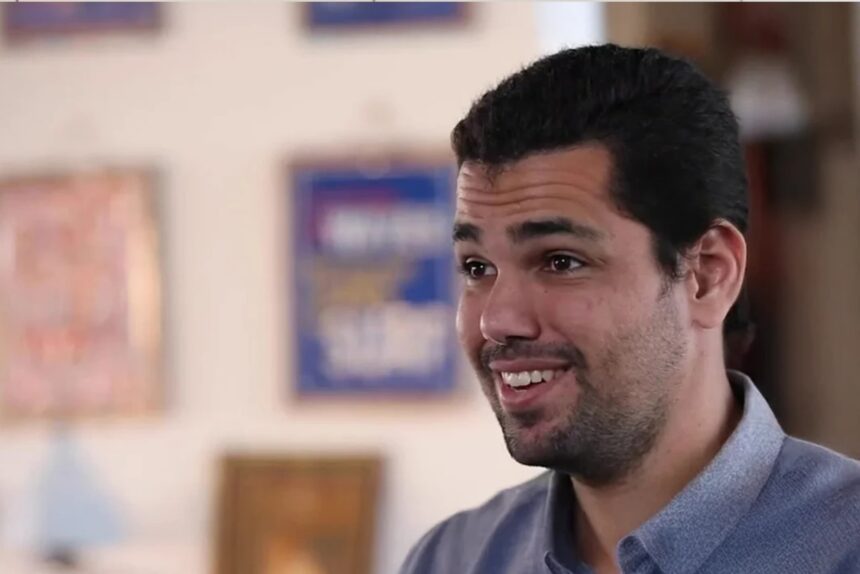
Morocco-based fintech WafR has raised $4 million in an oversubscribed seed round. This is to accelerate its plan to transform neighborhood corner stores into accessible financial service hubs, according to people familiar with the deal and published reports.
The round was co-led by LoftyInc Capital, alongside Attijariwafa Ventures and Almada Ventures, with participation from returning backers UM6P Ventures and First Circle Capital.
Founded in 2021 by Ismail Bargach and Reda Sellak, the company is leveraging Morocco’s vast informal retail network to tackle the country’s financial inclusion challenges, betting that trusted local shops can serve as the “last mile” for fintech delivery.
A Merchant Network as a Fintech Rail
At the core of WafR’s model is a simple but scalable idea, use existing high-frequency retail touchpoints as the infrastructure for digital financial services. The company currently works with nearly 20,000 active merchants, locally known as hanouts, who already serve as daily touchpoints within their communities.
Through this network, customers can access services such as airtime purchases and bill payments, with plans underway to expand into peer-to-peer transfers and domestic remittances.
This strategy mirrors a broader African fintech playbook, build distribution first, then layer higher-value financial services over time. In WafR’s case, the hanout network functions as a physical interface for digital tools.
Rather than investing heavily in branch-style infrastructure, the company is embedding fintech capabilities within stores that already enjoy customer trust.
This approach not only lowers operational costs but also enables access to customers who may be hesitant to engage with app-only platforms.
As WafR deepens its footprint, merchants are expected to evolve into cash-in, cash-out and transaction hubs, effectively forming a decentralized financial rail across the country.
Backing from Institutional Investors
The seed round speaks a strong investor confidence in the model. LoftyInc Capital described the deal as one of the first investments from its newly launched LoftyInc Alpha Fund, which targets what the firm calls Africa’s “graduation gap”.
That’s startups that have demonstrated traction but struggle to secure growth capital between early-stage funding and institutional backing.
Mariam Kamel, a partner at LoftyInc Capital, emphasized the firm’s strategic alignment with WafR’s mission, stating, “We are proud to co-lead this round and champion WafR’s bold mission.”
For WafR, the investment represents more than capital injection. Chief Executive Officer Ismail Bargach highlighted the strategic value of its new backers.
He notes that, “Their support brings not just capital, but deep fintech experience and strong regional networks that will be instrumental as we scale our impact.”
The participation of both new and returning investors underscores confidence in the company’s growth trajectory and operational execution since its founding in 2021.
Addressing Morocco’s Fintech Distribution Challenge
While Morocco has experienced growing fintech activity in payments and merchant enablement, financial inclusion barriers persist, often less because of technology and more due to distribution and trust constraints.
A significant portion of the population remains underbanked or cash-reliant, creating a structural gap between digital innovation and real-world adoption.
WafR is positioning itself at the intersection of this gap. By formalizing the role of neighborhood stores into a repeatable fintech channel, the company is attempting to institutionalize what is already a trusted community infrastructure.
Corner shops are embedded in daily life; turning them into financial access points reduces friction for consumers and bridges the divide between informal cash economies and structured digital systems.
If the model scales successfully, WafR could unlock broader opportunities beyond utility-style payments. Remittances, peer-to-peer transfers and additional financial products could follow, supported by transaction data generated across its merchant network.
Over time, this data layer may provide insights into merchant behavior and consumer patterns, enabling the rollout of more sophisticated financial services.
Scaling the Network Nationwide
The newly secured funding will be directed toward expanding the merchant network and broadening the company’s product suite across Morocco.
By strengthening its footprint and layering additional services onto its existing infrastructure, WafR aims to cement its role as a national distribution backbone for fintech services.
In essence, the company is not merely digitizing payments; it is reengineering how financial services reach communities.
By turning thousands of small neighborhood shops into structured fintech access points, WafR is attempting to solve one of Morocco’s most persistent financial inclusion challenges, the “last mile” problem.
As competition intensifies in Africa’s fintech ecosystem, WafR’s ability to combine physical retail trust with digital scalability may determine whether its merchant-led model becomes a blueprint for broader North African expansion.
Talking Points
WafR’s merchant-led model reflects a pragmatic understanding of Morocco’s financial inclusion constraints, particularly the persistent gaps in distribution, trust, and cash dependency that have slowed purely app-based fintech adoption.
By embedding digital financial services within nearly 20,000 neighborhood hangouts, WafR is effectively lowering customer acquisition costs while leveraging existing social capital, a strategy that has proven viable in several African markets.
However, the model’s long-term defensibility will hinge on execution depth rather than network breadth alone. As the company expands into higher-margin services like remittances and peer-to-peer transfers, regulatory compliance, liquidity management across merchant nodes, fraud risk, and operational consistency will become more complex.
Moreover, scaling a distributed physical network requires rigorous merchant onboarding, monitoring, and incentives to maintain service quality and brand trust.
While the $4 million seed round provides early growth momentum and institutional validation, sustained differentiation will depend on WafR’s ability to convert transactional activity into meaningful data intelligence and eventually into higher-value financial products without eroding the trust foundation that underpins its model.
_____________________
Bookmark Techparley.com for the most insightful technology news from the African continent.
Follow us on X/Twitter @Techparleynews, on Facebook at Techparley Africa, on LinkedIn at Techparley Africa, or on Instagram at Techparleynews