



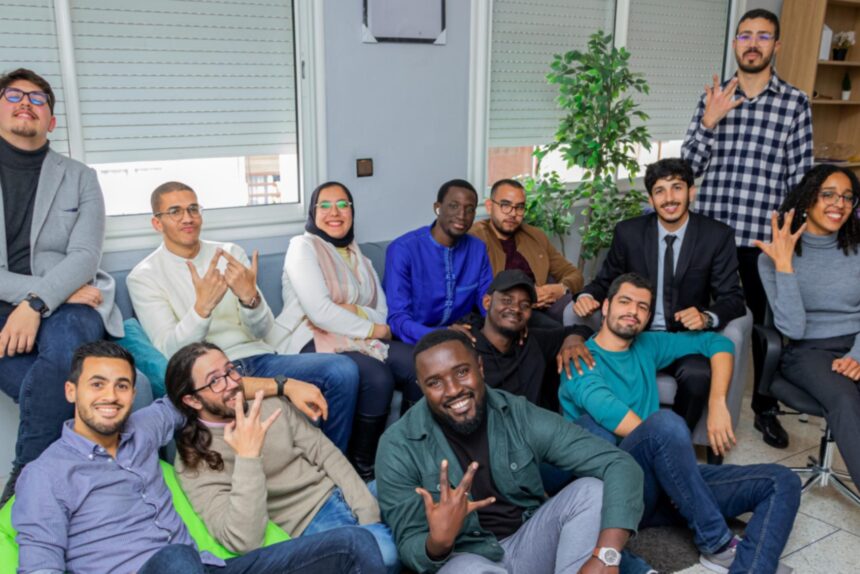
Weego, a Moroccan-Senegalese mobility start-up building a multimodal transport platform, has raised $1.1 million in early-stage funding from Azur Innovation Fund as it seeks to scale operations across Morocco and lay the groundwork for regional expansion into Africa, Europe and the Middle East.
The capital injection will be used to deepen Weego’s footprint in Moroccan cities, strengthen its enterprise-focused transport solutions, and accelerate its ambition of becoming a unified digital gateway for public and private mobility networks.
The raise underscores growing investor interest in transport technology as African cities confront worsening congestion, rising commuter demand and mounting pressure to modernise ageing infrastructure.
“Transportation is the primary obstacle to economic activity in our cities,” said Saad Jittou, Weego’s co-founder and CEO. “By 2030, our metropolitan areas will have to manage unprecedented passenger flows. At Weego, we are building the technological layer that connects existing infrastructure to make it more efficient. This funding enables us to accelerate this vision in Morocco and begin our regional expansion.”
Urban Congestion as an Economic Constraint
Urban mobility remains one of the most significant structural challenges facing African economies. In Morocco, congestion is increasingly viewed not merely as a commuter inconvenience but as a constraint on productivity and economic competitiveness.
Casablanca, the country’s commercial capital, ranks eighth among the most congested cities in Africa, according to data from Numbeo, which tracks commuting times, traffic inefficiencies and congestion levels globally. Lengthy commute times, unpredictable journeys and fragmented transport systems translate into lost economic hours and reduced business efficiency.
As Morocco advances towards its 2030 development objectives aimed at expanding economic output and positioning the country as a regional business and investment hub, transport efficiency is becoming central to the national competitiveness agenda.
Weego’s leadership argues that digital integration, rather than large-scale new infrastructure alone, will play a decisive role in addressing these bottlenecks.
Building a Digital Infrastructure Layer
Founded in 2020 by Saad Jittou and Mor Niane, Weego operates at the intersection of public infrastructure and private mobility services. Rather than functioning as another stand-alone ride-hailing application, the platform integrates multiple transport modes, including buses, trams, taxis and private services into a single interface.
Users can plan, compare and track journeys in real time, enabling greater predictability and convenience in cities where fragmented systems often force commuters to rely on multiple apps or informal arrangements.
The company’s model is designed not only for individual commuters but also for corporate clients. Beyond consumer trip planning, Weego provides transport management solutions for employers, allowing businesses to organise, monitor and optimise employee mobility, an increasingly important function in congested metropolitan areas.
Part of a Growing Moroccan Mobility Ecosystem
Weego joins a growing cohort of Moroccan mobility start-ups seeking to modernise urban commuting through technology. Companies such as Enakl are also developing data-driven transport solutions aimed at reducing inefficiencies and improving user experience.
The sector’s growth reflects a broader shift in African cities, where digital platforms are increasingly being deployed to optimise existing infrastructure rather than relying solely on costly physical expansion.
For investors, the appeal lies in scalable solutions that can be replicated across markets facing similar structural transport challenges.
“Weego’s approach addresses a critical need: the unification of transport modes. By investing in this solution, we are supporting a Moroccan innovation capable of becoming a regional standard and meeting the modernisation requirements of our African cities,” said Adnane Filali, Managing Partner at Azur Innovation Fund.
Regional Ambitions Beyond Morocco
While the immediate focus remains domestic expansion, Weego’s longer-term ambition extends beyond Morocco. The company is positioning itself as a regional platform capable of integrating multimodal transport systems in other African cities, as well as selected markets in Europe and the Middle East.
Success will depend on navigating regulatory environments, forming partnerships with municipal authorities and transport operators, and adapting to varying levels of infrastructure maturity.
Nevertheless, experts say the $1.1 million raise marks a significant milestone for the start-up as it seeks to transition from a national mobility solution to a cross-regional digital transport integrator.
In a continent where rapid urbanisation is reshaping economic landscapes, platforms that can make mobility more predictable, efficient and integrated may prove essential to sustaining growth.
Talking Points
It is encouraging to see Weego secure early-stage backing at a time when urban congestion is increasingly constraining productivity in major African cities. Mobility is no longer just a commuter issue, it is an economic one.
By positioning itself as a multimodal platform that integrates buses, trams, taxis and private transport into one interface, Weego is addressing a fundamental structural gap, fragmentation. The unification of transport modes into a single digital layer could significantly improve predictability and efficiency for daily commuters.
At Techparley, we see this as part of a broader trend where African start-ups are building digital infrastructure on top of existing physical systems, rather than waiting for large-scale public works projects. This approach is faster, more scalable and potentially more adaptable across markets.
The company’s dual focus on individual commuters and enterprise transport solutions is particularly strategic. Employers navigating congested cities need structured mobility management, and platforms that serve both consumers and businesses are better positioned to create sustainable revenue streams.
However, scaling such a model will require deep collaboration with transport authorities and operators. Integration across public and private systems is complex, and long-term impact will depend on how effectively Weego can embed itself within existing urban mobility frameworks.
With backing from Azur Innovation Fund, the opportunity now lies in execution. If Weego can demonstrate measurable improvements in commute efficiency and user adoption, it could emerge not merely as a Moroccan solution, but as a regional standard for multimodal transport integration.
——————-
Bookmark Techparley.com for the most insightful technology news from the African continent.
Follow us on Twitter @Techparleynews, on Facebook at Techparley Africa, on LinkedIn at Techparley Africa, or on Instagram at Techparleynews.